Portuguese
  Spanish


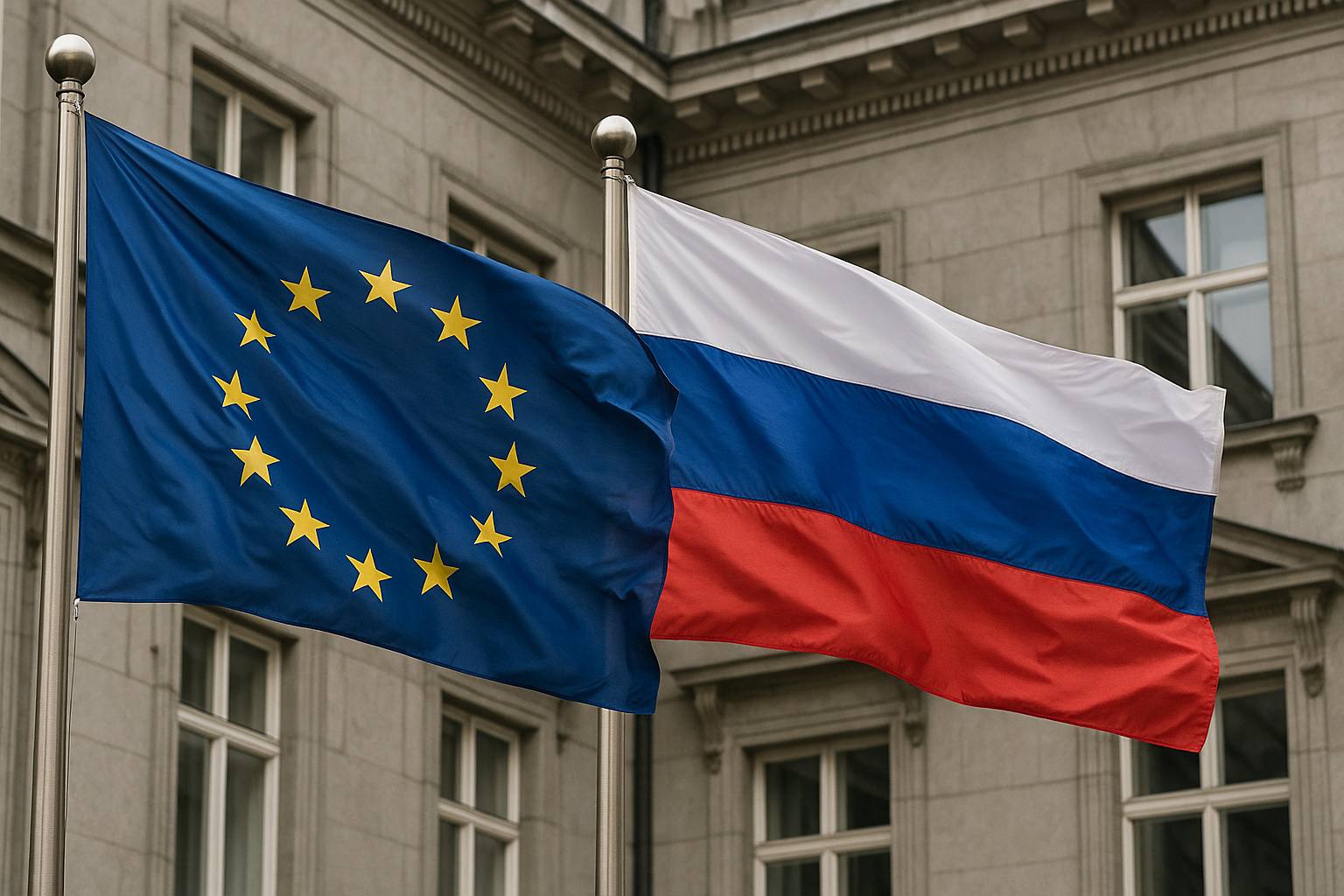

The decision announced by the European Commissioner for Energy, Dan Jørgensen, marked one of the most symbolic moments in the recent history of the continent. According to the statement made to the Europe Today program from Euronews, the European Union will not resume the purchase of Russian energy even after the end of the war between Russia and Ukraine. This position represents a structural change, as it shows that the relationship between energy and geopolitics has become even more determinant for regional stability.
Furthermore, according to Jørgensen, the European Commission is already preparing a new law that will definitively prohibit Russian oil throughout the European Union. Although the bloc has already blocked a significant portion of this import since 2022, the new legal device will consolidate the separation as a permanent rule.
This move redefines not only the European energy market but also the global balance in the production, consumption, and strategic use of oil and gas.
-
Oil production grows in Rio, but reserve replacement raises a warning sign

-
Petrobras is expected to complete the drilling of the Morpho well in the Foz do Amazonas in August 2026, the first well in the Equatorial Margin, an oil frontier that the ANP estimates at more than 30 billion barrels and could redraw the map of Brazil.

-
Oil returns to the center of concerns with tension between the US and Iran

-
IEA reduces forecast for global oil demand in 2026 after impacts of the Middle East crisis


The Crisis of 2022 as a Milestone in the Energy Transition
Historically, Europe has always oscillated between different models of energy security. For decades, Russian gas provided abundant and relatively cheap supply. However, according to data from the International Energy Agency (IEA), this dependence reached over 40% of the bloc’s gas consumption before the invasion of Ukraine in 2022.
With Moscow’s military offensive, the outlook changed radically. Europe began to face sharp rises in energy prices, interruptions in strategic pipelines, and fears about the continuity of supply. Jørgensen stated that the increase in gas prices after the invasion deeply shook the European economy, revealing the vulnerability of maintaining such close energy ties with unstable regimes.
Thus, the crisis of 2022 became a watershed moment. It accelerated investments in renewable energy, boosted new international agreements, and strengthened infrastructure projects capable of mitigating future risks.
How the European Union Prepares New Legislation on Russian Energy
The legislative proposal mentioned by Jørgensen is expected to formalize the total ban on Russian oil in the coming months. According to sources from Euronews, the new framework will include verification criteria, oversight mechanisms, and penalties imposed on countries that fail to comply with the rules.
This legislation will represent a definitive step towards the energy independence of the bloc. Additionally, it will serve as a political signal that the EU is willing to strengthen its autonomy, even in the face of changes in diplomatic circumstances among the countries involved.
Jørgensen stressed that even if there is peace between Russia and Ukraine, Europe will not return to the old model, as this would compromise the energy and economic security of the region. This statement demonstrates how energy has come to be seen as a strategic element for preserving sovereignty.
The Search for New Sources and the Advancement of Clean Energies
The decision to break away from Russian energy does not occur in isolation. It is part of a global movement to strengthen sustainability and technologies that reduce dependence on fossil fuels. According to the European Commission, the continent has increased investments in solar, wind, green hydrogen, and energy storage systems since 2022, with robust targets for 2030 and 2050.
Moreover, diversifying imports has become a priority. Europe has begun to acquire liquefied natural gas (LNG) from countries like the United States and Qatar, while also accelerating electrical interconnection projects among its own members.
While these initiatives require significant investments, they promote greater security and reduce future risks. Energy has become not only an economic resource but also a pillar for political stability, resilience, and sustainability.
The Global Impact of the European Decision
The definitive break creates impacts that go far beyond the continent’s borders. First, it pressures the international oil and gas markets, as it alters dynamics established for decades. Second, it encourages other countries to rethink their energy policies, particularly those that depend on geographically unstable suppliers.
According to analyses published by international bodies, the decision of Europe may stimulate a race for innovation, leading companies to invest more in clean technologies and carbon capture and storage systems. Therefore, the scenario points to a future where energy will be treated with even more environmental responsibility and long-term planning.
A New Energy Standard for the 21st Century
By definitively rejecting Russian oil and gas, Europe adopts a stance that combines strategic vision and a commitment to sustainability. Even with the challenges arising from transition costs, infrastructure, and industrial adaptation, the bloc establishes a new path.
Thus, energy takes on a central role in the discussion about geopolitics, society, and the environment. The European choice highlights that energy security and sustainability go hand in hand, and that nations need to build models capable of withstanding future crises.
This decision, coupled with the advancement of renewable energies, demonstrates that a new era is beginning, in which autonomy and environmental responsibility become non-negotiable priorities.