






 Portuguese
  Spanish


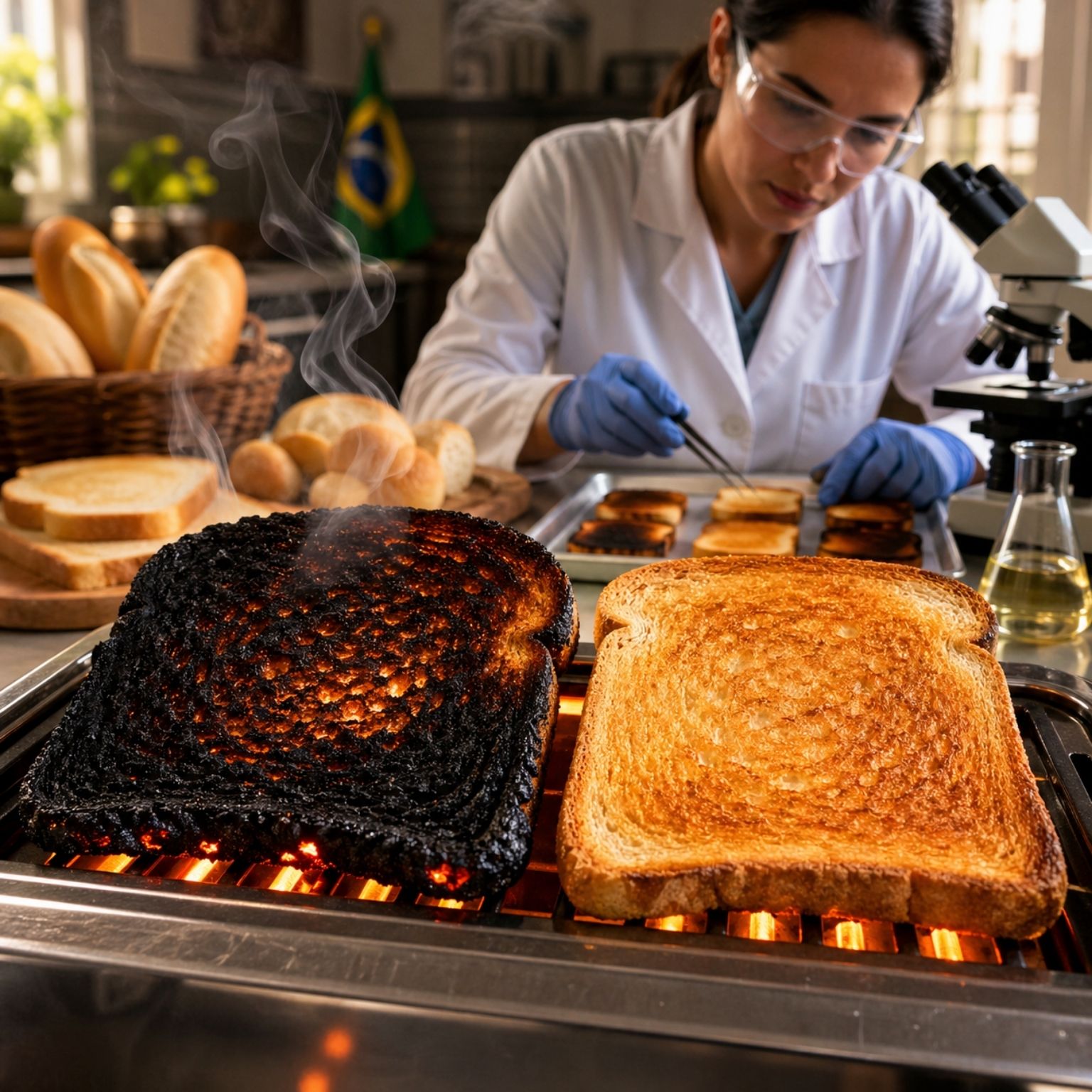

USP study reignites the alert about overly toasted bread by indicating that temperatures above 180ºC favor HPAs and potentially carcinogenic substances, but without removing bread from the diet of Brazilians.
The new alert regarding overly toasted bread arose from a study by the University of São Paulo, which identified the presence of potentially carcinogenic substances in foods such as wheat flour, bread, and cookies. According to the research, these compounds can form during common daily processes, such as toasting and cooking food, especially when they are subjected to temperatures above 180ºC.
The topic draws attention because it involves an item widely present in the country’s dietary routine. On average, each Brazilian consumes 30 kg of artisanal bread per year, equivalent to about two loaves per person per day. In addition to the cultural and familial weight of this food, it also appears as a source of carbohydrates, energy, and fiber, which makes the alert even more relevant for those who tend to request or prepare bread that is always darker and more toasted.
The USP alert about overly toasted bread

The USP research raised a practical point that directly affects common habits at the table. The study identified substances called HPAs in foods such as wheat flour, bread, and cookies, reigniting attention to the preparation method and, especially, to excessive toasting.
-
ChatGPT Alerts FBI to Prevent Planned Murder of 8-Year-Old in Brazil’s Espírito Santo

-
Scientists Discover 125-Million-Year-Old “Pregnant Fossil” with Preserved Embryos and Microscopic Larvae Inside Mollusk in England

-
17-Year-Old Justin Bernstein Develops Bacteria to Produce Glass on Arctic Ice to Reflect Sunlight, Wins $50,000 U.S. Scholarship

-
The 19-Meter Rocket-Helicopter: A Private Industry Prototype That Challenged Space Race Logic




The focus of the alert is not on the consumption of bread itself, but on the level of exposure to heat. According to the explanation provided, these molecules can arise from routine processes, such as toasting or cooking, and tend to form especially when the food exceeds 180ºC. Therefore, the message is clear: the risk lies in excess, especially when the bread becomes very dark.
What the research identified and why it matters
The study pointed out the presence of potentially carcinogenic compounds in different wheat-based products. Among them are HPAs, cited as substances that can increase the incidence of cancer in the long term, depending on the temperature applied to the food.
This data is noteworthy because high-temperature preparation is part of the routine of millions of people. Toasting bread, overheating, or allowing food to darken beyond the point is no longer just a matter of taste but becomes a health concern. The alert is further reinforced by the fact that, according to the explanation provided, it is not only the HPA that is concerning, but also other harmful substances that can arise when the bread becomes too dark.
The numbers that explain why the topic gained strength
Bread occupies a huge space in the diet of Brazilians. The presented estimate shows an average consumption of 30 kg of artisanal bread per year per person. In practice, this represents about two loaves per day, a volume that helps to explain why the USP study gained so much attention.
In addition to the quantity, there is an important symbolic component important. Bread appears as a food linked to abundant tables, family gatherings, and the routine of many households. This amplifies the impact of the alert because it is not an occasional product or restricted to a small group, but a food present at breakfast, snacks, and different moments of the day.
What changes in practice for those who consume bread every day
The main practical change suggested by the alert is simple: avoid letting the bread become excessively toasted. The study does not indicate removing the food from the diet, nor does it treat bread as a villain. The recommendation is to pay attention to the cooking point and not let the surface darken too much.
This care is important because bread continues to be seen as a relevant component of the diet. It has been pointed out as a source of carbohydrates, energy, and fiber, which reinforces that the concern lies in improper preparation, not in the presence of the food on the menu. In other words, the alert does not call for exclusion but moderation and attention to temperature.
Why bread does not need to be removed from the diet


Despite the impact of the research, the highlighted guidance is one of balance. Bread remains part of the diet and serves as an important energy-providing food throughout the day. In a scenario where it can also aid in dietary re-education, the study does not indicate a ban, but rather a more conscious consumption.
This point is central to avoid exaggerated interpretations. The alert serves to correct a habit, not to eliminate a traditional food from the routine. Ideally, according to the explanation provided, bread should not be too dark, precisely to reduce the formation of HPAs and other harmful substances to health.
Why this alert is drawing so much attention now
The topic is gaining traction because it combines three factors of great practical appeal. First, it speaks of potential health risks. Second, it involves a food widely consumed in Brazil. Third, it touches on a common habit often seen as harmless, which is preferring bread that is more toasted.
When such a prevalent food on the Brazilian table becomes the focus of a scientific alert, the impact is immediate. Not only due to high consumption but also because the suggested change is simple, direct, and easy to apply in daily life. The study transforms a detail of the routine, such as the doneness of bread in the oven or on the grill, into a precaution that can make a difference in the long run.
Do you usually eat lighter bread or do you prefer it well toasted at breakfast?


