






 Portuguese
  Spanish


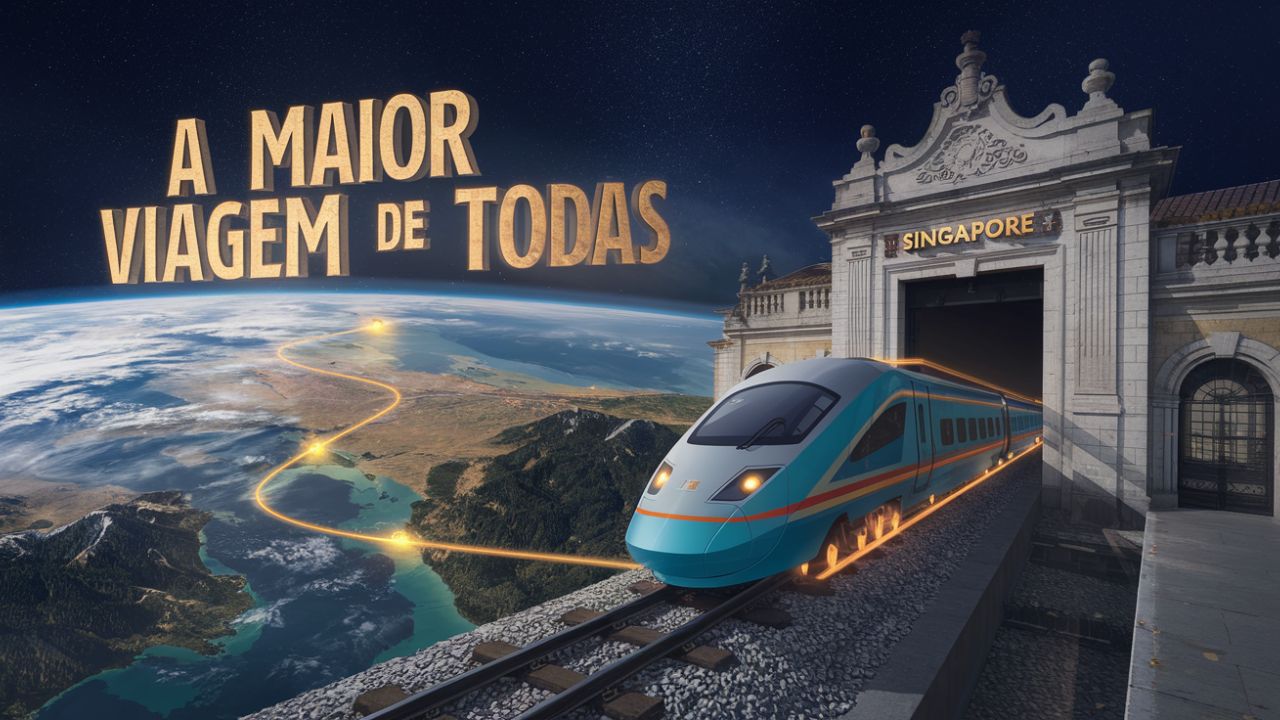


An Epic Train Journey of 19,000 Kilometers, Crossing Three Continents for Just 1,200 Euros, Promised to Be the Adventurers’ Dream, but Was Destroyed by Conflicts and Logistical Barriers.
An epic journey, crossing 13 countries over 19,000 kilometers by train. This is the proposal of the world’s longest train trip, a route connecting Lagos, Portugal, to Singapore. But unfortunately, this dream has been interrupted – and Vladimir Putin bears a large part of the blame.
The idea of a trip that would take 21 days, costing around 1,200 euros, seems fascinating. However, logistical factors and, above all, the conflict in Ukraine make this adventure unfeasible. Let’s explore the details and understand why this route is currently impossible.
The Route from Lagos to Singapore
The planned route is a true spectacle: it would start in Lagos, Portugal, and travel through Europe, Siberia, and Asia until reaching Singapore. The idea was to traverse various cultures and breathtaking landscapes, providing passengers with a unique experience.
-
Sustainable Building Solutions Enhance Durability, Long-Term Savings, and Comfort in Home Construction and Renovation

-
Brazilian Fishing Couple Spends 4 Years Building Solar-Powered Floating Home on the Paraguay River, Now a Navy-Approved Vessel with Leisure Area and Tour Demand

-
While the World Opens New Airports and High-Speed Trains, Brazil Rushes to Complete Projects Stalled for 40 Years
-
Brazil Invests in Massive Waterway to Transport Soybeans by Barge, Reducing Costly Truck Reliance



The cost of this train trip? Relatively affordable: just 1,200 euros. However, the price “too good to be true” is only one of the complications. Even if the trip seems straightforward on paper, the reality tells a different story.
Logistical Obstacles for This Train Journey

The main barrier to this epic journey is logistical complexity. Unlike buying a single ticket to one destination, the train journey would require about 20 separate tickets, purchased on different platforms. This would already be a significant challenge for any traveler.
Many key routes, such as the famous Trans-Mongolian and Trans-Manchurian trains connecting Moscow to Beijing, have been suspended since 2019. Thus, the itinerary is not only complicated but also depends on a series of factors beyond the passengers’ control.
The Role of War in the Impossibility of the Journey
The biggest factor preventing the trip is the war between Russia and Ukraine. The conflict has made it impossible to travel from Western Europe to Moscow, a crucial point of the route. Sanctions and instability in the region hinder any attempt at rail connection with Russia.
For many, the war is not only a humanitarian tragedy but also a barrier to ambitious projects like this one. Without the ability to cross Russia, the dream of the world’s longest train journey remains distant.
The Myth of the Direct Journey
The idea that this journey could be made easily is, in fact, a myth. According to Mark Smith, a railway travel expert, it would require organizing an intricate itinerary with several transfers. He satirized the notion of a “little man in a tent” selling direct tickets from Lagos to Singapore, emphasizing that the reality is quite different.
Smith explains that, even with all the trains running, planning would be complex and engaging. Crossing borders, especially in politically unstable areas, would turn the journey into a logistical nightmare.
Despite the challenges, the idea of such a lengthy train trip continues to fascinate enthusiasts of trains and adventurers. If the war ends and routes are restored, maybe this dream could become a reality. Until then, initiatives like this remind us of the importance of peace and global cooperation to make grand projects viable.


