






 Portuguese
  Spanish
  5 min of reading
  0 comments


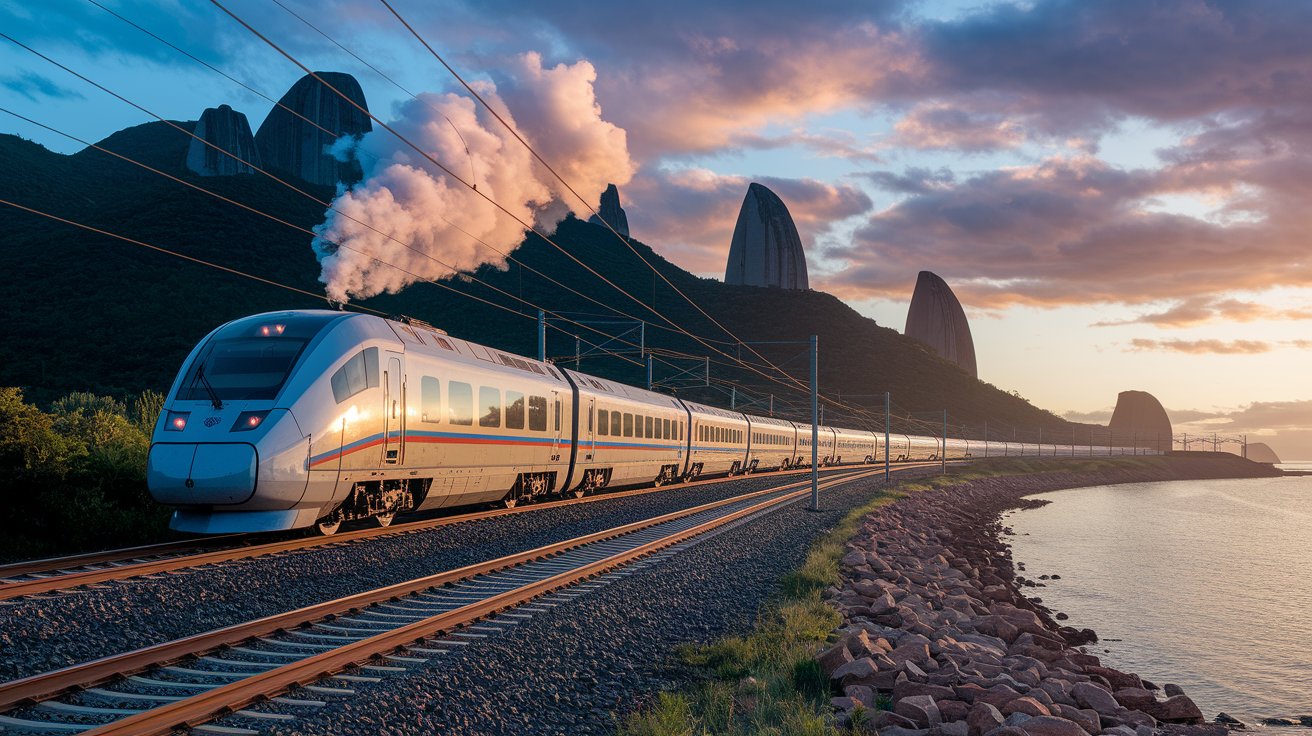
The South of Brazil Is About to Turn Upside Down! New Railways Could Transform National Logistics, Drain Cargo Efficiently, and Relieve Highways. With Billions in Investments, Strategic Ports, and Support from International Investors, the Railway Revolution Is About to Get on the Tracks of Bureaucracy Straight to the Future of Cargo Transport!
Ambitious Railway Expansion Projects Gain Momentum in the South of Brazil, with the potential to transform the way the country transports its cargo, relieving congested highways and boosting the competitiveness of the region’s ports.
While Brazil Lives with a Limited and Inefficient Railway System, the States of Paraná, Santa Catarina, and Rio Grande do Sul Are Working to Bring Railway Projects to Life That Could Reposition National Logistics.
The proposal is clear: invest in railway infrastructure to boost the flow of production and reduce dependence on road transport, which is increasingly overloaded.
-
Bolivian Female Construction Workers Form Association to Combat Discrimination and 38% Pay Gap in the Industry

-
Near Amsterdam, residents buy land and discover they must also build streets, manage drainage, handle waste, and grow food on half their plot.
-
Brazil’s WEG to Open New Factory in China by 2027, Expanding Production of Large Rotating Electric Machines and Low to Medium Voltage Motors in Rugao

-
Chinese Shipyard Secures $1 Billion in Orders for Low-Carbon Container Ships Amid Global Fleet Renewal Efforts


Port of Itapoá Wants Direct Access to the National Rail Network
One of the most promising projects is in Santa Catarina.
The Port of Itapoá Requested Authorization from the National Agency of Land Transportation (ANTT) to Build and Operate Two New Railways in the Northern Part of the State.
The lines are intended to connect the terminal to the national railway network. The first railway would connect Itapoá to Araquari, covering a distance of 113 kilometers.
The second would connect Itapoá to Morretes (PR), along 83 kilometers.
These connections would be essential to consolidate integration with other modes and increase the terminal’s competitiveness.
Currently, the Port of Itapoá Handles Over 70 Thousand Containers Per Month and Conducts Between 1,600 and 2,000 Cargo Transactions Daily.
With the dredging of the Bay of Babitonga, started in March 2025, Itapoá will be the first Brazilian port to Receive 366-Meter Long Vessels at Their Maximum Capacity.
According to the port’s CEO, Ricardo Arten, “the modernization and expansion of railways is essential to ensure predictability and safety in cargo transport”.
The executive emphasizes that the terminal already operates with regular routes to markets in Asia, Europe, and the United States.
Mega-Railway Between Paraná and Rio Grande do Sul
Another large-scale project in the South envisions the construction of a railway with 1,549 kilometers, connecting Terra Roxa (PR) to Arroio do Sal (RS).
The route will cross areas near the border with Paraguay and will end at a new port in Rio Grande do Sul that will be built with federal resources.
According to information from Revista Veja, the estimated investment for the port in Arroio do Sal amounts to R$ 1.3 billion, as announced by the Minister of Ports and Airports, Silvio Costa Filho.
The railway proposal has been submitted to ANTT by Doha Investimentos e Participações, with support from Russian investors.
The requested concession foresees an administration period of 99 years. The authorization is still under review and depends on technical, economic, and environmental studies to define the route and costs.
Paraná Bets on the Expansion of Ferroeste
The Government of Paraná Postponed the Auction of the New Ferroeste to 2025, a project aimed at connecting the municipality of Maracaju (MS) to the Port of Paranaguá, on the Paraná coast, with a length of 1,567 kilometers.
The project also includes a branch line between Foz do Iguaçu and Cascavel, as well as connections with Chapecó (SC).
According to the state government’s plan, the New Ferroeste will be the second largest logistical corridor for grains and containers in the country.
The management of the network will be shared between América Latina Logística (ALL), responsible for 2,039 kilometers of railways, and Ferroeste, a mixed-economy company that operates about 248.5 kilometers.
Brazil Still Has Underutilized Railway Network
Despite Its Continental Size, Brazil Has a Timid and Poorly Utilized Railway Network.
There are approximately 29 thousand kilometers of tracks, according to the National Logistics Plan (PNL), but only 7 thousand are in full operation.
Another 13 thousand have low traffic density, and about 8 thousand kilometers are underutilized or have no commercial operation.
For Comparison, the United States Has 295 Thousand Kilometers of Railways.
Argentina, despite having a territory three times smaller than Brazil’s, has a railway network of 36.9 thousand kilometers.
Southern Network Should Be Divided, According to the Productive Sector
The End of the Southern Network Concession, Scheduled for 2027, Revives the Debate on Railway Management in the South of the Country.
Currently, this network covers about 7 thousand kilometers, of which in Rio Grande do Sul, of the 3.3 thousand kilometers existing, 1.5 thousand are deactivated or have suspended operations.
In Santa Catarina, there Are Only 763 Kilometers of Active Railways. Historical sections, such as the Contested Railway (between Porto União and Marcelino Ramos), have been out of operation since the 2000s.
According to Edson Vasconcelos, president of the Federation of Industries of the State of Paraná (Fiep), it is necessary to modernize the concession model and consider dividing the Southern Network, allowing Paraná and Santa Catarina to operate together, while Rio Grande do Sul manages its own network.
The G7, a group that brings together entities of the productive sector of Paraná, advocates this reformulation.
Trucks Still Dominate, but Problems Accumulate
The Predominance of Road Transport in Brazil Generates Numerous Logistical Bottlenecks and Infrastructure Problems.
In January 2025 alone, there were 130 occurrences on the federal highways of Santa Catarina involving cargo vehicles.
Of these, 61 occurred on BR-101, one of the most critical in the region, with 10 injured.
Excess weight in trucks is another challenge. According to the Federal Highway Police (PRF), over 4.7 million kilograms of cargo above the allowed limit were removed from circulation in 2024 alone.
This excess accelerates road wear, causes potholes, cracks, and increases the risk of accidents.
Investing in Railways Is Strategic for the Future
In addition to Reducing the Number of Trucks on the Roads, the New Railways Could Help Make Cargo Transport Safer, More Predictable, and Environmentally Sustainable.
Brazil Still Needs to Overcome Bureaucratic Barriers and Ensure Adequate Funding for the Projects Under Review to Become Reality.
The Expectation Is That the Approval of Requests with ANTT and Viability Studies Will Advance in the Coming Months.
With This, the South of the Country Could Become a True Railway Corridor, Boosting Agribusiness, Industry, and Foreign Trade.
And you, do you believe that Brazil will finally be able to invest seriously in railway transport, or will the projects remain on paper?


Be the first to react!