Portuguese
  Spanish


In an Unprecedented Plot in the United Kingdom, a 65-Year-Old Grandmother Was Accused of Leading a Criminal Family Network Responsible for Moving Millions in Cocaine, Using Children and Relatives in Sophisticated Operations and International Trips.
In July of this year, British justice sentenced 65-year-old Deborah Mason to 20 years in prison for leading a criminal family network specialized in large-scale cocaine distribution in the United Kingdom.
The case gained international attention due to the unlikely profile of the main defendant: a grandmother who, according to the prosecution, recruited her own children, sister, and partners to lead a drug trafficking scheme valued at up to 110 million dollars, equivalent to approximately R$ 615 million, according to updated values.
Investigations began in April 2023, when undercover agents from the Metropolitan Police of London observed suspicious movements in a shopping center near the port of Harwich, in Essex County.
-
Brazilian Airport to Receive $2.8 Million Investment, Completion Expected Within a Year

-
UN Warns of AI’s Environmental Impact and Calls for Greater Corporate Transparency

-
Former Atacadão Employee Turns Online Cake-Baking Lessons into a Confectionery Brand with Factory, Store, Delivery, and Nearly $400,000 in Revenue
-
Brazilian Startup Sells Nearly 9 Million Surprise Bags of Near-Expiry Food, Prevents Thousands of Tons of Waste, Aiming for $42 Million Revenue by 2026




At the time, Mason was seen loading boxes into a rented vehicle and, shortly thereafter, handing a heavy bag to an unknown person in Ipswich, a town in eastern England.
The vehicle had been monitored since its departure from London the night before.
Authorities had already received alerts about the car, considered suspicious for circulating in areas frequently associated with trafficking.
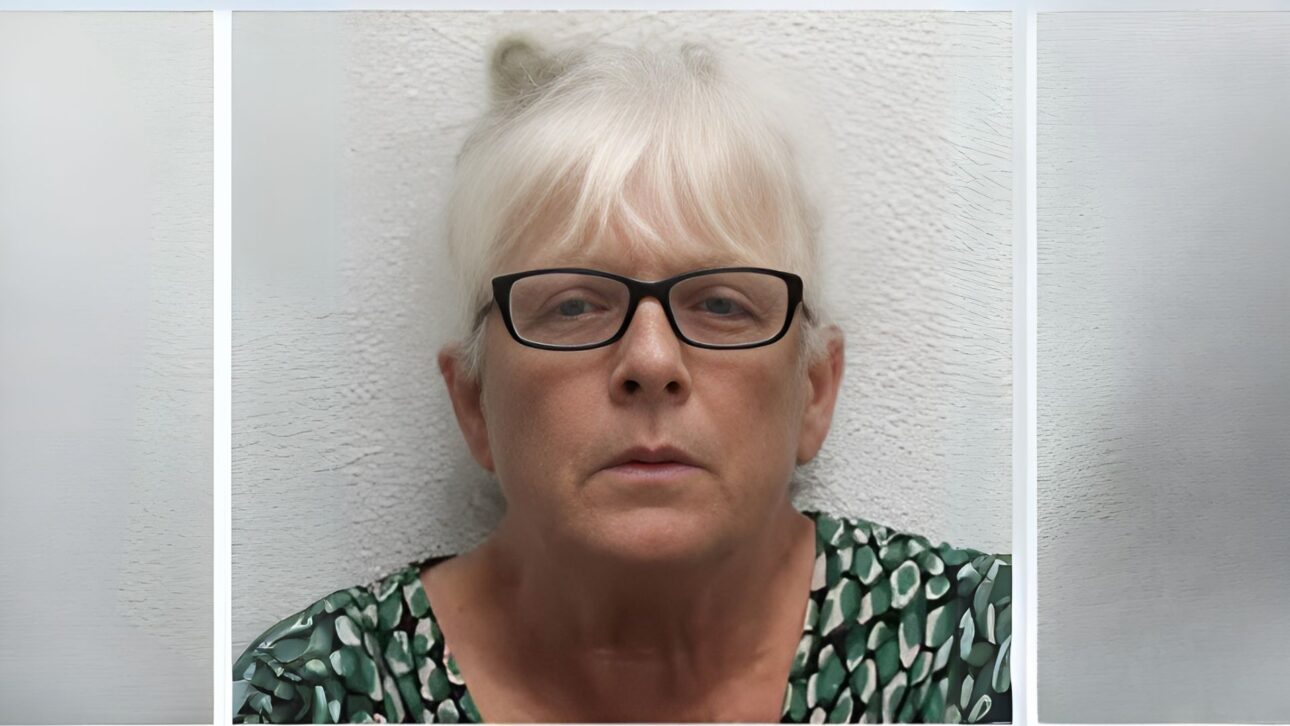
Drug Empire Structure and Communication via Encrypted App
According to testimonies collected in the London court, Deborah Mason, nicknamed “gangster Debbs” and also called “queen bee” by her own family, organized the group’s logistics using a sophisticated communication scheme.
Conversations about operations and drug delivery were conducted through the Signal app, known for its encryption that makes message tracking difficult.
Gang members used code names to hinder identification during the transportation of goods, which typically departed from the ports of Harwich, Folkstone, and Dover, important entry points for drugs in Great Britain.
The pattern of operations included collecting carefully packaged cocaine packages, transporting them in supermarket bags, and distributing them to various locations in the United Kingdom.
Over seven months, Mason’s network moved at least 356 kilograms of cocaine, delivering to cities such as London, Cardiff, Bristol, Sheffield, Rotherham, Manchester, Bradford, Southend, Leicester, and Walsall.
According to the prosecution, the wholesale value of the drugs ranged from 30 to 40 million dollars (R$ 168 to R$ 220 million), with potential to reach up to 110 million dollars on the streets.
Family Involvement and Sentences
In addition to Deborah Mason, the network involved all four of her children, her sister, and close partners.
Her son Reggie Bright, 24, was accountable for transporting at least 90 kilograms of cocaine in 12 trips, always accompanied by family members or his partner, Demi Kendall, 31.
The oldest daughter, Demi Bright, actively participated in the transportation of around 60 kilograms.
Other daughters, Roseanne Mason, 30, and Lillie Bright, 27, also appear among the convicted, with records of multiple trips and drug deliveries across different regions of the country.
In total, the London court sentenced the group to prison terms ranging from 10 to 20 years.
A family friend, Anita Slaughter, 44, was identified as an accomplice and also received a sentence.
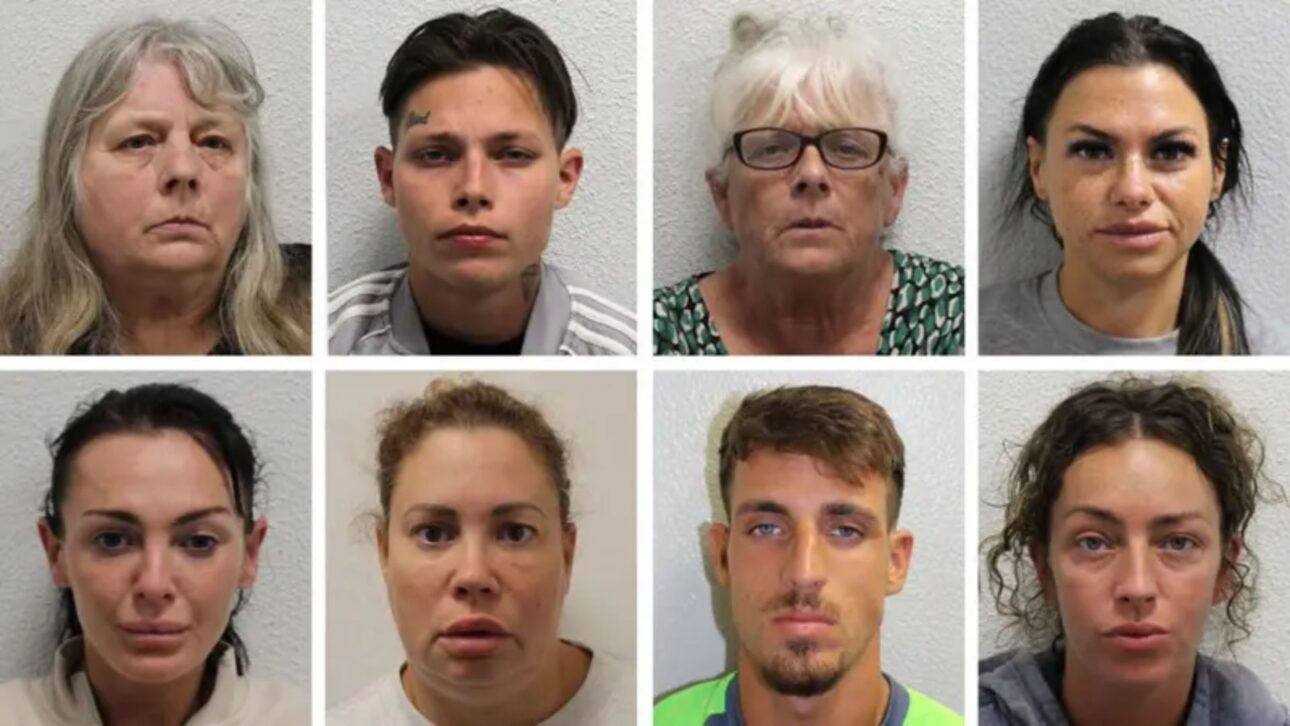
Chloe Hodgkin, Lillie Bright’s partner, awaits sentencing after the birth of her child, according to case information.
Grandmother Had a Command Role and Group Strategies
During the trial, Judge Philip Shorrock highlighted Mason’s leadership, classifying her as “the foreman of the operation who worked under the orders of a project manager”.
In his remarks, he stressed that the defendant “should have set an example for her children, not corrupt them.”
Prosecutor Charlotte Hole detailed the defendant’s role: “She organized the drivers, maintained phone contact from early morning to ensure everyone was awake, and monitored operations throughout the day”.
Grandmother Had Luxury Financed by Trafficking and a Lavish Life
Deborah Mason’s lifestyle also caught the attention of authorities and the public.
The profits obtained from trafficking funded extravagant expenses, including designer accessories, international travel, and luxury items for her pet.
In one of the police operations, Mason was found handcuffed next to a DKNY towel, a symbol of the group’s consumption pattern.
Among the most unusual purchases were a Gucci collar costing 520 dollars (R$ 2,900) for her cat Ghost and a nine-carat gold plaque with the animal’s name.
In addition to her direct involvement in trafficking, Mason received social benefits from the British government totaling 65 thousand dollars (R$ 360 thousand), according to the prosecutor.
The money circulated not only to finance her own luxury but also to cover the family’s frequent trips: destinations included Dubai, Bahrain, Cornwall, Malta, Prague, and Poland, from where Mason continued to coordinate criminal activities via video calls.
Social Impact and Authorities’ Response
Prosecutor Robert Hutchinson classified the case as unusual: “Instead of caring for and protecting her family members, Deborah Mason recruited them to set up an extraordinarily profitable criminal organization that ultimately led everyone to prison”.
The investigations found no evidence of coercion or threats for family members to join the scheme; according to the prosecution, they all acted in pursuit of financial gain.

Detective Jack Kraushaar, who was responsible for the investigation, described the gang as “sophisticated and extremely lucrative for those involved.”
According to him, “the group was selfishly drawn by the financial gains of drug trafficking to sustain lavish lifestyles”.
Drug Empire and Challenges for the Justice System
The impact of the case resonates in British society, highlighting the ability of criminal organizations to infiltrate even seemingly ordinary family structures.
Security experts point out that the use of encrypted apps like Signal has posed an additional challenge for policing and intelligence work, requiring ever more investment in technology to combat organized crime.
In light of the structure set up by grandmother Mason and her family members, a question arises: how do the actions of criminal family networks challenge the justice system and strategies to prevent drug trafficking in the United Kingdom and other countries?