






 Portuguese
  Spanish


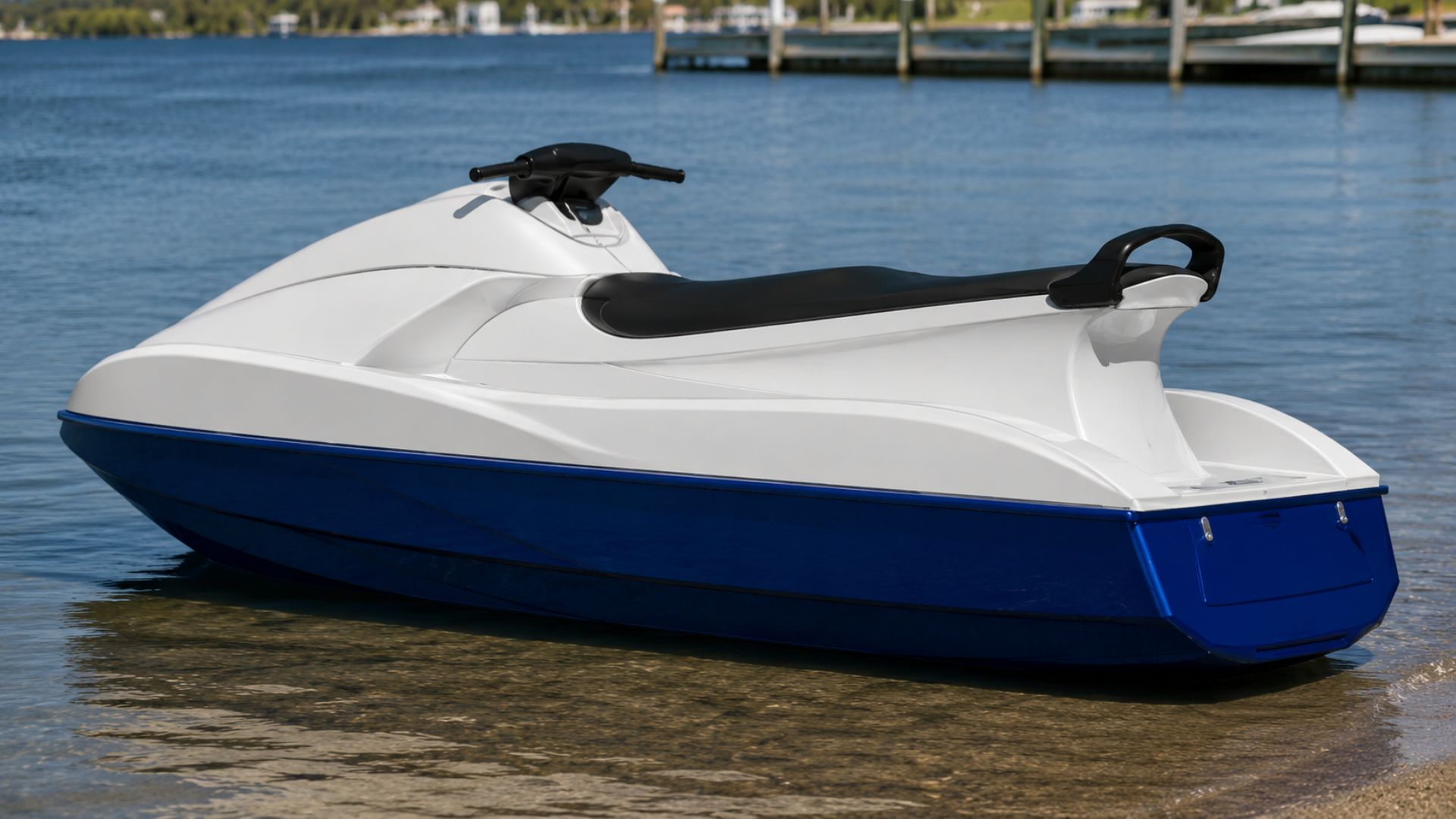

Nicknamed MadSky, the project uses 80 and 9-millimeter plywood sheets, fiberglass, polyurethane glue, and common screws. The boat carries up to three people and will be powered by a Kawasaki ZZR1200 superbike engine, with 1,200 cubic centimeters and an estimated power of about 170 horsepower.
The category of home inventions has gained a curious chapter in the nautical world. A YouTuber identified as the creator of the Made in Madness channel presented in a video the MadSky project, which he introduces as the first jet ski entirely built from scratch using simple materials and a conventional home workshop.
The construction was documented in a series and shows the entire step-by-step process, from printing paper templates to the first layer of fiberglass. The creator states that the final version can be assembled in a few days by anyone with basic notions of carpentry, using only a jigsaw, sander, and common tools for gluing.
How the MadSky project was born

Before appearing ready in video, the jet ski underwent months of technical drawing. The creator says he dedicated considerable time to researching and designing the vessel, focusing on ensuring that anyone with minimal skill could reproduce the result at home.
-
A network of cameras created to hunt down stolen cars recorded over 1 million alerts in a single American city in one year, overwhelmed the police, and forced the department to disable precisely the feature that was supposed to be the system’s strong point.

-
Young people from Minas created a robot without screws or metal parts, betting on a strong and flexible structure to compete against a thousand teams in Houston and took Brazil to the top of world robotics for the first time; Sofia, 15, also made history with an unprecedented leadership award.

-
It seems like an invented animal, but it really exists: meet the only mammal with scales on the planet and find out why it is disappearing.
-
Son of a truck driver who lost his income after a work accident, he grew up in a low-income family, was the first to attend college, took over a small chain of coffee shops, and transformed Starbucks into a global giant with over 38,000 stores in more than 80 countries.





The biggest difficulty in the engineering phase, according to him, was achieving an acceptable look. The intention was for the result to look like a real sports vessel, and not an amateur adaptation, a pattern that often appears in homemade jet ski projects mounted on floats or improvised structures.
The solution to make the project accessible also involved the method of cutting the parts. Instead of having everything machined by CNC or laser cut, expensive options that would make the jet ski almost unfeasible for a home builder, he created paper templates.
These molds can be printed at a common print shop for about 50 dollars and glued onto the plywood sheets. From there, the work continues with a jigsaw, a tool found in any small workshop, without the need for expensive professional equipment to reproduce the hull and internal structure.
The plywood hull and the inspiration from the Yamaha Waverunner

The heart of the project is the hull, the part that defines whether a vessel floats, planes, and cuts through the wind without compromising stability. The design choice followed a current market reference.
The creator was inspired by the latest lines of the Yamaha Waverunner to define the shape. The bottom is relatively flat, a characteristic that provides lateral stability and helps the jet ski to plane more easily, the moment when the vessel accelerates over the water instead of sinking its stern.
The internal structure is assembled from 80-millimeter plywood sheets in a standard 4×8 feet format. This skeleton then receives an external covering of thinner sheets, 9 millimeters thick, which form the fairing and shape the final appearance of the hull.
The idea is to combine strength and lightness using what is available in any building material warehouse. Plywood is cheap, easy to cut, and responds well to gluing with polyurethane glue, an item used in all structural joints to ensure sealing and adhesion even under mechanical stress.
Fiberglass, stabilization strips, and the water test


After fixing the outer cladding, the builder moves on to the finishing stage. The seams between the sheets receive polyester filler for filling, a process that makes the entire surface continuous and smooth before the application of fiberglass.
This fiber layer is what guarantees the project’s watertightness. Without properly applied fiberglass, any infiltration in the joints would compromise the buoyancy and lifespan of the plywood during the first trips.
Another important technical detail is the stabilization strips installed on the bottom of the hull. Positioned 30 centimeters from the centerline, they ensure predictable behavior at high speed and prevent water from splashing sideways when the vessel planes.
Before the definitive launch into the water, a pre-flotation test was also conducted. The creator places the hull in a body of water with the structure still incomplete just to validate if the assembly remains stable, an important step for any boat project that will be reproduced by others under different conditions.
The superbike engine that will power the jet ski
The choice of engine is the most ambitious aspect of the project. The builder decided to use a Kawasaki ZZR1200 superbike engine, with 1,200cc, inside the boat’s central engine room.
The configuration promises significant authority on the water. The estimated power is around 170 horsepower, an impressive number for a vessel that carries up to three people and was designed to be larger than a traditional two-stroke jet ski.
The engine room was designed with intentional clearance to accommodate different mechanical options. Those who reproduce the project can choose, for example, to install a popular car engine like that of a Mazda Miata, as the creator himself suggests in a video.
For transmitting power to the water, the initial plan is to build a homemade jet drive unit in a future episode. As this process is more expensive and complex, the creator also designed an alternative hull version that allows for the installation of a conventional outboard motor, between 20 and 50 horsepower.
The thousand-dollar cost and the promise of building in days
One of the channel’s central arguments is the total cost of the endeavor. According to the builder, the homemade jet ski can be made for about a thousand dollars just in materials, a value that covers plywood sheets, fiberglass, polyurethane glue, and other consumables.
The engine is a separate cost, and in this case, it largely depends on each builder’s choice. Buying a used superbike engine is usually cheaper than a new factory-made jet ski engine, which reinforces the accessible nature of the project for enthusiasts willing to get their hands dirty.
The timeline is also presented as an advantage. According to the creator, those who use the plans available on the channel’s website can complete the assembly in a matter of days, a timeframe quite distinct from the weeks or months required by other artisanal boat projects.
This argument is supported by the speed that the builder himself demonstrates in the video. The complete hull structure is ready in a few workshop hours, with stages like truss assembly taking about two hours and the outer cladding progressing quickly after the first sheets are adjusted.
What comes next and managing expectations
The first part of the series only shows the hull and the structural base completed. The next stages should bring the upper half of the jet ski, which, according to the creator, will require more careful and detailed work to achieve the desired final look.
The installation of the Kawasaki engine, the homemade jet drive unit, and the first high-speed tests are also left for future episodes. These steps are usually the riskiest of any experimental boat project, especially when involving high power combined with a hull built outside of a factory.
For viewers, it’s worth following the development with both curiosity and skepticism. Amateur nautical initiatives often work well in videos but require constant adjustments to become safe and durable products in prolonged real-world use.
The promise of being the first fully homemade jet ski on YouTube still needs to be proven when the MadSky finally becomes fully operational on the water. Until then, the project serves as an example of how creativity, technical planning, and common tools can challenge what is normally treated as the exclusive property of the specialized nautical sports industry.
And you, would you dare to take a ride in a homemade jet ski, with a plywood and fiberglass hull, powered by a 170-horsepower superbike engine? Do you think it’s worth saving money on this type of project, or do you prefer the safety of a professionally manufactured vessel?
Tell us in the comments if you would trust a YouTuber’s homemade engineering to venture out on the water, if you’ve seen any similar projects around Brazil, and what engine you would choose to put in your own MadSky if you decided to build one. The discussion helps to understand the extent of Brazilian courage when it comes to extreme DIY.


