Portuguese
  Spanish



ABB’s Robotics Automation Drives Sustainability at Volvo Cars
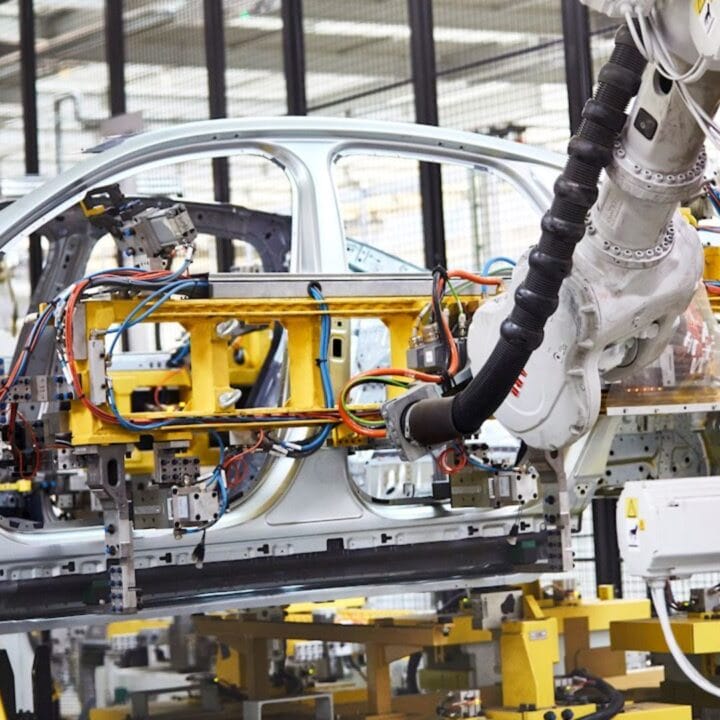
ABB, a global leader in electrification and automation technologies, announces a significant expansion of its collaboration with Volvo Cars. The already established partnership gains new momentum with the supply of over 1,300 robots and functional packages intended for the production of Volvo’s next generation of electric vehicles. This initiative is a strategic step to help the Swedish manufacturer achieve its sustainability goals, marking a significant advance in the automotive sector.
Marc Segura, president of ABB Robotics, emphasizes the importance of this collaboration in the context of the transformation of the automotive industry, driven by the increasing demand for electric vehicles and more sustainable practices.
Energy Efficiency and Innovation in Robotics
Energy efficiency is at the core of this partnership. ABB’s new family of large robots, along with the OmniCore™ controllers, promises to save up to 20% energy in production units. This technological advance not only optimizes the manufacturing process but also significantly contributes to Volvo Cars’ sustainable practices.
-
1983 Chevrolet Runs Over 100,000 km Without Gasoline, Powered by Wood Chips, Reaches 125 km/h in Airport Test

-
Workshop Converts Giant Tractor Tire Tricycle into a Three-Wheel Drive Hybrid with 36,000-Watt Electric Motor Capable of Climbing Hills

-
Chery Offers Lifetime Battery Warranty and Car Replacement for Major Failures Under New Chinese Regulations
-
Sales of Brazil’s Cheapest Electric Car Halted Before First Deliveries: E-Motors Suspends Emova Easy Due to Import Tax Increase and Rising Freight Costs





The functional packages provided by ABB include a variety of production tasks, from spot welding to ultrasonic weld inspection. These integrated systems combine hardware, software, and services, ensuring efficiency and reliability. The implementation of these systems will occur at Volvo Cars’ facilities in Torslanda, Sweden, and Daqing, China.
Preparation and Planning for Implementation
The deployment phase of this project is meticulously planned with the help of ABB’s RobotStudio® software. This platform allows for virtual visualization and optimization of the deployment, ensuring that production remains uninterrupted during the installation of the robots. This detailed planning ensures that automation solutions are developed and validated efficiently, allowing for replication in different locations.
The long-standing tradition of collaboration between Volvo Cars and ABB has been crucial in making car production more efficient and innovative. This latest project reinforces that partnership, with the first implementations anticipated to begin in early 2024. It is a milestone in ABB’s series of solutions aimed at assisting the global automotive industry in achieving its sustainability goals and transitioning to the production of electric vehicles.
For more information about ABB Robotics in the automotive sector, visit www.abb.com/automotive. ABB continues to be a beacon of innovation and sustainability, with its 105,000 employees dedicated to driving transformations that accelerate the industrial revolution. Learn more at www.abb.com.
Source: Tamer Comunicação.