






 Portuguese
  Spanish



Discovery of a Hoard of Millennium Silver Coins Impresses Researchers and Reveals Details About a Historical Period Marked by Challenges and Transformations
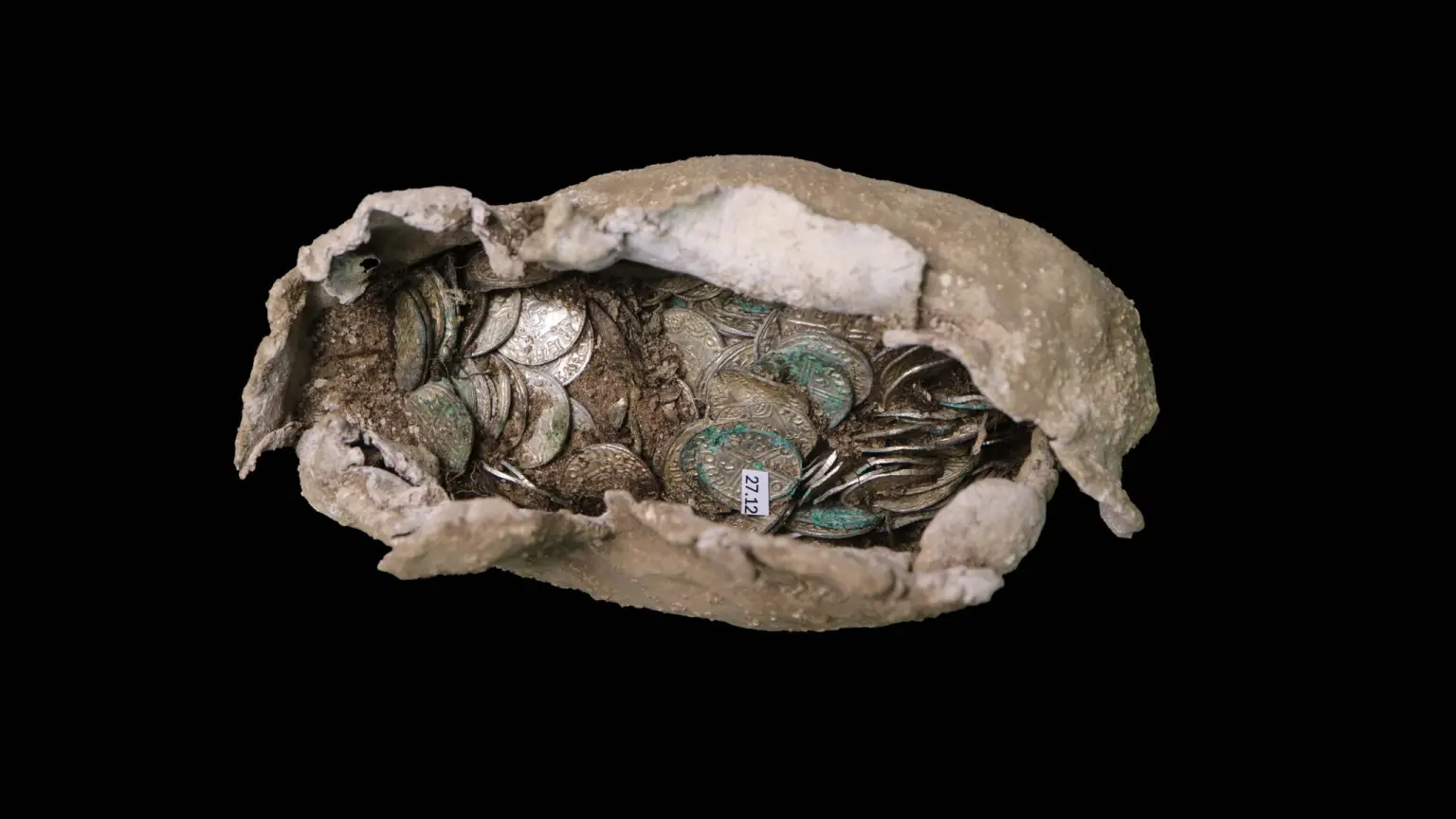
Archaeologists Discovered a Historical Treasure near a nuclear power plant under construction on the Suffolk coast in England. A cache of 11th-century silver coins was found in excellent condition. The discovery may help to better understand a turbulent period in English history.
Andrew Pegg, a researcher from Oxford Cotswold Archaeology (OCA), was the one who found the coins. He recounts that he was “shaking” when he saw the first coin emerging from the ground. “I was shaking when I unearthed it for the first time, seeing a single edge of the coin peeking at me! A perfect archaeological time capsule. The information we are learning from this is astonishing and I am very proud to have added to the history of my own little part of Suffolk.”
The treasure includes Anglo-Saxon coins made between the years 1036 and 1044, a period that includes the coronation of King Edward the Confessor in 1042.
-
China Develops Custom 140-Ton Electric Mining Truck with 770 kWh Swappable Battery, Deploys 290 Units in Xinjiang’s Largest Zinc Mine

-
Meta to Launch Arena, a New Prediction App Targeting 3.56 Billion Users, Competing with Polymarket and Kalshi

-
Scientist Challenges Famous Human Evolution Theory, Argues Homo Sapiens Evolved Gradually Over Thousands of Years
-
15-Year-Old American Builds Ocean Generator with PVC Pipe and 3D-Printed Propeller for $12, Wins National Prize, Presents at White House, and Makes Forbes 30 Under 30 List




Oxford Cotswold Archaeology
The Historical Period of the Coins
King Edward the Confessor ruled England during a time of many conflicts. His reign was marked by political disputes and the exile of opponents. According to experts, hiding money may have been a protective measure against changes in government.
Alexander Bliss, an expert from OCA, explained that the coins totalled 320 pence, a sum that at the time could buy up to 16 cows.
For him, the owner of the treasure may have feared the new government and decided to hide his wealth. “Perhaps the owner of the treasure was concerned about the new regime [or] the political situation and broader social instability, taking measures to conceal his wealth. There are now three hoards from this period (1042 to 1044) known throughout England, which strengthens the idea that the early years of Edward’s reign were not calm,” Bliss stated.
Researchers emphasize that only three treasures from this period (1042-1044) have been found in England. This suggests that burying money may have been more common than previously thought.
How the Relics Were Preserved
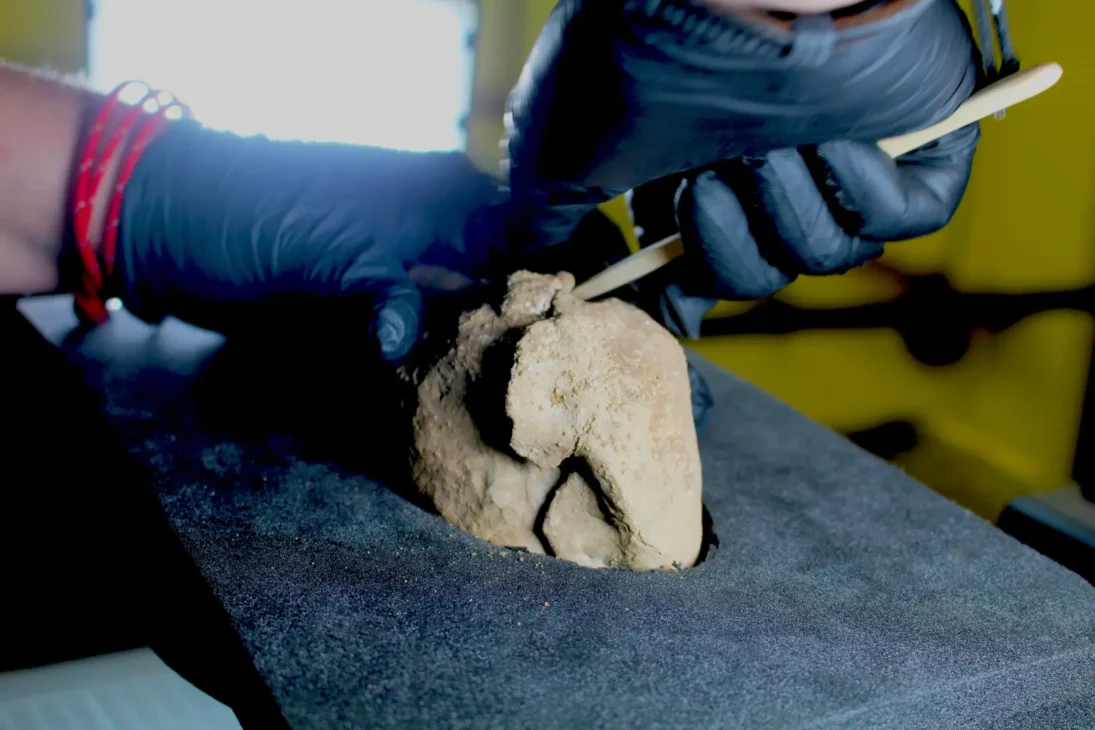
In addition to the historical value of the coins, archaeologists were surprised by how they were protected. They were inside a sack surrounded by a hand-formed sheet of lead and then wrapped in fabric. This care helped to keep the coins well preserved for almost a thousand years.
Bliss explained that keeping the bag intact was crucial for the study. “In this case, preserving the bag was very important because it is part of the overall ‘object’ as a containment element for the coins. We also wanted to understand whether the lead was just a piece of sheet or if it had been detached from a larger object.” he said.
Researchers also examined whether the lead sheet was just a wrapper or part of a larger object.
Another important detail is that some coins came from smaller and less known minting offices in rural England. This makes the find even more valuable, as it helps to better understand the production and distribution of coins during that period.
The Mystery About the Owner of the Silver Coins
The researchers still do not know who the owner of the coins was, but they raise some possibilities. He may have been someone influential in the region and, for some reason, lost his wealth with the new government.
Another possibility is that the owner perished before recovering his money. Bliss suggests that he might also have been urged to leave the country. “They may have been prevented from retrieving it due to other means, for example, if they left or were exiled from the country and could not return“, said the expert.
The discovery made in Suffolk is another piece of Anglo-Saxon history. The study of these coins can reveal important details about the early years of Edward the Confessor’s reign.
With information from New York Post.





