






 Portuguese
  Spanish


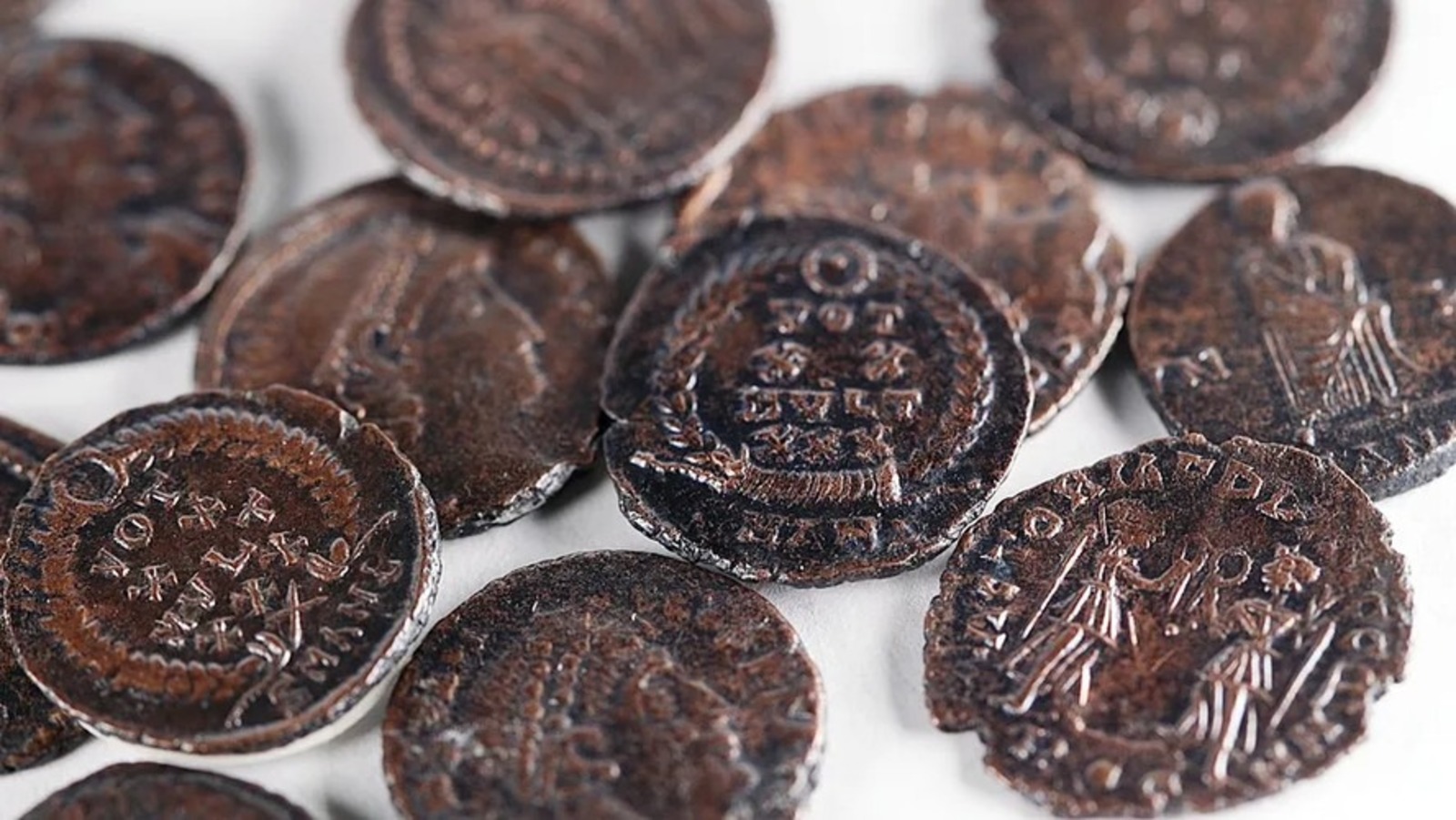


Discovery of Coins in Underground Tunnels of Galilee Reveals Jewish Resistance, Reuse of Shelters, and Cultural Importance During Roman Persecutions
Israeli archaeologists announced the location of a rare set of copper coins dating back approximately 1,600 years. The find was made in an opening within the underground tunnels of the settlement of Hukok, in the Galilee region, northern Israel.
The treasure, consisting of 22 pieces, remained hidden until revealed by the team from the Israel Antiquities Authority.
The discovery will be detailed in a scientific article expected in the next issue of the journal Israel Numismatic Research.
-
China Develops Custom 140-Ton Electric Mining Truck with 770 kWh Swappable Battery, Deploys 290 Units in Xinjiang’s Largest Zinc Mine

-
Meta to Launch Arena, a New Prediction App Targeting 3.56 Billion Users, Competing with Polymarket and Kalshi

-
Scientist Challenges Famous Human Evolution Theory, Argues Homo Sapiens Evolved Gradually Over Thousands of Years
-
15-Year-Old American Builds Ocean Generator with PVC Pipe and 3D-Printed Propeller for $12, Wins National Prize, Presents at White House, and Makes Forbes 30 Under 30 List




Signs of the Galilean Revolt
The coins display representations of the emperors Constantius II (337–361 A.D.) and Constans I (337–350 A.D.).
This detail indicates that they were hidden during the so-called Galilean Revolt, which occurred between the years 351 and 352 A.D.
Unlike older rebellions, this Jewish revolt was less extensive and ended quickly and violently. Roman legions suppressed the insurgency by burning and devastating cities in the region.
The name of the uprising refers to Constantius Gallus, a cousin of Emperor Constantius II, who governed the eastern provinces of the empire during that period.
Tunnels Reused for Centuries
According to experts, the discovery demonstrates that the Hukok tunnels had use far beyond their original construction.
They were excavated during the Great Jewish Revolt (66–70 A.D.) and were also reused in the Bar-Kochba Revolt (132–135 A.D.).
Now, the presence of the coins confirms that, centuries later, they once again served as shelter in times of persecution.
This pattern reinforces the historical value of the site, which functioned both as a military hideout and as a space for communal life.
Religious and Cultural Refuge
For archaeologist Uri Berger from the Antiquities Authority, and for professor Yinon Shivtiel from Zefat Academic College, the site housed not only fighters but entire communities.
They highlight that the site allowed for the continuation of religious rituals and daily practices away from Roman surveillance. This expands the cultural significance of the find.
Well-Planned Treasure
According to the researchers, the hideout was carefully prepared. The small collection was placed in a pit dug at the end of a narrow and winding corridor.
“It is likely that people expected to return when the threat passed,” said Berger and Shivtiel.
With information from Revista Galileu.





