






 Portuguese
  Spanish




Court Decision Confirms Serious Misconduct After Analysis of Videos, Testimonies and Financial Damage Caused by Intentional Code Switching at Butchery
The Labor Court of Minas Gerais upheld the dismissal for just cause of a butcher who worked at a supermarket in the Triângulo Mineiro, after it was proven that she used codes for cheaper meats to sell premium cuts to known customers, causing financial harm to the company. The decision was based on robust evidence, such as security camera footage, testimony from colleagues, and the operational dynamics of the butchery sector.
The information was disclosed by a website specializing in labor decisions, based on a ruling from the 3rd Labor Court and subsequent confirmation by the Sixth Panel of the Regional Labor Court of Minas Gerais (TRT-MG). The case gained prominence precisely because of the clarity of the evidence and the unequivocal characterization of act of impropriety, as provided in Article 482 of the Consolidation of Labor Laws (CLT).
Since the beginning of the process, the central point of discussion was to determine whether the code switching occurred due to operational error or if there was a deliberate intention to favor third parties. Throughout the analysis, however, the evidence pointed to the latter hypothesis.
-
Brazil Approves Proposal to Cap Vehicle Tax at 1% of Car Value

-
Brazilian Senate Approves Bill to Automate Child Support Payments Directly from Debtors’ Accounts

-
Brazilian Congress Advances Bill to Ensure Full Pension Benefits for Families Receiving Reduced INSS Death Benefits
-
Unusual Traffic Signs in Brazil: Wheelbarrow Ban, Crosswind Warning, and Customs Stop


Evidence Shows Frequent Code Switching and Favoring Specific Customers
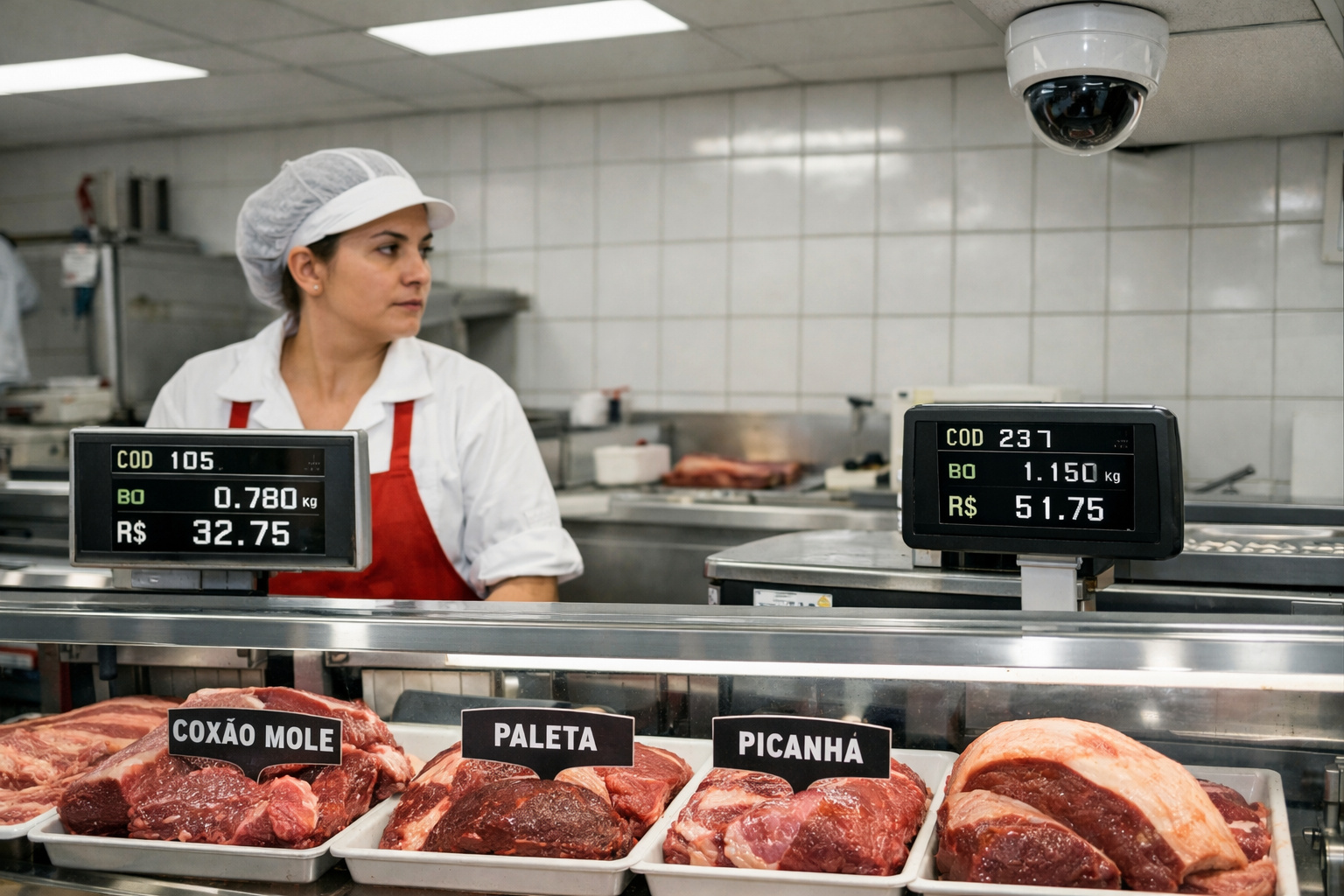
According to the records, the butcher was caught several times weighing more expensive meats with codes corresponding to lower value cuts. In one of the videos submitted to the case, it is possible to see the worker greeting an acquaintance with a handshake before fulfilling the order.
Subsequently, she cuts steaks from top sirloin and performs the weighing using the code for beef chuck. As shown on the scale display, a kilogram of top sirloin cost R$ 36.99, while the beef chuck was sold for R$ 32.99. This difference, although seemingly small per kilogram, resulted in accumulated financial damage to the supermarket, especially considering the repetitive nature of the practice.
In addition to the images, a witness interviewed in the case claimed to have witnessed the sale with the wrong code three times, always involving the same customers. According to the testimony, the errors were not random but directed.
“There’s no way to confuse the codes; the claimant weighed more expensive meats with codes for cheaper meats; these mistakes occurred with the same customers, and one of those customers refused to be served by the witness to be served by the claimant,” declared the witness.
Defense Claimed Persecution, but Court Dismissed Claim of Moral Harassment
In an attempt to reverse the just cause, the butcher claimed persecution by the store manager. According to her version, after an isolated episode of code switching, which would have occurred due to “procedural error,” the manager began to scrutinize her excessively, punishing any operational mistake.
Based on this argument, the worker requested the reversal of the dismissal for just cause to an unjustified dismissal, in addition to the payment of the corresponding severance pay, the fine provided for in Article 467 of the CLT, and compensation for moral damages resulting from alleged harassment.
The company, in turn, argued that the investigation of the facts was conducted discreetly and technically. According to the employer, the internal investigations only confirmed a repeated practice of selling premium meats with codes for cheaper cuts, such as picanha registered as top sirloin, causing direct harm to the supermarket’s cash flow.
Additionally, the company argued that simply reversing the just cause, should it occur, would not automatically constitute compensable moral damage, dismissing any claim of harassment by management.
Judge Highlights Professional Experience and Confirms Act of Impropriety
Upon examining the evidential set, the presiding judge of the 3rd Labor Court highlighted an essential factor: the professional experience of the worker. According to the ruling, the butcher had worked at the unit for over two years and demonstrated great skill, confidence, and command of the codes used in the sector.
For the judge, this professional history entirely dismissed the possibility of involuntary error. The images and testimonies indicated that the worker knew exactly which codes she was using and what prices were being charged to customers.
“In light of the analysis of the evidential context, I conclude that the supermarket proved that the butcher favored third parties, to the detriment of the company, which characterizes the act of impropriety provided for in Article 482 of the CLT,” stated the judge.
As a result, the requests for reversing the just cause, payment of severance pay typical of an unjustified dismissal, and compensation for moral damages were denied. The Sixth Panel of the TRT-MG fully confirmed the ruling. An appeal was made to the Superior Labor Court (TST), which awaits a date for judgment.


infelizmente isso acontece no Brasil todo, talvez até no mundo inteiro
Basta prestar atenção nesses mercados de cidade pequena que a. Carne. É pesada na. Hora conforme o o pedido de do cliente,observe apenas um dia, normalmente é por senha. Ou fila, sempre tem o atende determinado a cada pessoa,e. Quando em sua vez. É. Outro. Atendente o cliente passa a vez aguardando para. Ser atendido. Por aquele que que. Vai. Pesar carnes nobres no valor de carnes. Baratas ,isso. Eu. Já. Presenciei várias vezes ,basta. Ser uma pessoa que atenta. Que percebi rápido demais