Portuguese
  Spanish


Work during Brazil’s matches continues normally in the 2026 World Cup, as the matches are not holidays and the release depends on the company or collective agreement.
The Brazilian National Team’s qualification for the round of 16 of the 2026 World Cup raised a question for workers scheduled during the times of the upcoming matches: is it possible to interrupt the workday to watch the games? According to labor legislation, the employee does not have the automatic right to leave work, as the national team’s matches are not considered holidays.
Brazil faces Norway on Sunday (5th) at 5 PM. If they advance to the final, the team led by Carlo Ancelotti will still play four matches, including two scheduled for weekdays.
Thus, work during Brazil’s matches should continue normally, except when there is authorization from the employer, prior negotiation, or provision in a collective agreement of the category.
-
Brazilian Family’s Homeschooling Success Sparks International Debate: Daughters Read 30 Books Annually and Speak Multiple Languages

-
Piauí Governor Enacts Law Requiring State Contractors to Reserve Jobs for Former Inmates with Minimum Wage and Verification Before Payment

-
Providing Your Tax ID at Supermarkets: A Routine Step That Can Unlock Discounts and Rewards but Also Reveals Your Shopping Habits
-
Germany Changes Noise Regulations, Extending Quiet Hours Beyond 10 PM



Work during Brazil’s matches is not automatically suspended
The occurrence of a Brazilian National Team match does not, by itself, alter the contracted schedule between company and employee.
Those scheduled must fulfill their usual workday, regardless of whether the game takes place on a weekday or Sunday. Release can only occur by the company’s decision or a previously established rule.
Among the possibilities are:
- release from work during the match time;
- temporary change in the start or end of the workday;
- organization of shifts among employees;
- compensation for the hours not worked;
- application of rules provided in collective agreements;
- advance agreement between company and worker.
The chosen method must respect labor legislation and the collective norms applicable to the activity. The employer may allow the entire team or just part of it to watch the match.
In this case, the company may also establish mechanisms to compensate for the released period. The adjustment may involve changing schedules or making up the hours at another time, provided that legal and collective rules are observed.
However, the release does not constitute a general obligation of the company. It also cannot be assumed by the employee just because Brazil will be playing. Therefore, any modification in work during Brazil’s matches needs to be communicated and agreed upon before the start of the match.
Matches played on Sundays follow the schedule rules
The next national team game will take place on a Sunday, when some workers are usually off. Professionals in hospitals, airports, public transportation, security, energy supply, and other continuous services, however, may remain active.
When Sunday is already regularly part of the schedule and the weekly rest is granted on another day, there is no double payment just because the service was performed on a Sunday.
Compensation and any compensatory time off depend on the Consolidation of Labor Laws and, mainly, on the conventions or collective agreements of each category. This situation should not be confused with certain rules applied to work on holidays, as World Cup games do not receive this classification.
Work during Brazil’s games requires authorization to leave
An employee who leaves their post to watch the match without permission may receive a disciplinary penalty. According to labor lawyer Malu Vieira Xavier, partner at A.C. Burlamaqui Advocacia, for g1, the measures may include a warning or suspension.
In more serious situations, there may also be the possibility of dismissal for just cause. The specialist emphasizes, however, that this is the most severe sanction provided by law and should not be applied without evaluating the circumstances.
“An isolated conduct hardly justifies just cause. Factors such as the severity of the infraction, any recurrence, and the damage caused to the company are evaluated,” says Malu. The analysis should consider the employee’s behavior, disciplinary history, and the consequences caused by the absence.
Abandoning the post can be more serious in essential services
Leaving without authorization tends to have a greater impact on activities that cannot be interrupted.
In hospitals and emergency services, for example, absence can compromise public service. In airports, public transportation, and energy supply, abandonment can also hinder the continuity of operations.
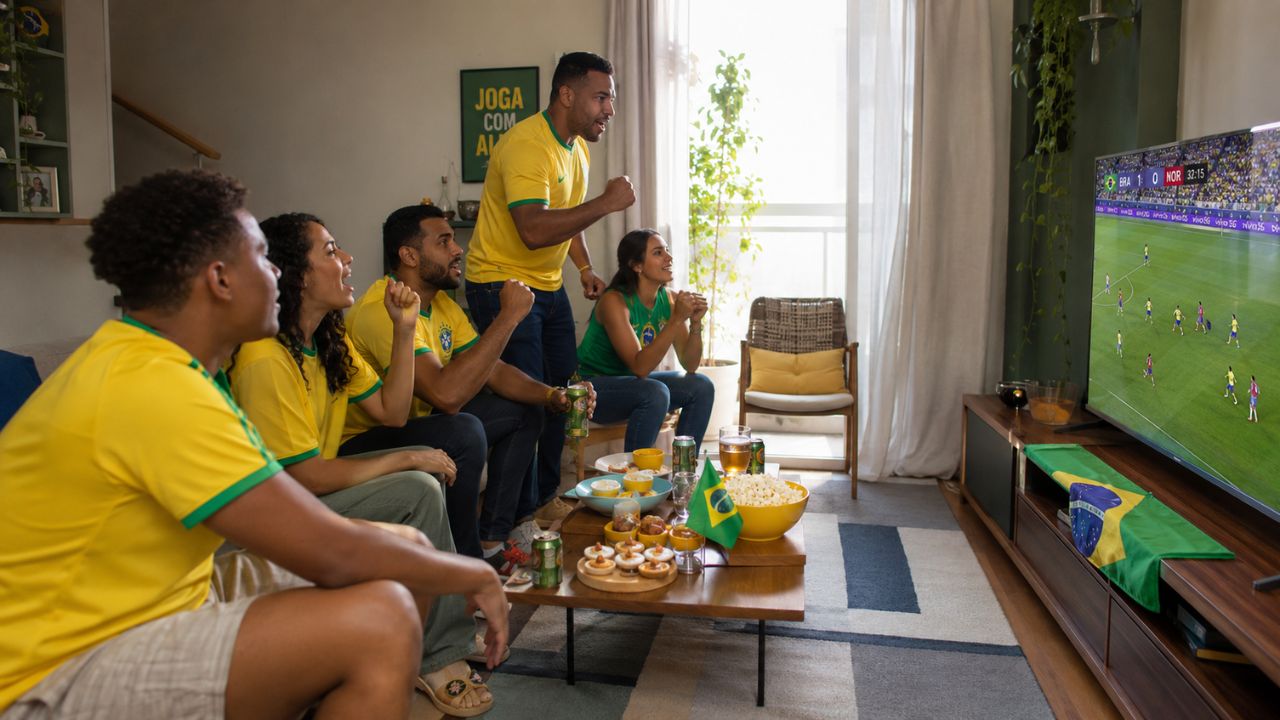
The same occurs in security-related functions, where the absence of a scheduled professional can affect other people or structures. In these sectors, the damage caused by the conduct may weigh on the definition of the disciplinary measure adopted by the company.
Just cause depends on the circumstances of each situation
The absence to watch a match does not automatically result in dismissal for just cause.
According to the lawyer, the application of this penalty depends on elements such as:
- severity of the fault;
- repetition of the conduct;
- damage caused to the company;
- nature of the activity performed;
- consequences of the employee’s departure;
- disciplinary history of the worker.
An isolated situation may lead to a warning or suspension, while more serious or repeated cases may receive different treatment. The company must evaluate each occurrence individually before applying the sanction.
How companies can organize the next matches
If Brazil continues advancing in the 2026 World Cup, two of the four possible games until the final will occur on weekdays. Companies that decide to flex the working hours can organize the operation in advance to avoid unexpected interruptions.
Among the mentioned alternatives are the creation of shifts, team rotation, changing schedules, and release with later compensation. In essential sectors, the organization may involve maintaining a minimum team during the match.
These measures depend on the conditions of each company and the rules established for the involved workers. The presented guidance is that the employee should talk to the company before altering their schedule.
Leaving the post, arriving late, or failing to attend without authorization can be treated as non-compliance with professional obligations. The company, on the other hand, can decide if it has the conditions to flex the schedules without affecting its activities.
Therefore, work during Brazil’s games remains subject to the schedule defined by the employer and the collective rules of the category. The possibility of watching the matches during working hours depends on prior release or negotiation.
With information from g1