






 Portuguese
  Spanish
  5 min of reading
  0 comments


Railway of 26.5 Km Promises to Change Logistics Between Minas and Rio, Shortening Distances and Reducing Accidents on One of the Most Dangerous Roads in the Country. Construction Should Begin in 2027, with Operation Expected for 2030.
The Ramal Serra Azul, new railway of 26.5 km, promises to remove 5 thousand trailers per day from the Fernão Dias Highway (BR-381), the axis that connects Minas Gerais to São Paulo.
The goal is to shorten the distance to the Port of Itaguaí, in Rio de Janeiro, by 400 kilometers, speeding up mineral output and reducing logistical costs.
The schedule indicates the start of construction in 2027 and commercial operation in the first half of 2030.
-
Railway returns to prominence in Brazil after STF approval: a R$ 25.2 billion project promises to save R$ 9 billion in freight, transport 50 million tons per year, and transform Sinop into a logistics powerhouse for agribusiness.

-
Retired trains leave European tracks and become tons of steel, aluminum, and copper in dismantling yards where recycling exceeds 90%, but batteries, composites, and electronics create a new frontier of railway waste.

-
The strategic railway of Santa Catarina will receive R$ 608 million, will undergo historic modernization, and could transform logistics between Mafra and the Port of São Francisco do Sul.
-
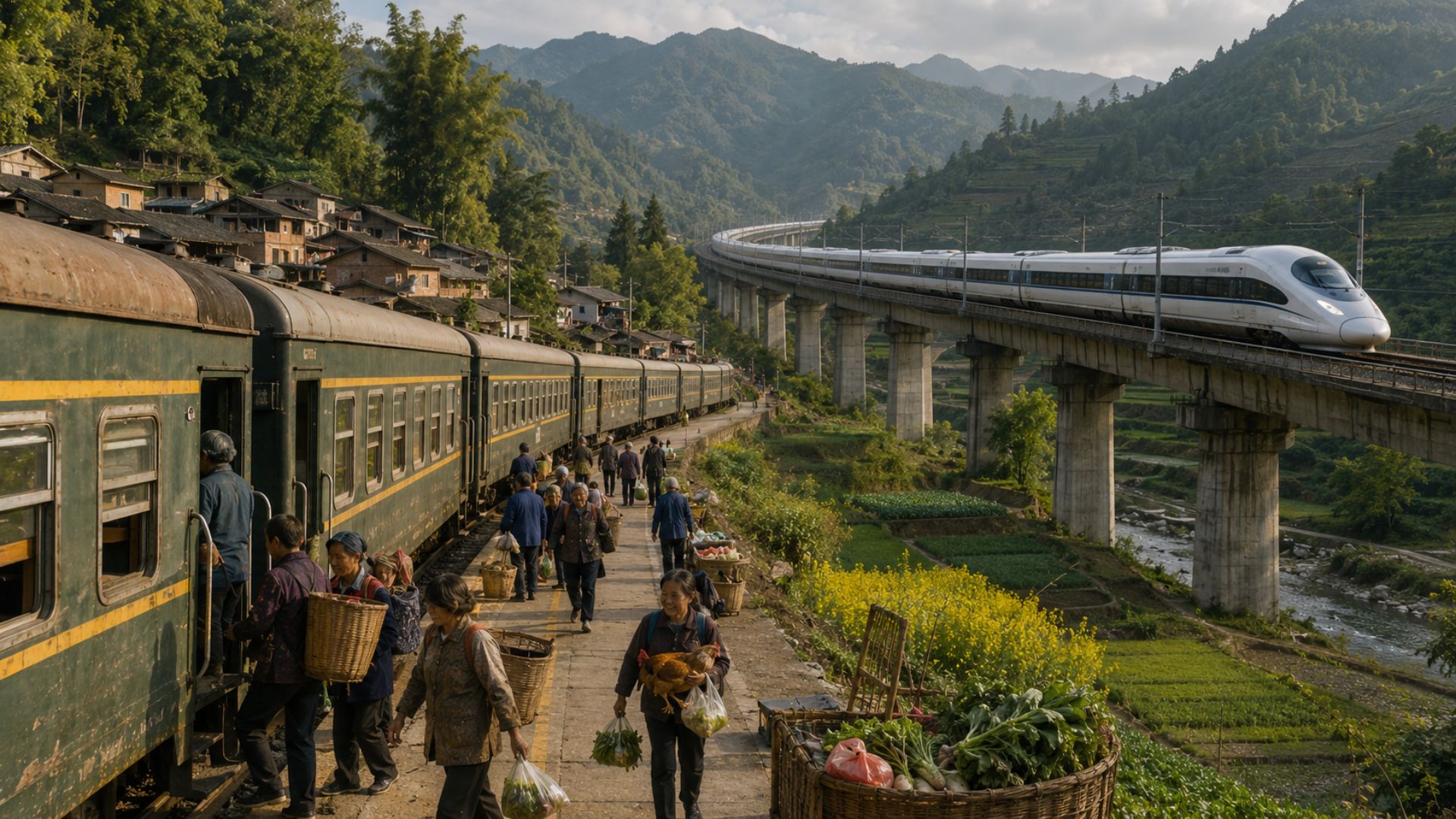
While showcasing bullet trains traveling at over 300 km/h, China maintains about 81 slow train lines that travel at 40 km/h, charge less than R$ 2 for a ticket, and cross remote villages carrying residents, students, and even chickens and vegetables to the market.


According to the SEEG (System of Estimates of Greenhouse Gas Emissions), rail transport can emit up to 88% less CO₂ per ton than road transport.
Why The Railway Is A Priority Now
The road network between Minas and the coastal region of Rio operates at its limit in various stretches.
The daily volume is 250 thousand vehicles on the Fernão Dias, including 5 thousand trailers.
This saturation affects deadlines, raises freight rates, and increases the risk of accidents on one of the busiest corridors in the country.
The Ramal Serra Azul aims to relieve this bottleneck and provide predictability in mineral transport.
Where The Construction Should Act And What It Connects
The route of the new railway was designed to connect mining hubs in Minas Gerais to railway corridors that extend to the coast of Rio de Janeiro.
The link shortens the trip to port terminals in Itaguaí, reducing intermediate steps in truck transportation.
At 26.5 km, it is a strategic branch, designed to integrate existing systems and accelerate the arrival of cargo at the port.
Relief On The Fernão Dias And Impact On Daily Life
Removing 5 thousand trailers daily from BR-381 is expected to improve the flow of cars and buses.
Fewer slow overtakes and fewer queues on critical inclines may reduce delays and stress for those traveling between São Paulo and Belo Horizonte.
The Ramal Serra Azul redirects part of the heavy flow to the rails, relieving a corridor that concentrates personal trips, collective transport, and urban distribution.
Road Safety: What The Numbers Say
From 2021 to 2024, the Federal Highway Police registered more than 7 thousand accidents on the Fernão Dias, with 440 confirmed deaths.
The migration of cargo to the new railway tends to decrease dangerous interactions between light vehicles and trailers in urban and mountainous stretches.
The combination of fewer trucks, better flow, and continuous supervision usually results in fewer collisions and less severity of accidents.
Emissions And Sustainability: The Role Of SEEG
According to the SEEG, the railway emits up to 88% less carbon dioxide per ton transported compared to trucks.
This difference arises from the energy efficiency of trains, which move large volumes with lower consumption per unit of cargo.
By consolidating part of the mineral output on the rails, the Ramal Serra Azul contributes to corporate and public decarbonization goals.
The new railway also reduces brake and tire dust on the surrounding road, a rarely discussed side effect of traditional road transport.
Environmental Licensing And Controversies
The implementation of railway infrastructure in Brazil requires environmental licenses in stages, along with technical studies and public hearings.
Criticism has already been registered for potential impacts on sensitive areas of the route and for debates surrounding a possible pipeline associated with the project.
Environmental organizations demand a clear mitigation schedule, detailing wildlife crossings, vegetation suppression management, and water monitoring.
Without additional public documentation in the original text, it is not possible to inform what the exact stage of licensing is or the conditions already established.
What is clear, however, is that the new railway can only advance with proof of environmental and social viability.
Timeline, Stages And What’s Next
The planning indicates construction starting in 2027 and the beginning of operations in the first half of 2030.
Between these milestones, the project needs to comply with engineering rites, hiring, licensing, and safety tests.
In projects of this scale, it is common for execution to occur in phases, with simultaneous work fronts and progressive commissioning of yards, signaling, and systems.
If the schedule is confirmed, the Ramal Serra Azul may start regular transportation within the announced timeframe.
If there are adjustments, new dates should be communicated in the next phases of official disclosure.
Competitiveness Of The Mineral Sector And Effects On The Economy
Reducing 400 kilometers on the route to the port means less transit time, lower fuel consumption, and fleet optimization.
With the Ramal Serra Azul, shipments become more predictable, improving the operational window at maritime terminals.
This tends to strengthen the competitiveness of Brazilian ore by lowering logistical costs and reducing the risks of delay.
The new railway may also free trucks for regional routes of greater added value, improving transportation availability in other productive chains.
What Changes For Those Living In The Area
Less heavy traffic on BR-381 may reduce noise and local pollution in areas adjacent to the highway.
For neighboring cities, the transition to rails decreases delays at urban access points and facilitates routine travel.
The trade-off involves construction works and sites, which require planning for detours and safety during construction.
The new railway should present social communication programs and service channels for inquiries from residents and entrepreneurs.
Main Points To Remember
- The Ramal Serra Azul is 26.5 km long and aims to remove 5 thousand trailers per day from the Fernão Dias (BR-381).
- Construction is scheduled for 2027 and operations for the first half of 2030.
- The route to Itaguaí is expected to shorten 400 kilometers, increasing the competitiveness of the mineral sector.
- According to the SEEG, the railway may emit up to 88% less CO₂ per ton than trucks.
- There are criticisms regarding potential environmental impacts and discussions about a possible pipeline associated with the project.
The new railway may, in practice, improve safety, emissions, and timelines in one of the busiest corridors in the country.
For you, who frequently use BR-381, what would be the first perceived main benefit: less congestion, more safety, or quicker crossings in urban areas?






Be the first to react!