






 Portuguese
  Spanish


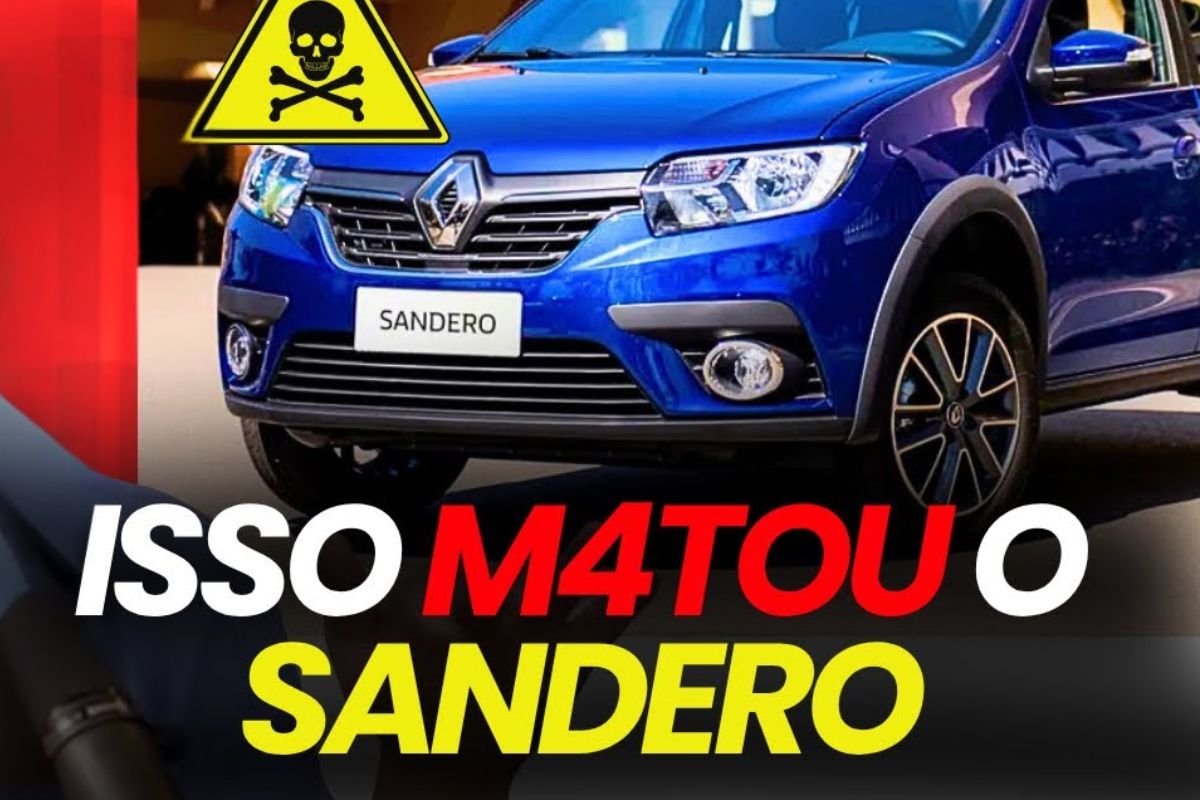


In An Interview In Brazil, The Global CEO Of Renault Revealed That The Sandero And Logan Will Not Return To Stores Because Popular Cars Have Stopped Generating Profit, Reflecting A Global Change Among Manufacturers Towards More Expensive And Profitable Models
The Sandero, one of the best-selling cars in Brazil over the last decade, has been discontinued and is not expected to return. According to the global CEO of Renault, the decision was strategic: the brand no longer intends to produce low-cost vehicles, even if they have high sales volume.
The Renault executive stated that the Sandero and Logan were not generating sufficient profit margins to justify continued production. The company’s focus now is on higher-value cars, following a trend that is already affecting other global manufacturers and may redefine the concept of “popular car” in Brazil.
The End Of An Era: Sandero And Logan Disappear From The Map
The Sandero, launched in 2007, was an immediate success in the Brazilian market, achieving millions of units sold and a constant presence among the most registered vehicles.
-
Does a Flag on Your Car’s Hood Overheat the Engine? Expert Reveals the Overlooked Danger for Drivers

-
How to Identify and Remove Superficial Scratches Before Spending on Car Bodywork

-
Electric Car with Extended Range: Company Patents Hybrid Transmission System Using Gasoline Engine for Backup
-
GM Developed the Chevette to Rival the Beetle, Launched it in Brazil Before Europe, Sold 1.6 Million Units, and Left a Generation with Gas Station Trauma


However, the rise in production costs and the pressure for profitability changed the course of Renault’s strategy.
According to the CEO himself, the brand “does not make money with cheap cars” and decided to end the production of popular models.
The priority now is to concentrate resources on more sophisticated vehicles, such as hybrid and electric SUVs, which offer higher profit margins even with lower sales volumes.
Global Strategy: Less Volume, More Profit
Renault’s decision follows an international trend. Major manufacturers have been abandoning the entry-level segment, considered to yield low financial return.
The reasoning is simple: it’s better to sell fewer units, but with higher profit per car, than to compete for volume in an increasingly tight market.
General Motors and Ford have already taken a similar path.
GM, for example, drastically reduced the production of compact cars and focused its efforts on SUVs and pickups.
Meanwhile, Ford ended its manufacturing operations in Brazil, now operating only as an importer.
The Popular Car That Stopped Being Popular
The concept of “popular car” has also changed.
What was once synonymous with an affordable vehicle, with a 1.0 engine and a price below R$ 40 thousand, today approaches R$ 80 thousand. This has pushed away a large part of the consumers who traditionally sustained this segment.
Even with simple adaptations, such as “Robust” versions and reduced equipment, manufacturers cannot reach the price that the market associates with popular cars.
The result is a vacuum: neither the factories want to produce low-cost cars, nor do consumers afford the new prices.
The Impact On The Brazilian Market
With the end of the Sandero, Renault saw its market share drop from 10% to about 5%.
Still, the brand considers the outcome positive, as it managed to increase profitability per vehicle.
The current focus is to reposition the portfolio, bringing in more technologically advanced models that align with European standards.
This transition, however, raises an important question: is there room for truly affordable cars in Brazil?
As consumer purchasing power shrinks, manufacturers seek financial sustainability in a market that values profit more than volume.
The end of the Sandero symbolizes a profound transformation in the automotive industry.
The car that marked a generation of Brazilians disappears to make way for a new market logic, based on exclusivity and profit margin.
And you, have you ever owned a Sandero, Logan, or another simple car that you miss? Share in the comments which model marked your life and whether you believe there is still space for truly popular cars in Brazil.






Tenho um Sandero 1.6 2014 com 80 mil km e não troco. BBB. Bom, bonito e barato. Modelo europeu é pra Europa!
Tenho um sandero stepway não tenho o que reclamar!
No preço em que elas vendem essas carroças ditas populares (que se populares não tem nada) elas alegam q não tem lucro? Aaaaaaah mentira deslavada! O golpe tá aí, cai quem quer! Quero ver se o mercado delas se sustenta por muito mais tempo com essa tática, sendo que a maioria do público de carros no país não tem condições de comprar esses carros muito mais caros!