






 Portuguese
  Spanish


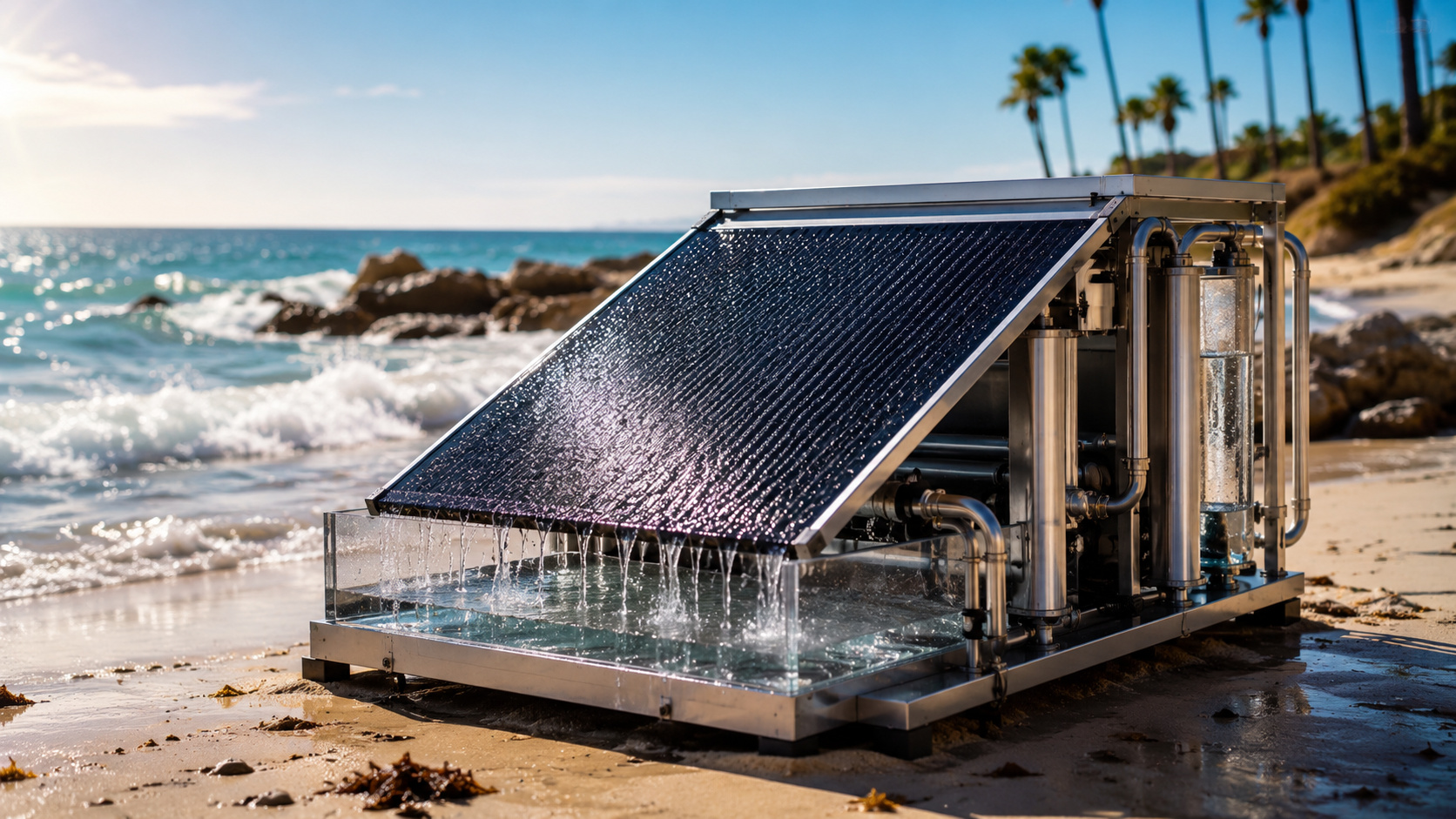

US Scientists Develop System That Transforms Seawater into Potable Water Without Toxic Brine, Bringing Sustainable Advances to the Water Sector.
The shortage of potable water already affects billions of people in different parts of the world, making the search for sustainable solutions a global priority. In this scenario, an innovation developed by researchers at the University of Rochester, in the United States, emerges as a possible answer to one of the greatest challenges in the water sector.
The technology uses solar energy to transform seawater into potable water without generating toxic brine, a residue considered one of the main environmental problems of conventional desalination. Additionally, the system allows for the recovery of valuable minerals present in the water, creating a solution that combines sustainability, efficiency, and economic potential.
The study was published on May 27, 2026, by the University of Rochester News Center and involved the participation of researchers led by the American institution, opening new perspectives for the future of global supply.
-
Brazilian undergraduate builds eco-friendly weed-killing robot, wins $50,000 and starts own startup after beating 95 teams

-
Fervo Energy Adapts Oil Drilling Techniques to Develop Universal Geothermal Energy Solution

-
Brazilian Teen’s Jute Hydro-Sponge Removes 80% of Tire Pollutant Killing Salmon, Wins $75,000 at U.S. Science Fair
-
New Zealand Drills Geothermal Well with Steam Exceeding 400 Degrees, Potentially Revolutionizing Clean Energy


US Scientists Present Solution for One of the Greatest Challenges in the Water Sector
The US scientists involved in the research developed a device capable of converting seawater into potable water using solar energy as the main source of operation.
The key difference lies precisely in the elimination of toxic brine, a problem that accompanies practically all desalination technologies currently in use.
The proposal has the potential to benefit regions facing severe water scarcity, especially coastal areas that have an abundance of saltwater but little availability of water suitable for consumption.
Among the main benefits pointed out by the researchers are:
- Sustainable production of potable water;
- Lower environmental impact;
- Recovery of valuable minerals;
- Possibility of large-scale expansion.


Why has toxic brine become a growing environmental concern?
Desalination plants play a crucial role in various arid regions of the planet. However, traditional technology presents significant environmental limitations.
Conventional systems use processes like reverse osmosis and thermal distillation to separate salts from seawater. Although efficient, they require high energy consumption and produce large volumes of toxic brine.
This highly concentrated waste is often returned to the ocean after treatment, causing environmental impacts that concern scientists and authorities.
The main associated problems include:
- Increased salinity in coastal areas;
- Reduction of oxygen levels in the water;
- Alterations in marine ecosystems;
- Impacts on sensitive aquatic species.
The elimination of toxic brine has thus become one of the main goals of research focused on the water sector.
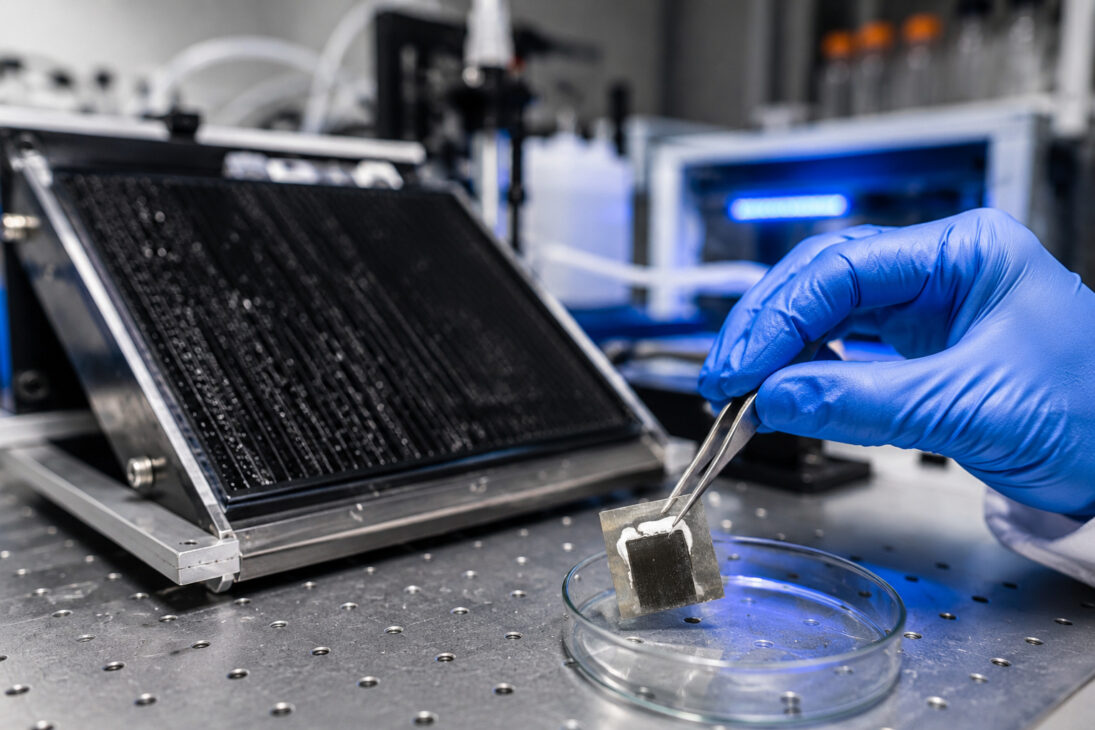
How seawater is transformed into drinking water using solar energy
The equipment created by US scientists uses black metal plates that undergo a special treatment with ultrafast femtosecond lasers.
This process modifies the metal’s surface on a microscopic scale, making the material extremely efficient in absorbing solar light and distributing water.
When seawater comes into contact with these plates, a thin liquid layer forms on the surface. The absorbed solar energy quickly heats this layer, causing the clean water to evaporate.
Subsequently, the vapor is condensed and converted into potable water ready for use.
The system was divided into three distinct regions:
- Active area responsible for solar energy absorption;
- Zone of accelerated evaporation;
- Passive region intended for the accumulation of minerals.
This configuration allows for continuous and efficient operation.
The intelligent mechanism that prevents clogs during desalination
One of the historical obstacles of desalination is related to the accumulation of minerals on evaporation surfaces.
In traditional laboratory tests, researchers used to use only water and sodium chloride. However, real seawater contains a much more complex composition.
Minerals like magnesium and calcium can form dense solid deposits, hindering the operation of the equipment.
To solve this problem, scientists in the USA created microscopic grooves on metal plates. These structures use a phenomenon known as the “coffee ring effect,” directing minerals to specific areas of the equipment.
Thus, the region responsible for evaporation remains clean during operation.
The result is a more efficient system, with less need for maintenance and greater durability.
Seawater can also become a source of strategic minerals
In addition to producing potable water, the new technology offers another important advantage: the recovery of mineral resources.
Instead of generating toxic brine, practically all the dissolved salts in seawater can be collected in solid form.
According to researchers, these materials can be reused in different economic sectors.
Among the recoverable resources are:
- Table salt;
- Industrial mineral compounds;
- Lithium used in batteries.
One of the most relevant results observed in the tests was the recovery of approximately half of the lithium present in the analyzed samples.
This detail is noteworthy because lithium is considered a strategic mineral for the global energy transition, being widely used in the manufacture of electric vehicles and energy storage systems.
The potential of technology to transform the global water sector
Although the equipment is still in the experimental phase, researchers believe the technology has great scalability potential.
In practice, this means that the concept could be expanded for larger applications in the future, serving from small communities to large urban centers.
The advancement is viewed with interest by experts because it simultaneously addresses two global challenges:
- The scarcity of potable water;
- The need for sustainable acquisition of strategic minerals.
Furthermore, the use of solar energy reduces operational costs and decreases dependence on conventional energy sources.
For regions affected by prolonged droughts, this combination can represent a relevant alternative to enhance water security.
Scientists point to a new path to produce potable water with less environmental impact
The work developed by the team at the University of Rochester demonstrates that desalination can evolve into more sustainable and efficient models.
By transforming seawater into potable water without generating toxic brine, the technology presents an innovative solution to a problem affecting billions of people worldwide.
The recovery of minerals, including about 50% of the lithium present in the evaluated samples, further enhances the economic potential of the proposal. Combined with the use of solar energy and the possibility of future expansion, the system emerges as a promising alternative for the water sector.
Although further tests and engineering advances are still needed before large-scale implementation, the results obtained so far indicate that this innovation could contribute to a more sustainable, resilient supply model aligned with the demands of the coming decades.


