






 Portuguese
  Spanish
  5 min of reading
  2 comments


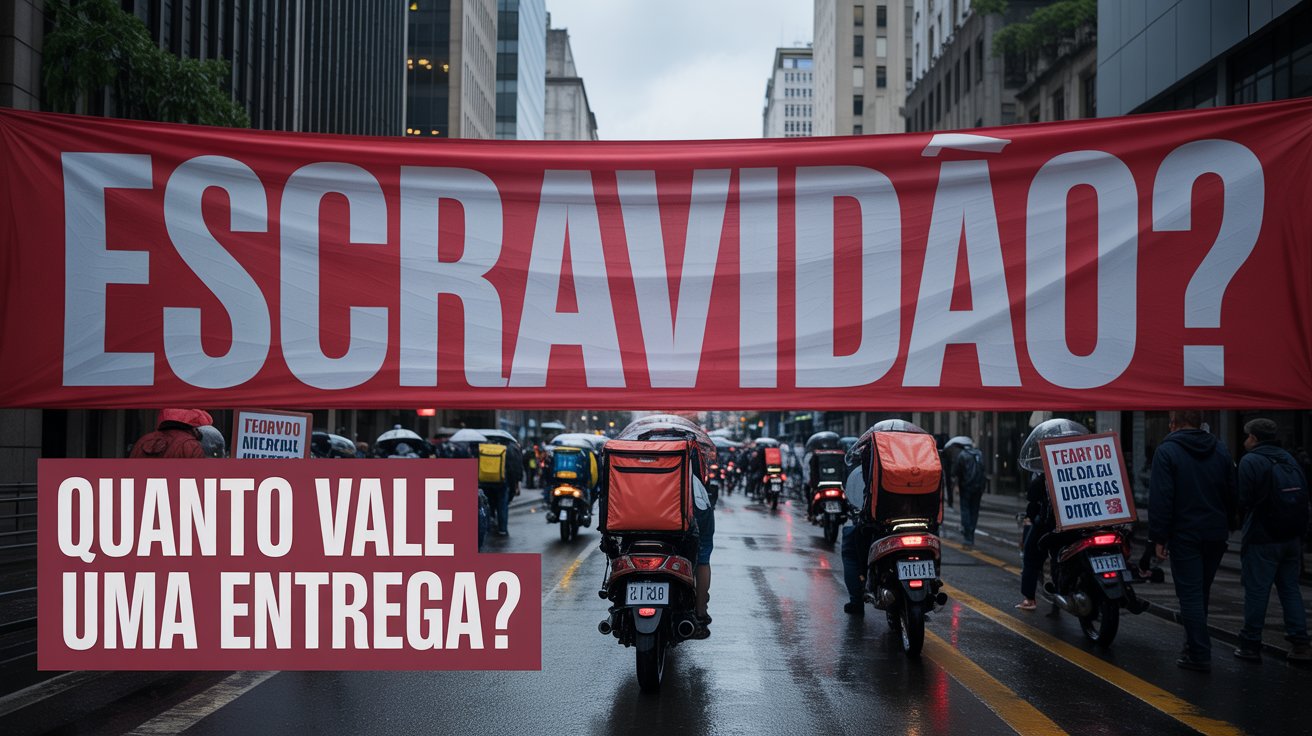

Deliverers’ Protest Exposes Criticisms of the iFood Remuneration Model During Million-Dollar Event in São Paulo, While Workers Demand Better Conditions and Valuation.
App deliverers organized a protest on Tuesday (5) in São Paulo to denounce working conditions and the low amounts paid per delivery, mainly after the emergence of a new model that offers remuneration of R$ 3.50 per order.
The event took place in front of the São Paulo Expo, where the iFood Move was held, an event promoted by the platform itself and aimed at the delivery sector.
Working Conditions of iFood Deliverers
The workers demand the establishment of a minimum amount of R$ 10 per delivery for distances of up to 3 km in the case of bicycles and 4 km for motorcycles.
-
FIRJAN’s mega plan of R$ 526.3 billion for Rio de Janeiro aims to revive Brazil’s largest industry, with two-thirds of the investments going to oil and gas.

-
China signals an increase in beef imports, Brazil has already consumed 70% of the 1.106 million ton quota and seeks to renegotiate the tariff that jumps from 12% to 55%, while demand from the US also skyrockets.
-
Food inflation rose 302% in 20 years in Brazil, but the supermarket changed: purchasing power yielded 87% more mortadella and 31% less fruit, and ultra-processed foods took over the cart.
-
Petrobras sells the first batch of 3,800 m³ of aviation fuel made with certified soy, capable of reducing emissions by up to 70%, in an unprecedented project that anticipates the aviation sector’s requirements expected for 2027.



Currently, according to information from the deliverers themselves, the amounts paid per ride are well below what is being demanded, which has led to mobilizations not only in the city of São Paulo but also in cities such as Campinas, Mogi Guaçu, Sorocaba, Rio de Janeiro, as well as regions in Minas Gerais and Santa Catarina.
The protest was marked by the presence of banners and posters with phrases like “iFood Move Slavery” and “Motoboy Connection for All Neighborhoods”, symbolizing dissatisfaction with current working conditions.
According to the protesters, participation in the iFood event was not open to deliverers, while the mega event gathered about 12,000 people, with tickets costing up to R$ 1,300 per day.
Among the speakers were prominent figures, such as former athlete Usain Bolt.
During the gathering in the parking lot of Plaza Sul Shopping, a few kilometers from the event location, private security, identified as iFood employees, questioned the organizers of the protest about their intentions.
Meanwhile, the app launched promotions offering bonuses of R$ 5 for those who accepted new orders.
Still, the deliverers continued in a motorcycle rally to the event’s location, even organizing a collective barbecue near the entrance.
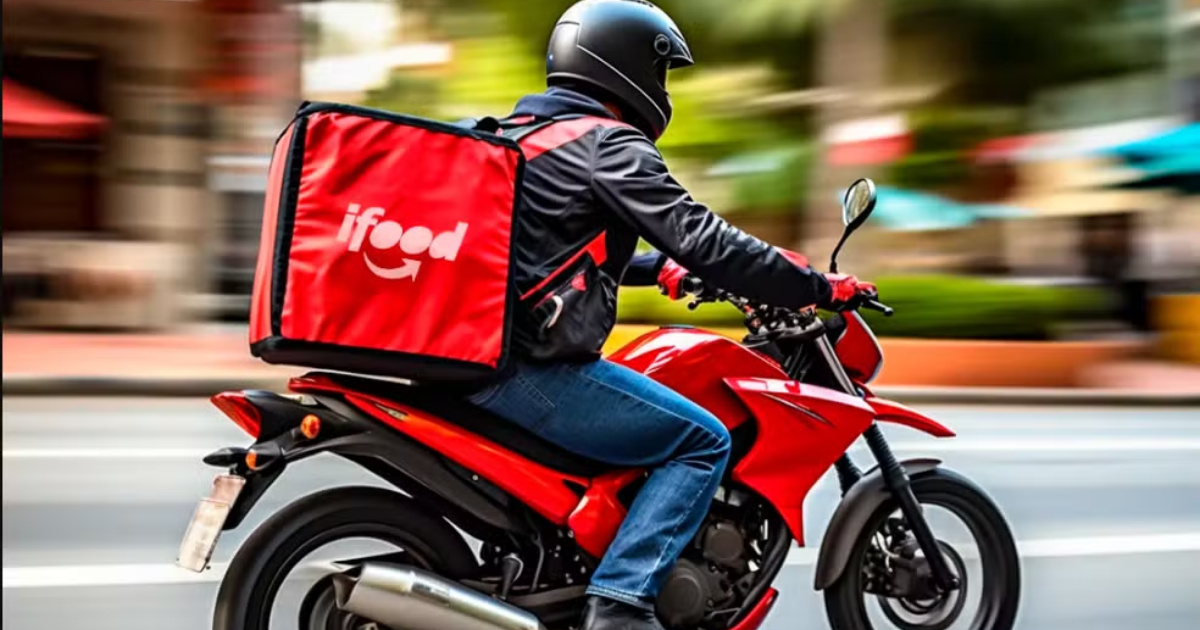
Demands of App Deliverers
The category claims that, despite the growth of the delivery sector and the billion-dollar profit of the company, working conditions remain precarious.
Deliverer João Viktor highlighted:
“What they are really celebrating at this event is the modern slavery of what they call ‘entrepreneurship.’ While they toast with a Supreme Court minister, drink champagne, and whatever else, we, as deliverers, are out here under the sun, in the rain, without a place to use the bathroom, and sometimes even risking our lives.”
Another central point of the protest was the demand for the approval of Bill 2479/2025, presented by federal deputy Guilherme Boulos (Psol), with direct participation from deliverers in drafting the text.
Among the main proposals of the bill are:
- Creation of a minimum fee of R$ 10 per delivery;
- Prohibition of clustering orders for the same deliverer without proportional remuneration increase;
- Requirement for support points with access to drinking water, restrooms, and outlets in high-demand areas.
The workers also criticize the model known as “sub-squares”, already implemented in cities like Curitiba (PR), Recife (PE), and Campinas (SP).
In this system, the deliverer must schedule their working hours, receiving a fixed amount per hour, plus a variable additional amount per delivery.
However, many claim that the amount paid per ride can reach R$ 3.50, an amount considered insufficient to cover basic expenses such as fuel and vehicle maintenance.
Banners and stickers calling for an end to the sub-square model were present at the protest.
iFood Profit and Business Speech
According to information from iFood itself, the company moved R$ 140 billion in the Brazilian economy in 2024, representing about 0.64% of the national Gross Domestic Product (GDP).
During the iFood Move event, panels addressed topics such as “accelerating performance,” “food service trends,” and “turning promotions into profit.”
iFood CEO Diego Barreto took the opportunity to announce the launch of an artificial intelligence called “Cris,” aimed at supporting restaurants, and revealed an investment of R$ 17 billion until March 2026 to expand the company’s ecosystem, focusing on technology and innovation.
Despite the criticisms, Barreto classified the deliverers’ protest as “natural”.
“They have the right to question,” said the executive, adding that “there are several deliverers present at the event.”
He also stated that part of the announced investments will be allocated to the expansion of support points for workers – currently, there are about 400 throughout the country.
Regarding Bill 2479/2025, the CEO of iFood stated that the text still needs to be widely discussed among all parties involved.
Controversy Over Remuneration and the Future of iFood Deliverers
However, deliverers like Renato Assad argue that the company’s discourse about modernization and entrepreneurship does not reflect the reality faced on the streets.
“Behind this advertising aesthetic with a veneer of modernization, what they really hide is the most refined expression of capital. What happens here is a self-promotion spectacle financed by the brutal daily exploitation of our category’s labor force,” he declared.
The discussion over minimum remuneration for app deliverers has mobilized different sectors of society, in addition to pressuring Congress for legislative progress.
After recent protests held in over 70 cities, iFood raised the minimum fee from R$ 6.50 to R$ 7 for deliveries made by bicycle and from R$ 7.50 for motorcycles, amounts still considered insufficient by workers.
The demand for R$ 10 per delivery remains the main claim and central issue of the protests.
The controversy surrounding the app work model raises a fundamental question: what should be the limit between innovation, profit, and decent working conditions for those who drive the digital economy?
Do you believe that the proposed changes are sufficient to ensure rights and fair remuneration for deliverers?







Such valuable 📚 information shared here. Your posts consistently provide real value to community
Senhor Alisson, antes de publicar algo você precisa pesquisar um pouco mais sobre o assunto. Quem fez essa manifestação não foi a classe, quem fez isso foi membro de associações interessados na aprovação da PL 2479/25 a qual a classe é contra. Se puder, faça outra matéria. Abaixo segue o link da petição e nela os motivos pelos quais somos contra. Essas associações querem apenas arrancar dinheiro da categoria através dessa PL perigosíssima que vem travestida de reajustes na tarifa miníma mas cheia de lacunas abertas a exploração.
https://chng.it/BxtBwDGdKS