






 Portuguese
  Spanish
  4 min of reading
  0 comments


The Grande Shanghai, first of a new generation of super ships from the Grimaldi Group, docked at the Port of Itajaí this Wednesday (27) carrying 4,585 electric and hybrid vehicles from BYD. The ship, 220 meters long and 38 meters wide, distributes up to 9,000 vehicles across 14 decks and functions as a giant floating parking lot. According to information from the NSC portal, among the differentials of Grimaldi’s super ships are 2,500 square meters of solar panels, lithium batteries, and technologies that reduce fuel consumption by 50% per transported unit compared to the previous generation.
One of the most advanced super ships in the world has just unloaded nearly 5,000 BYD electric cars at the Port of Itajaí, in Santa Catarina. The Grande Shanghai, from the Grimaldi Group of Naples, is the first of a new generation of vehicle carriers that combines massive cargo capacity with cutting-edge environmental technology. The ship is 220 meters long, 38 meters wide, and distributes up to 9,000 vehicles across 14 decks, functioning as a floating parking lot that crosses oceans carrying thousands of automobiles from one continent to another.
The Grande Shanghai is one of the super ships that represent a technological breakthrough in maritime vehicle transport. The vessel features 2,500 square meters of solar panels installed on the upper deck, lithium batteries for energy storage, and a shore power supply system that allows the engines to be turned off during docking. Compared to the previous generation of Grimaldi ships, the super ships reduce fuel consumption per transported vehicle by 50%, an advancement that earned the Grande Shanghai the Shippax RoRo Award 2026, one of the main international awards in the maritime sector.
The numbers of the Grande Shanghai and Grimaldi’s super ships

The Grande Shanghai was delivered in 2025 and had its christening ceremony on July 21, in the city of Haimen, China. The ship is the first in a series of super ships that Grimaldi ordered to renew its fleet of vehicle carriers, betting on clean technology and expanded cargo capacity to meet the growing demand for China’s electric car exports.
-
Ports without drivers and cabins already move containers like automated factories: robotic cranes, autonomous electric vehicles, and software transform giant terminals into 24-hour logistics machines.

-
About 300 American ports still breathe diesel from trucks, cranes, and locomotives, but they are now trying to electrify heavy machinery to clean the air for 31 million nearby residents.

-
The Port of SC has just entered the direct route to the largest hubs in Northern Europe with a new line from Maersk, gains a connection with Manaus in 13 days, and is preparing dredging to receive giant ships of up to 16,000 containers.

-
Empty containers coming from China are crowding U.S. ports, taking up space for new cargo and creating a logistical paradox where farmers need boxes while thousands of them remain idle near the sea.
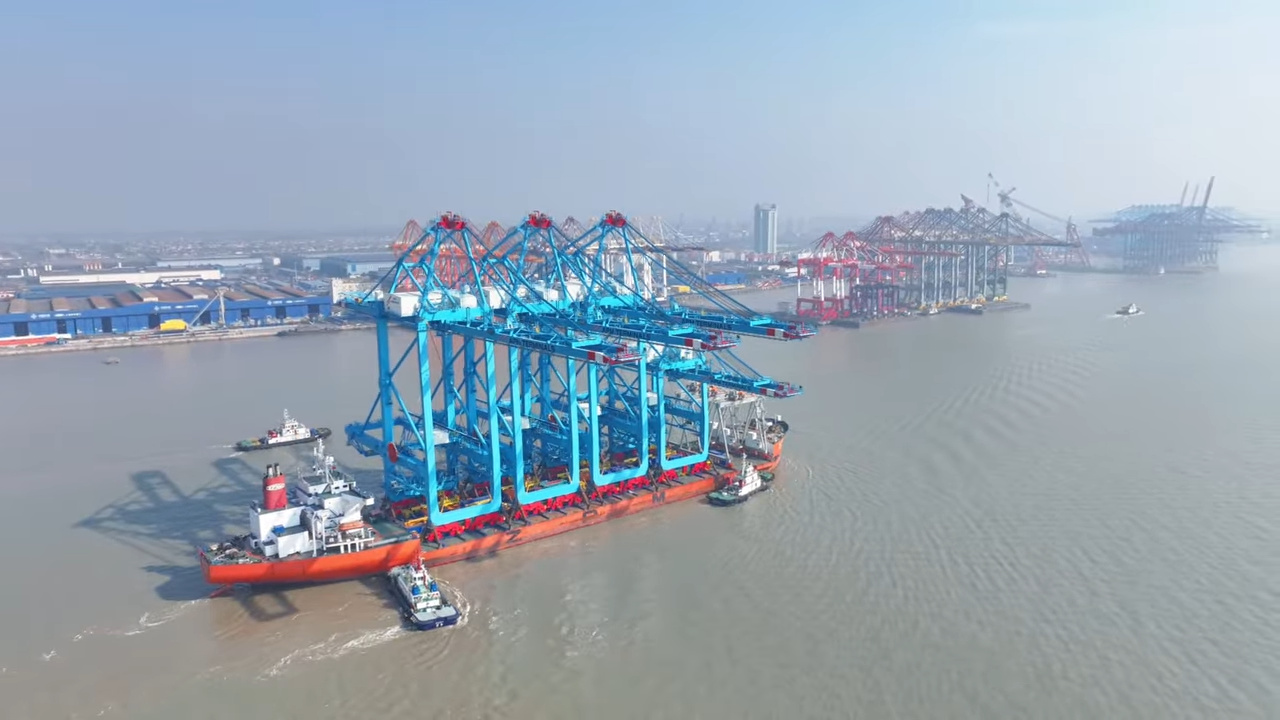


The total capacity is 9,000 vehicles distributed across 14 decks, including electric models and those powered by traditional fuels. The first commercial voyage of the super ships took place in September 2025, departing from the port of Taicang, China, bound for Mombasa, Kenya, and Dar es Salaam, Tanzania. Before reaching Itajaí, the Grande Shanghai had already passed through ports in Belgium and Tanzania, demonstrating the global reach of Grimaldi’s super ship route.
The operation of nearly 5,000 BYD cars in Itajaí

BYD unloaded 4,585 electric and hybrid vehicles at the Port of Itajaí on Wednesday night. The operation began at 7 PM and involved about 150 workers and 90 car carrier trucks, with the unloading conducted by JBS Terminals in a logistical scheme designed to ensure agility in the exit and transport of the vehicles.
Before the arrival of the super ships, the Port of Itajaí had already handled 2,928 vehicles in ro-ro operations in 2026. With this scale and another scheduled for June, when the ship Changsha will bring an additional 7,200 units, the expectation is that the terminal will reach about 14,713 vehicles handled in this type of operation by the end of the year. The port superintendent, Artur Antunes Pereira, stated that the operation “demonstrates the Port of Itajaí’s ability to carry out large-scale operations with safety, efficiency, and planning.”
The technology that makes the super ships different
The Grande Shanghai is not just large, it is technologically distinct. The 2,500 square meters of solar panels on the deck generate energy that complements the onboard system, and the lithium batteries store this surplus for use during port maneuvers and loading and unloading operations, reducing the need to keep the main engines running.
The shore power supply system allows super ships to connect to the port’s electrical grid during docking, completely eliminating emissions while the ship is stationary. The combination of these technologies with an optimized hull and state-of-the-art engines is what allows for a 50% reduction in fuel consumption per vehicle transported, a figure that Grimaldi highlights as proof that scale and sustainability can go hand in hand.
What the arrival of super ships means for Itajaí
The mayor of Itajaí, Robison Coelho, highlighted that the automobile import ships “are extremely positive for the city’s economy, they are high-value-added cargoes that directly impact job creation and strengthen an important niche within the port segment.” The movement of super ships like the Grande Shanghai positions Itajaí as a hub for electric vehicle imports in the South of Brazil, diversifying a port that is historically associated with containers.
BYD returns in June with the ship Changsha to unload another 7,200 units, and the expectation is that the total volume of vehicles moved in 2026 will set a new record for the terminal. For the city, each operation with super ships generates temporary jobs in unloading, transportation, and logistics, in addition to reinforcing the port’s image as capable of receiving the largest and most modern ships in the world.
Did you know that a 220-meter ship with solar panels and 14 floors of cars just docked in Itajaí? What impresses you most about the super ships: the capacity of 9,000 vehicles, the 50% fuel reduction, or the lithium batteries? Tell us in the comments.


-

1 person reacted to this.