






 Portuguese
  Spanish


Complex manufactured in China will be assembled in the province of San Juan to support the Vicuña project, one of Argentina’s largest copper, gold, and silver ventures
Argentina is set to receive a modular city manufactured in China to house thousands of workers linked to the Vicuña project, a mega mining project located in the province of San Juan, in a remote region of the Andes Mountains. The structure will be used as an operational base for employees working on one of the country’s largest mineral ventures.
The initiative draws attention because it is not just a common construction accommodation. The plan involves residential modules, dining areas, offices, service spaces, and support structures capable of forming a small temporary city in the mountains.
In its first phase, the Batidero complex is expected to have a capacity for about 2,500 people. With the typical mining shift system, the circulation of workers could reach between 3,500 and 5,000 people, a number that explains the comparison to a city built from scratch.
-
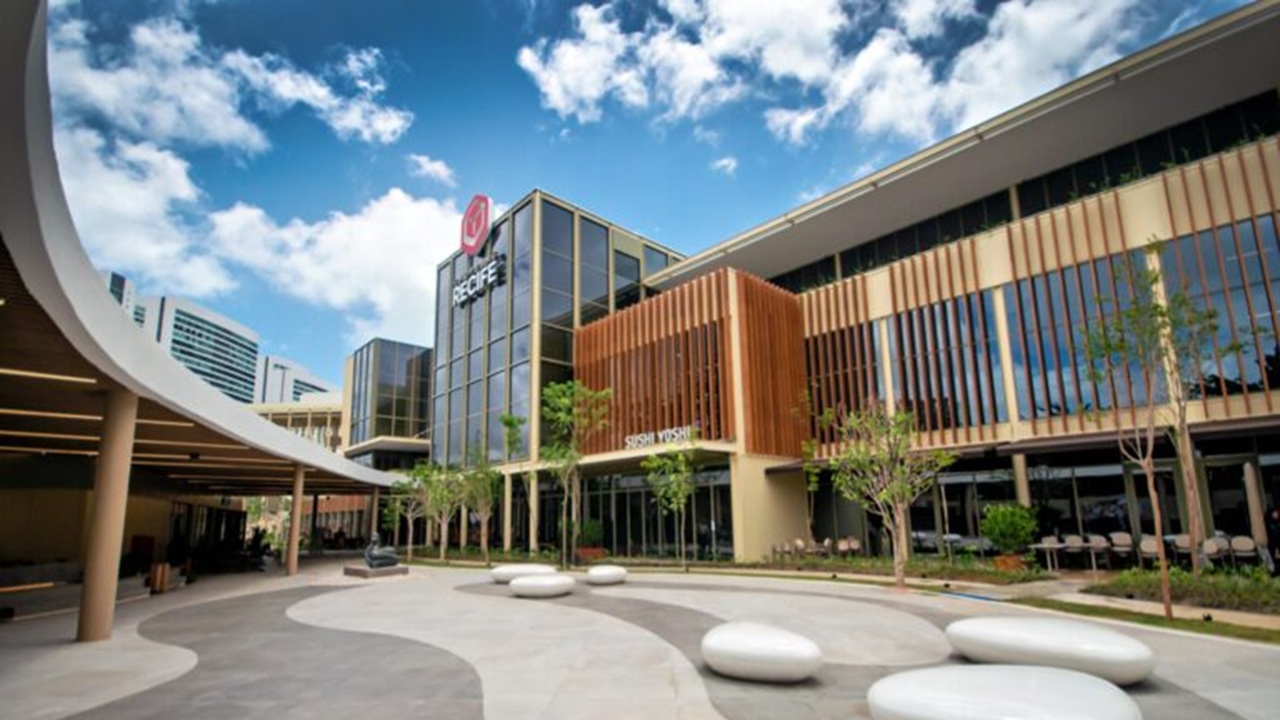
Opened in 1980, Shopping Recife was Pernambuco’s first mall and helped transform Boa Viagem into a bustling and sought-after district in southern Recife.

-
Tired of Monthly Water Supply, South African Villagers in Limpopo Connect Mountain Spring to Taps, Bringing Water to 5,000 People with $700 Initiative

-
Rare Case of Neurocysticercosis in Spain: 60-Year-Old Man’s Suspected Brain Cancer Turns Out to Be Tapeworm Cysts, Avoiding Invasive Cancer Treatments

-
Horse Trailer from 2000 Transformed into Mobile Home with Bed, Kitchen, Bathroom, and Workspace in Upcycling Project



The information was published by iProfesional and public data from the companies involved in the project. The case also reignites a well-known discussion in Latin America, involving foreign investment, imported infrastructure, local job creation, and environmental risks.
Modular city in the Andes will be the base for workers of the Vicuña project
The structure will be installed in the San Juan region, in western Argentina, in an area of difficult access and high altitude. This type of enterprise requires its own logistics, as roads, housing, food, occupational health, and transportation need to function even before the mine is fully operational.
The modules will be manufactured in China and sent ready for assembly. The proposal is to reduce implementation time and allow dormitories, dining halls, offices, and social areas to be installed quickly, without fully relying on conventional constructions on site.
This model has been used in large mining, energy, and infrastructure projects in remote regions. Instead of bringing materials and building everything from scratch on site, companies opt for pre-fabricated units, which arrive in standardized parts and are assembled like blocks.
On April 28, 2026, the Justice of the province of San Juan allowed the continuation of the Vicuña project after a suspension determined days earlier by a decision in La Rioja, related to access and environmental discussion around the area. The decision helped unlock an important stage of the enterprise, which brings together the Filo del Sol and Josemaría deposits and is seen as one of Argentina’s major bets to return to the international copper market.
In the Argentine case, the choice for the Chinese solution gained attention because of the size of the project and the scale of the accommodation. The expression “city” became popular because the complex will have basic services, intense circulation of workers and capacity similar to that of small municipalities.
Copper Megaproject Targets One of the Largest Unexplored Reserves in the World


The Vicuña project is controlled by a joint venture formed by the Australian BHP and the Canadian Lundin Mining. The operation brings together the Josemaría and Filo del Sol assets, deposits of copper, gold, and silver located between the Argentine province of San Juan and the Chilean region of Atacama.
Copper mining has gained strategic importance because the metal is essential for electrical grids, electric cars, solar panels, turbines, and energy transmission systems. With the energy transition, countries with large reserves have started competing for billion-dollar investments.
Argentina itself sees the project as an important piece to return to the global copper map. The country stopped producing copper on a relevant scale after the closure of the Alumbrera mine in 2018 and is trying to attract new investments to expand mineral exports in the coming years.
The first phase of Vicuña is treated as a high-investment stage, focusing on infrastructure, access, processing plant, and land preparation. If it progresses as planned, the enterprise could transform San Juan into an even more relevant hub for South American mining.
Why China Appears at the Center of This New Structure
China enters the project as a supplier of the modular city, not as the main owner of the mine. The Chinese participation is linked to the manufacturing of the housing and operational units that will form the support complex for the workers.
This detail is important because it prevents an exaggerated interpretation of the news. What will be built is a modular city to support mining, designed to house employees in shifts, not a traditional city with permanent residents, common neighborhoods, and its own public administration.
Even so, the Chinese presence in supplying the structure reinforces the country’s industrial strength in prefabricated solutions. China has established itself as a major producer of metal modules, industrial accommodations, construction site units, and rapid structures for large projects.
For mining companies, the appeal is speed. In mountainous regions, each month of delay can increase costs, compromise schedules, and hinder the arrival of teams. Therefore, a ready and standardized structure can be decisive in accelerating the pre-construction phase.
Local jobs enter the center of the dispute
The promise of thousands of workers boosts the economy of San Juan and raises expectations among suppliers, transportation companies, food services, maintenance, security, services, and regional commerce. Projects of this magnitude usually create a hiring chain beyond the mine.
At the same time, there is concern about the participation of the local industry. When entire modules come ready from abroad, part of the manufacturing ceases to occur in the country receiving the project. This can generate criticism from Argentine companies that could provide structures, parts, labor, and services.
The discussion is not simple. For proponents of the model, importing the modules can reduce costs and accelerate investment. For critics, the country risks receiving the mine and its impacts but losing a significant part of the industrialization associated with the project.
This is a sensitive point for Latin American countries rich in natural resources. The recurring question is whether the region will only be a supplier of raw minerals or if it will also be able to develop technology, engineering, qualified jobs, and local suppliers.
Environmental impact and water also pressure the advancement of mining
Besides the economy, the Vicuña project faces environmental scrutiny for being located in the Andean area, close to sensitive regions of great water importance. High-altitude mining requires rigorous planning to reduce risks to water, soil, waste, and machine circulation.
The debate on mining in Argentina gained momentum after discussions involving laws protecting glaciers and periglacial areas. These regions are strategic because they function as natural water reserves and supply communities in dry zones.
Companies in the sector claim that modern projects follow environmental standards, require licensing, and adopt control measures. Still, environmental organizations and local communities often demand broader studies, independent oversight, and transparency about water use.
In the case of Vicuña, the challenge will be to prove that the expansion of mining can occur without compromising essential natural resources. The presence of a modular city for thousands of workers further increases the need for waste management, sanitation, energy, security, and transportation.
What this project shows about the new race for critical minerals
The modular city in the Argentine Andes is more than a curious construction. It shows how the global race for critical minerals is driving large companies to remote regions, where infrastructure needs to be created almost from scratch to enable operations.
Copper, lithium, nickel, rare earths, and other minerals have come to occupy a central place in the global economic competition. Without these inputs, the expansion of electric cars, batteries, power grids, and clean technologies is limited.
South America appears in this scenario as a decisive territory. Argentina, Chile, Peru, and Brazil have strategic natural resources but face the challenge of transforming mineral wealth into local development, revenue, lasting jobs, and environmental protection.
The Argentine case also serves as a warning to other countries in the region. Large investments can generate opportunities but also raise questions about external dependency, local hiring, oversight, environmental impact, and the division of economic benefits.
Project can transform San Juan, but still depends on decisive stages
Despite the infrastructure progress, Vicuña still needs to complete technical, environmental, financial, and regulatory stages. Large mining projects do not enter operation just by building accommodations, as they depend on licenses, studies, access works, and final investment decisions.
The expectation is that the enterprise will help reposition Argentina in the international copper market. For this, it will be necessary to overcome logistical bottlenecks, ensure legal security, maintain dialogue with communities, and ensure that the operation is viable in the long term.
The modular city manufactured in China is, therefore, a sign of scale. When a company needs to prepare accommodation for up to 5,000 workers, it means that the project has moved from the realm of generic promise to requiring real structure in the territory.
The controversy, however, is likely to continue. For some, the construction represents jobs, investment, and a chance for development in a remote region. For others, it is yet another example of how mineral-rich countries can become dependent on external technology and exposed to environmental impacts that are difficult to reverse.


