Portuguese
  Spanish


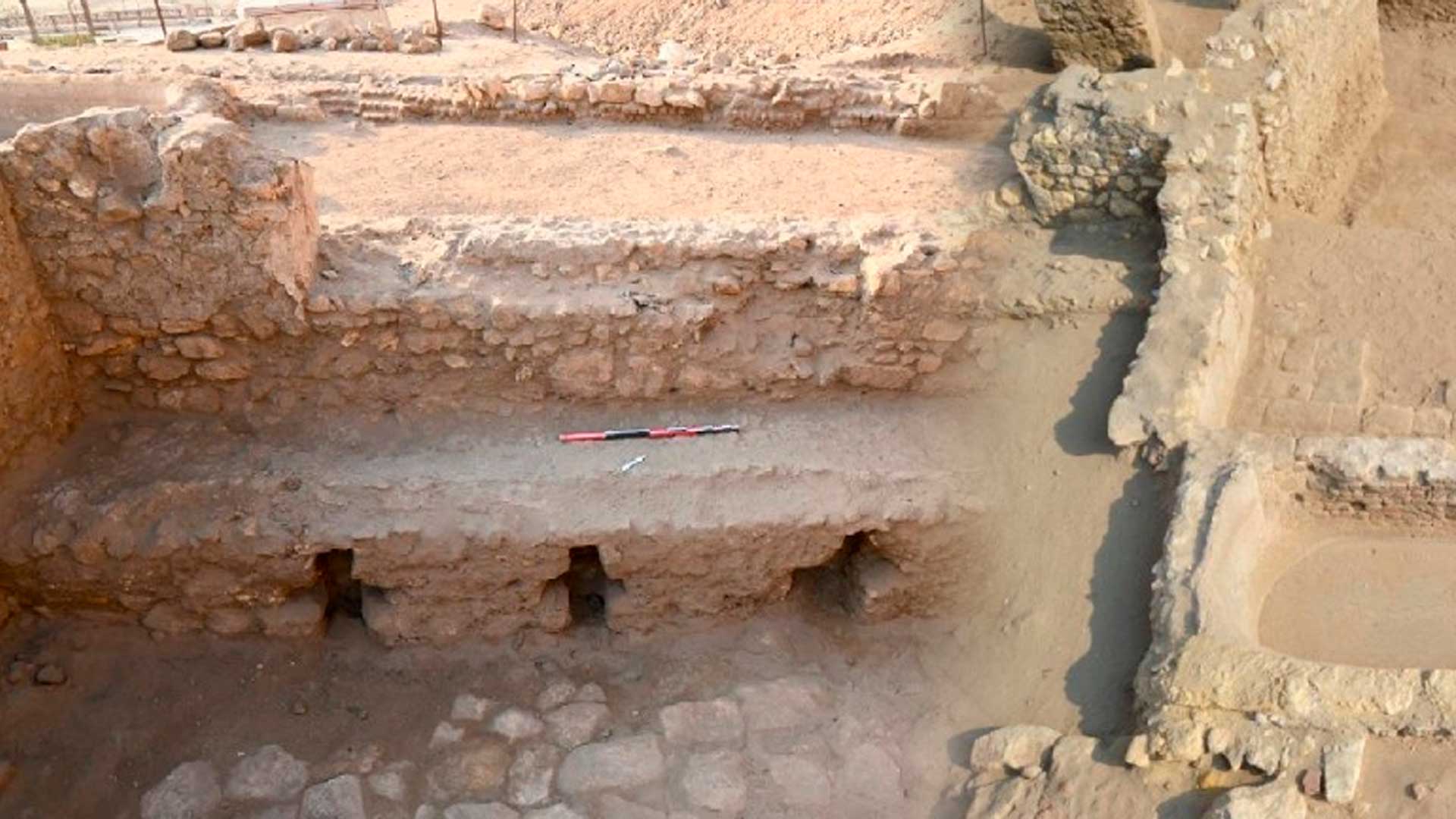

Discovery in historic Cairo reveals a medieval water infrastructure that supplied the Citadel of Saladin and shows that there are still important parts of the city preserved under current neighborhoods
An archaeological excavation near the Citadel of Saladin in Cairo has revealed a little-known part of medieval Egypt’s urban engineering. The find includes a Mamluk-era water supply system, remains of a mosque, Islamic burials, and objects related to the daily life of the ancient city.
The discovery was made in the historic neighborhoods of Arab al-Yasar and al-Hattaba, in an area linked to the surroundings of the fortress that for centuries concentrated military, political, and administrative power in Egypt. The work brings together Egyptian and French archaeologists in a documentation project, excavation, and preservation of historic Cairo.
The most striking point was the presence of deep wells, water wheels, and stone channels that helped transport water to the Citadel. For researchers, the structure may reveal the final stage of an ancient hydraulic system that did not clearly appear in known historical sources.
-
Cold War Secret Plane Lost Engine Mid-Flight, Forcing Six to Parachute in Darkness; Wreckage Remains in Death Valley Mountains 73 Years Later

-
Opened in 1980, Shopping Recife was Pernambuco’s first mall and helped transform Boa Viagem into a bustling and sought-after district in southern Recife.
-
Tired of Monthly Water Supply, South African Villagers in Limpopo Connect Mountain Spring to Taps, Bringing Water to 5,000 People with $700 Initiative

-
Rare Case of Neurocysticercosis in Spain: 60-Year-Old Man’s Suspected Brain Cancer Turns Out to Be Tapeworm Cysts, Avoiding Invasive Cancer Treatments





More than an isolated discovery, the find shows how the Egyptian capital depended on a complex technical network to maintain palaces, military areas, neighboring communities, and religious spaces. Water, in this case, was not just a basic resource but an essential part of the organization of one of the most important cities in the medieval Islamic world.
Mamluk-era water system was buried near one of Egypt’s most important fortresses
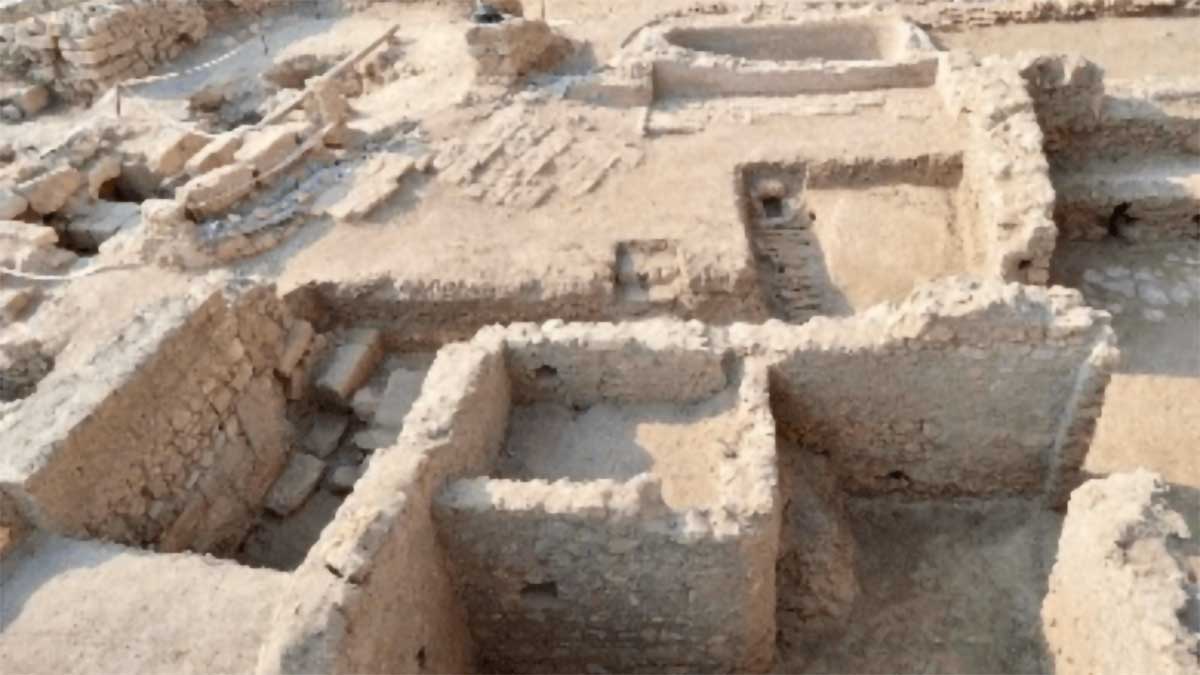
The excavated area is close to the Citadel of Saladin, a fortress started in the 12th century and transformed over the centuries by different dynasties. During the Mamluk era, between 1250 and 1517, Cairo experienced a phase of great architectural expansion, with mosques, madrasas, mausoleums, palaces, and infrastructure works.
In the neighborhood of Arab al-Yasar, archaeologists found two large wells constructed with stone blocks. One of them is about 10 meters deep, while the other reaches approximately 8 meters, and the excavations are still seeking to identify lower reservoirs associated with these structures.
These wells did not work alone. They were part of a network with four water wheels and stone channels, elements used to raise and conduct water to higher areas, especially towards the Citadel, which dominated Cairo’s landscape from an elevated position.
Water wheels, channels, and areas for animals show how medieval engineering functioned in daily life
The discovery did not reveal only monumental parts of the system. The archaeologists also found structures associated with the daily operation of the hydraulic network, such as paths used by animals, shelter spaces, areas for storing fodder, water tanks, and stone-paved surfaces.
These details help to understand how the infrastructure operated in practice. The water wheels were probably moved by animals, which walked in defined paths to activate mechanisms capable of raising water from the wells and sending it through channels.
The system seems to be connected to the famous Cairo aqueduct, known as Magra al-Oyoun or Sur Magra al-Oyoun. This historic work transported water to different areas of the city and played a decisive role in supplying the Citadel and its surroundings.
The importance of the find lies precisely in the now-revealed section. The excavation may have identified, for the first time, the final phase of the hydraulic system that carried water to the Citadel, a part that was not well documented in preserved historical records.
Buried Mamluk mosque enhances the religious importance of the discovery
In the al-Hattaba neighborhood, the archaeological mission also found remains of a mosque from the Mamluk era. Among the preserved elements are the mihrab, which indicates the direction of Mecca, parts of the prayer area facing the qibla, sections of an arcade, and parts of the original stone floor.
The presence of the mosque shows that the surroundings of the Citadel were not just a technical or military zone. The region combined religious, residential, administrative, and funerary functions, composing a more complex urban space than a simple support area for the fortress.
Near the mosque, a funerary chamber and several tombs from different Islamic periods were found. One of the burials may belong to the early Islamic era, suggesting prolonged occupation of the area and reinforcing the idea that the site went through various phases of use.
This overlapping of layers is common in ancient cities continuously inhabited. In Cairo, buildings, cemeteries, hydraulic works, and circulation routes accumulated over the centuries, often becoming buried under new constructions and urban renovations.
Found objects help reconstruct common life in medieval Cairo
In addition to architectural structures, the excavation recovered pieces that help tell the everyday history of the region. Among the finds are ceramic containers used in water lifting mechanisms, Mamluk and Ottoman coins, jewelry, metal seals, and household objects.
Fragments of weapons and materials associated with the 18th and 19th centuries were also found. These items indicate that the area continued to be used and transformed even after the end of Mamluk rule, spanning the Ottoman period and later phases of Egyptian history.
The coins and everyday objects are important because they help date archaeological layers and identify human activities at the site. They reveal economic circulation, work practices, resident presence, administrative functions, and possible military uses.
The discovery was announced on June 6, 2026, by the Egyptian Ministry of Tourism and Antiquities, as part of a joint project involving the Supreme Council of Antiquities and the French Institute of Oriental Archaeology. The initiative includes archaeological excavation, digital documentation, technical training, and the creation of detailed records for future research.
Discovery reinforces Cairo’s historical significance as a world heritage site
Historic Cairo has been recognized as a World Heritage Site by UNESCO since 1979 and houses some of the most important examples of medieval Islamic architecture. The city preserves marks from the Tulunid, Fatimid, Ayyubid, Mamluk, and Ottoman periods, forming a rare urban ensemble due to the quantity and diversity of monuments.
The Citadel of Saladin played a central role in this process. Built as a strategic fortification, it became the seat of government and a symbol of power for centuries, undergoing expansions, renovations, and new constructions in different periods.
The Mamluk era was one of the most remarkable phases of this transformation. Mosques, mausoleums, religious schools, palaces, and public works began to occupy areas near the city’s political center, helping to create the urban landscape that still defines much of historic Cairo today.
The new discovery shows that the grandeur of the period was not only in the visible monuments. The water system found beneath the current neighborhoods reveals a silent engineering, necessary to sustain the functioning of the fortress, nearby communities, and religious spaces.
Digital recording can transform the way of studying the Citadel of Saladin


The archaeological project also invests in modern documentation, with three-dimensional models, technical photography, architectural surveying, and a database on the Citadel and its surroundings. This type of record helps preserve information even when structures are fragile or difficult to keep exposed.
The team also documented tombs from the Mamluk and Ottoman periods, as well as architectural remains in nearby areas. This collection may allow new interpretations about circulation, water supply, religious occupation, and urban development around the fortress.
Another relevant point is the training of Egyptian inspectors in modern excavation and documentation methods. This type of training strengthens local preservation and reduces the risk of information loss in dense urban areas, where archaeological heritage coexists with real estate pressure, tourism, and rehabilitation works.
The discovery still has to go through new stages of study. As excavations continue, researchers may find lower reservoirs, new hydraulic connections, or more elements capable of explaining how water reached the internal sectors of the Citadel.
What the discovery changes about the history of ancient Cairo
The finding changes the understanding of medieval Cairo’s infrastructure because it fills an important gap between the historical aqueduct and the Citadel. Previously, part of this path was known through monuments and records, but the final stretch of the supply remained less clear.
Now, the presence of wells, water wheels, channels, work areas, and structures for animals shows a planned, robust, and integrated system. This reinforces the idea that political power in Cairo also depended on sophisticated technical solutions capable of sustaining an elevated fortress and its surroundings.
The discovery also enhances Islamic archaeology, often less remembered by the public than Egypt’s pharaonic finds. Although pyramids and royal tombs continue to fascinate the world, medieval Cairo holds essential clues about urbanization, supply, religion, commerce, and daily life.
In the end, what was hidden beneath Cairo’s historic neighborhoods was not just an ancient waterwork. It was a part of the real functioning of the city, a system that connected engineering, faith, power, and survival in one of the most influential capitals in Islamic history.