






 Portuguese
  Spanish
  2 min of reading
  1 comment


USC Rocket Propulsion Lab Project Reached Impressive Altitude of 143,300 Meters and Speed Mach 5.5 with Student-Made Rocket.
The Aftershock II, a rocket made by students from the USC Viterbi School of Engineering, achieved a historic feat by breaking world records for altitude and speed for non-commercial or governmental projects. The launch took place in the Black Rock Desert in Nevada, marking an unforgettable moment in the history of student engineering.
What Makes the Aftershock II So Special?
Developed by a group from the Rocket Propulsion Lab, the student-made rocket reached an incredible altitude of 143,300 meters above the Earth’s surface and achieved a speed of 5,800 km/h (or Mach 5.5). At 4 meters tall and 150 kg, it surpassed the previous record, held by a Chinese project since 2004.
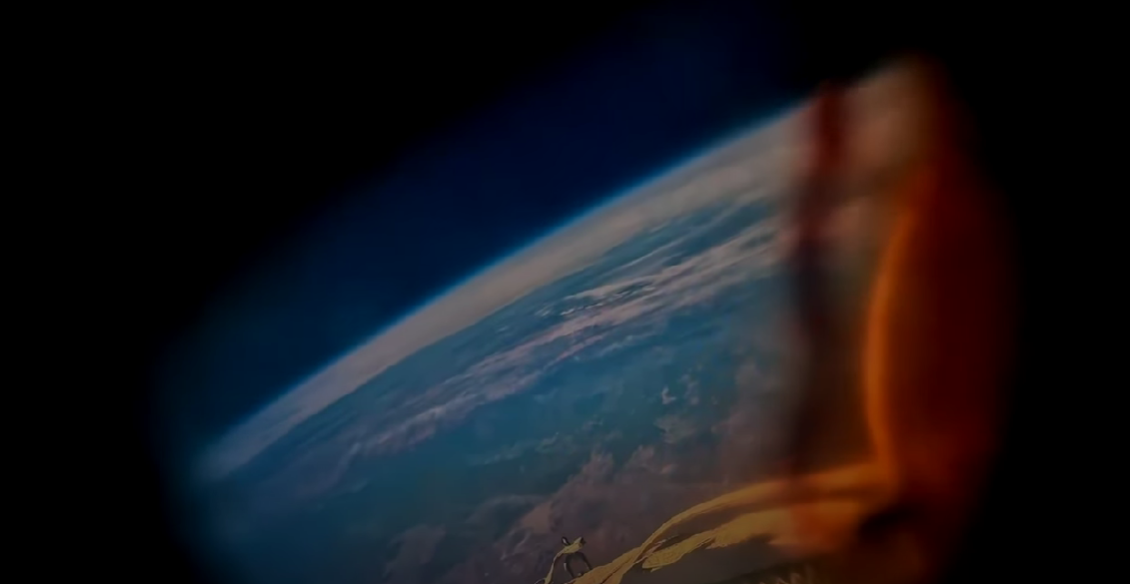
More than just impressive numbers, the Aftershock II was designed almost entirely by students, with minimal guidance from professors. This includes everything from the solid fuel system to the electronic module, called HAMSTER (High Altitude Module for Sensing, Telemetry, and Electronic Recovery), which monitored the flight in real-time.
-
Fragment of the Moon found in Africa holds a mark of a giant impact from 3.5 billion years ago and may reveal what the solar system was like when life was beginning to emerge on Earth.

-
Alexa+ arrives in Brazil with generative AI in the ChatGPT style, promises to understand even the Brazilian way, costs R$ 99.90 outside of Prime, and can transform Amazon’s old assistant into a smart hub for conversations, tasks, connected home, emails, and even Uber requests.
-
Scientists are studying the creation of toothpaste from human hair capable of reconstructing tooth enamel: keratin forms a crystalline layer similar to natural protection and could change the fight against cavities in dentistry.

-
Maritime engine without diesel receives international certification and can deliver pure hydrogen to ships with power up to 2,670 kW, without CO₂, without sulfur, without soot, and with exhaust composed of water vapor.




Cutting-Edge Technology in a “Home-Made” Rocket
The Aftershock II is an example of how innovation can emerge from university projects. Among its differentiators are the titanium fins, which ensured stability at high speeds, and a heat-resistant paint that protected the rocket during the intense heat generated during ascent.
Additionally, the smart design allowed for the successful recovery of the last stage, thanks to the integrated parachute. Now, the data obtained will be analyzed so that the team can, in the future, surpass their own records.
More Than a Record, an Inspiration
The Aftershock II represents the pinnacle of creativity and determination of young engineers. For the group of students at USC, the student-made rocket is not just a record holder, but a milestone of how ambitious ideas and hard work can open new horizons in astronomy and space exploration.
The team already has plans to improve the project and return to the Black Rock Desert for a new test. If their dedication so far is any indication, the next record will also be theirs.






Eo campo de batalha só interessa a vitóriaaaa é vençer e vençer e vençer eu venço sergioguedes,tecnologia escadinha