






 Portuguese
  Spanish
  5 min of reading
  0 comments


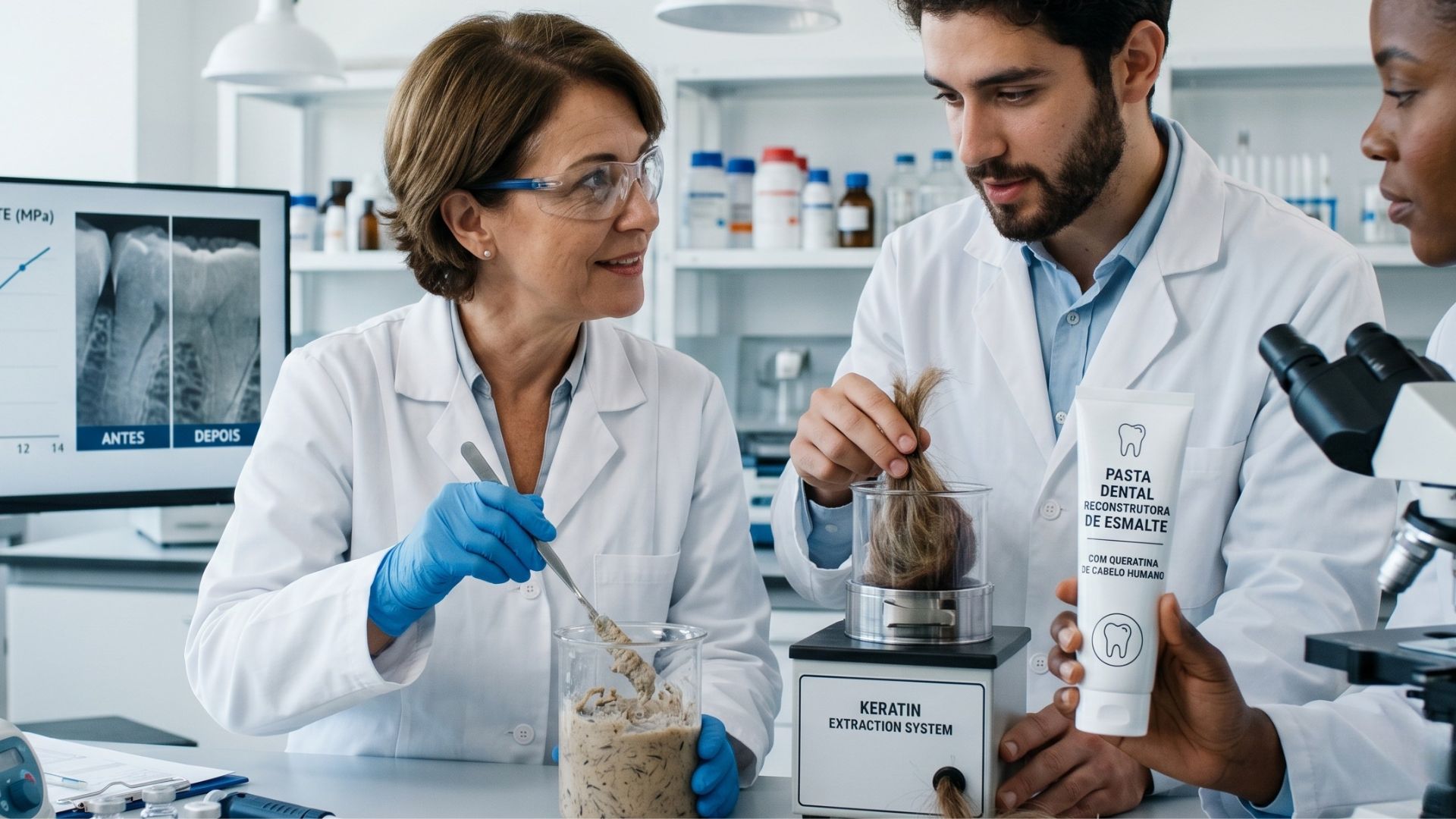
Study from King’s College London shows that keratin can repair tooth enamel, halt early decay, and pave the way for a new regenerative toothpaste.
According to King’s College London, scientists at the institution have discovered that keratin, a protein found in hair, skin, and wool, can help repair dental enamel and stop the early stages of decay. The work was published in the journal Advanced Healthcare Materials and drew attention because it addresses one of the most frustrating limitations of dentistry: tooth enamel, unlike bones and skin, does not regenerate on its own.
The advancement is significant because the treatment does not act merely as a temporary barrier. According to King’s College London, keratin forms a biomimetic protective layer when it comes into contact with the minerals present in saliva, creating a structure that mimics the organization and function of natural enamel. In the tests described by the university and the scientific article, the approach was able to stop the progression of erosion, while fluoride pastes today are mainly used to slow down this process.
Why enamel loss is a permanent problem in dentistry
Dental enamel is the hardest tissue in the human body, but it is also one of the most limited when damaged. According to King’s College London, acidic foods and drinks, poor oral hygiene, and aging itself contribute to enamel wear, which can lead to sensitivity, pain, and tooth loss.
-
Maritime engine without diesel receives international certification and can deliver pure hydrogen to ships with power up to 2,670 kW, without CO₂, without sulfur, without soot, and with exhaust composed of water vapor.

-
Samsung launches an ultra-thin notebook with up to 22 hours of battery life, a 3K AMOLED display with 120 Hz, and a next-generation Snapdragon chip to rival the Lenovo Yoga Slim 7x and the 14-inch MacBook Pro; meet the Galaxy Book 6 Edge

-
iPhone 18 might be more expensive than many people expected, and the blame would lie with the memory chips that have become as valuable as gold in the race for artificial intelligence.

-
U.S. Navy signs a $23.4 million contract to produce 50 units of the Blackbeard hypersonic missile, a weapon that exceeds 6,100 km/h and targets long-range attacks at a lower cost.




The major difficulty is biological. Enamel does not have living cells capable of rebuilding it after damage. Therefore, when the surface wears away, conventional treatment usually relies on restorative solutions, such as resins and crowns, rather than real regeneration of the lost tissue.
This is precisely where the new research gains importance. Instead of merely filling the damage with an artificial material, the proposal is to create a new layer that behaves more like natural enamel.
How keratin helps to reconstruct an enamel-like layer
According to King’s College London, keratin does not function as a mass that covers the tooth. It acts as a highly organized microscopic framework, similar to a crystal, which guides mineral deposition on the dental surface.
Over time, this framework attracts calcium and phosphate ions, exactly the minerals that form enamel. The result is the gradual growth of a protective coating around the tooth, with a structure inspired by the organization of true enamel. In the study, this process was described as a promising and clinically friendly way to develop protein matrices for hard tissue regeneration.
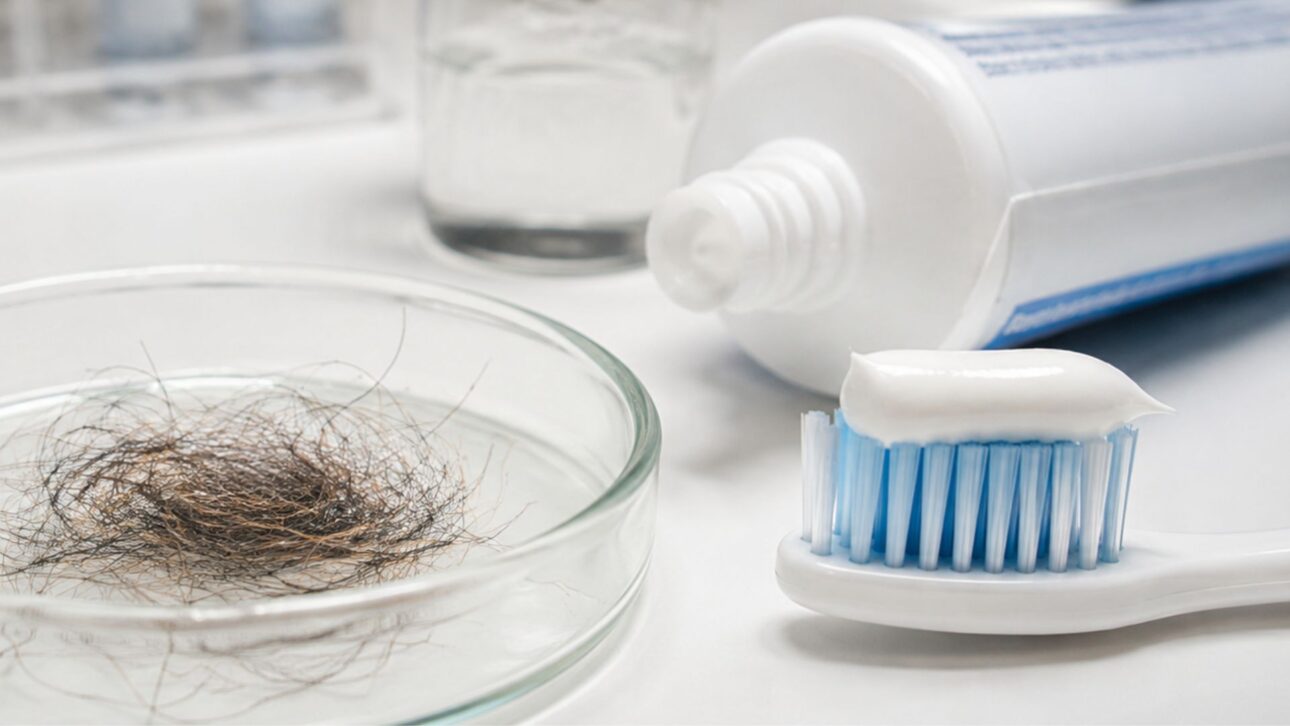
This helps explain why the material has generated so much interest. The technology not only aims to protect the dental surface but also stimulate organized mineralization, something that brings restorative dentistry closer to so-called regenerative dentistry.
The study used wool, but keratin also exists in human hair
One of the most curious points of the discovery is the origin of the material. Although the idea of “toothpaste made from one’s own hair” attracted attention, the study described by King’s College London extracted keratin from wool, treated as a biological waste with clinical potential.
The importance of this lies in the sustainable aspect. Keratin can be obtained from discarded biological materials and converted into a high-value biomaterial for dentistry.
According to researcher Sara Gamea, the study’s first author, the proposal offers an ecological alternative that brings biology and dentistry closer by mirroring natural processes.
In addition to seeking a regenerative effect, the technique also reduces dependence on conventional resin-based restorative materials. This gives the discovery a dual weight: clinical potential and environmental appeal.
Toothpaste and dental gel are the two formats envisioned by researchers
According to King’s College London, the technology could reach the public in two main formats. The first would be a daily use toothpaste, aimed at continuous enamel protection. The second would be a professionally applied gel, used by the dentist in a targeted manner on the most damaged areas.
This division makes sense from a clinical point of view. The paste would serve as preventive maintenance for home use, while the gel could focus treatment on areas already affected by erosion or sensitivity.
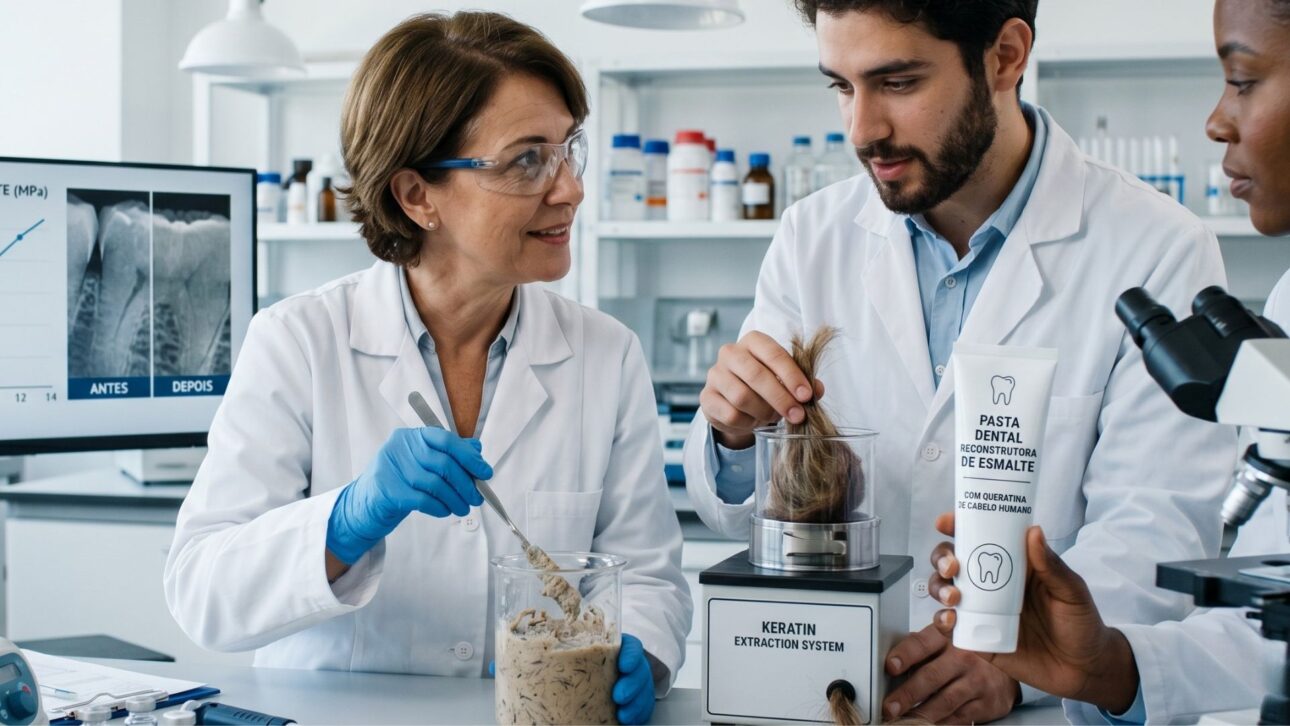
According to the university, the team is already exploring paths for clinical application and considers that such a solution could reach the public in two to three years, although this still depends on additional development.
In other words, the discovery is promising, but it has not yet become a product available in pharmacies or clinics. At this moment, the main value lies in the potential shown in the laboratory and the path it opens for new dental therapies.
What still needs to be proven before keratin becomes a real treatment
Despite the enthusiasm, the research stage itself requires caution. The article in Advanced Healthcare Materials shows a strong result in an experimental environment, but this does not mean that the technology is ready for widespread use in patients.
It will still be necessary to prove how this new layer behaves over time under real conditions of chewing, acidity, temperature variations, and daily wear. It will also be necessary to evaluate thickness, durability, stability, and clinical safety in subsequent studies.
Therefore, the best interpretation of the discovery is this: it is an important laboratory advance, with strong application potential, but it still needs to go through the normal validation stages before becoming a widely available dental treatment.
The research from King’s College London places keratin as one of the most interesting bets in recent regenerative dentistry. By showing that a protein present in hair, skin, and wool can help form a layer similar to enamel, the study paves the way for a new generation of treatments aimed not only at protecting but also at biologically restoring the dental surface.





Be the first to react!