






 Portuguese
  Spanish





Kashe Quest is two years old, lives in Los Angeles, and joined Mensa with an IQ 48 points above the American average. A two-year-old child who identifies the 50 states on the map, navigates the periodic table, and learns Spanish while still watching cartoons.
Kashe’s mother, Sukhjit Athwal, is an educator. She knows child development better than most parents. Even so, when her daughter was about 17 months old and already mastered the complete alphabet, numbers, colors, and geometric shapes, she wasn’t sure what to do with it. A two-year-old child learning at this speed is not what any child development manual describes as standard. The family pediatrician, observing Kashe’s pace, gave unusual advice: document everything. Note it down. Film it. Record it.
What the mother realized over the following months was that her daughter’s memory was different in nature, not just in degree. Kashe not only absorbed information. She retained and applied it. She learned something once and already started using it. Her father, Devon Quest, described the phenomenon simply: “If there’s something she doesn’t know, she wants to know what it is and how it works. As soon as she learns, she starts applying it.” This combination of compulsive curiosity with immediate retention was what caught the attention of the specialists who came later.
The test that confirmed what the parents already suspected
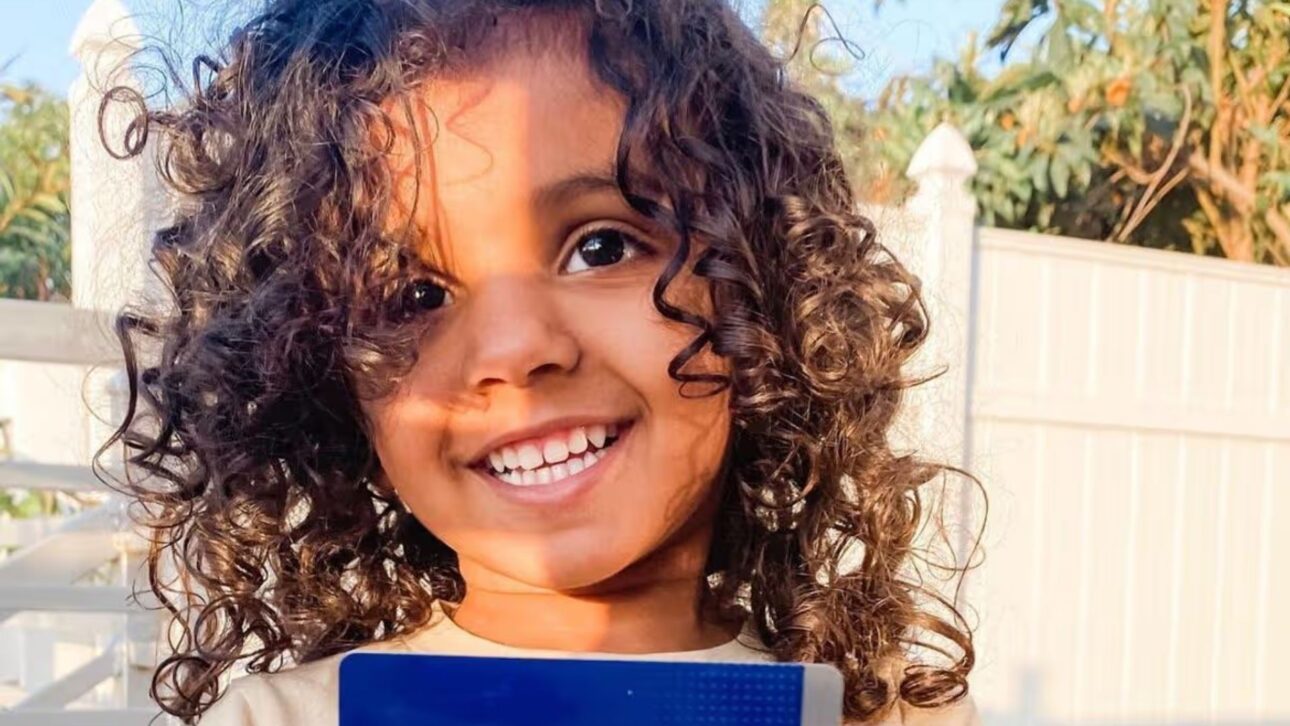
The result of the Mensa test was an IQ of 146 points. To have a sense of what this represents: the average American score is 98 points. Kashe was 48 points above. She is part of the 2% of the United States population with an IQ well above the national average. O POVOISTOÉ
-
Thailand Converts 8 Tons of PET Bottles into 3,500 School Backpacks, Showcasing Circular Economy with Over 40 Factories Involved

-
Mysterious Bats Spotted in Paris’s Père Lachaise Cemetery, Drawing Tourists to the “Vampire Cemetery”

-
From Selling Street Food to Leading a $300 Million Construction Firm: The Journey of a Brazilian Entrepreneur

-
Abandoned Penthouse in Houston Reveals Million-Dollar Suite with 24-Karat Gold, Tiffany Crystals, and Opulence Even Elvis Might Have Snubbed




The test did not only evaluate what the two-year-old child could memorize. The exam worked on receptive memory, cognitive skills, and logical reasoning. It was not a quiz of questions and answers. It was an evaluation of mental capacity itself. And Kashe scored in a way that placed her among the brightest minds on the planet, at a time when most children her age are still learning to use a fork. Exame
Mensa and the record that no one expected to break so soon
Mensa is the largest, oldest, and most famous high IQ society in the world, open to individuals who are among the top 2% of the population in terms of intelligence. The admission criterion is objective and unique: the candidate must prove that their IQ surpasses the 98th percentile of the general population. Mensa admits candidates whose IQs are above 98% of the general population, and this admission is conducted through tests carried out with qualified professionals. MensaMensa
With a score of 146, Kashe Quest was accepted and became the youngest member of American Mensa. The organization’s executive director, Trevor Mitchell, commented on the case, expressing hope that such an early discovery would allow the parents to help the girl reach her full potential. What no one within Mensa had anticipated was that the record for the youngest member would be broken by someone who was still in the phase of learning to tie their shoes.
What Kashe can do at two years old
The list of what Kashe Quest masters at two years old is not short. She counts to 100, identifies each of the American states by shape and location on the map, navigates the periodic table of elements, is bilingual, and is improving in sign language. These are skills that many adults cannot perform with the same precision. Mega Curioso
What most attracts researchers’ attention is not the volume of information, but how she processes it. Kashe does not repeat content like someone who memorized a list. She reasons from what she learned. It is this capacity for connection, and not just accumulation, that makes this two-year-old child’s case a real challenge for the science of cognitive development. The mother insists that she never pushed her daughter in any specific direction. What she always did was provide resources at home and follow Kashe’s interests, without forcing pace or content.
What neuroscience says and where it still stumbles


The science of child development still debates the limits of what an IQ test applied to a two-year-old can really measure. Neuroscientist and Mensa member Fabiano de Abreu explained that the brain is in full development at this stage and that nuances can interfere with the results: “As a scientist, I believe it is premature. The brain is developing and factors related to connections can be determinant.” At the same time, he acknowledged that Mensa has renowned specialists and that the process was conducted rigorously. Mega Curioso
The point where neuroscience still does not have a clear answer is why some children are born with this accelerated absorption capacity and others, exposed to the same environment, do not develop the same pattern. Heredity explains part. The environment explains another part. But the sum of the two parts still doesn’t add up. Cases like that of Kashe Quest exist precisely to show that there is something in cognitive development that science has not yet fully mapped.
A child who still watches Paw Patrol
With all the attention the case generated, Kashe’s parents maintain a deliberately calm stance. The mother told the American press that her daughter is still a child, and preserving that childhood is the priority. The father added: “She wakes up on a Saturday and says she wants to study the elements or the states. When she leans towards that, we’re there to support.” But when she wants to watch Paw Patrol, she watches.
No agenda of intellectual acceleration, no pressure for performance. The family understands that having a two-year-old with an IQ of 146 in Mensa is not a trophy to be displayed. It is a responsibility that requires balance between stimulating and preserving. The challenge now, according to the parents themselves, is to ensure that Kashe receives the appropriate education for her potential without giving up on experiencing what any child her age has the right to experience.
Kashe Quest made history and doesn’t know it yet. But the scientists, educators, and parents who follow the case know that what is being observed here goes far beyond a record in Mensa. It is an open window to understand what human intelligence can be when it appears earlier than science expected.
The case was featured on the show The UnXplained with William Shatner, on the History channel. The original story was reported, among other outlets, by G1 in July 2021.
Do you know or have you ever lived with a gifted child? Do you think the environment in which they grow up makes more difference than genetics, or is it the other way around? Leave your opinion in the comments.






Old Walt Disney movie “The Incredible Journey ” dogs return home as must watch for her
It must be all those midichlorians