Portuguese
  Spanish




Agroecology in Brazil Gains Prominence at COP30’s AgriZone, Connecting Research, Amazon Territories, and New Strategies for Sustainable Production Systems
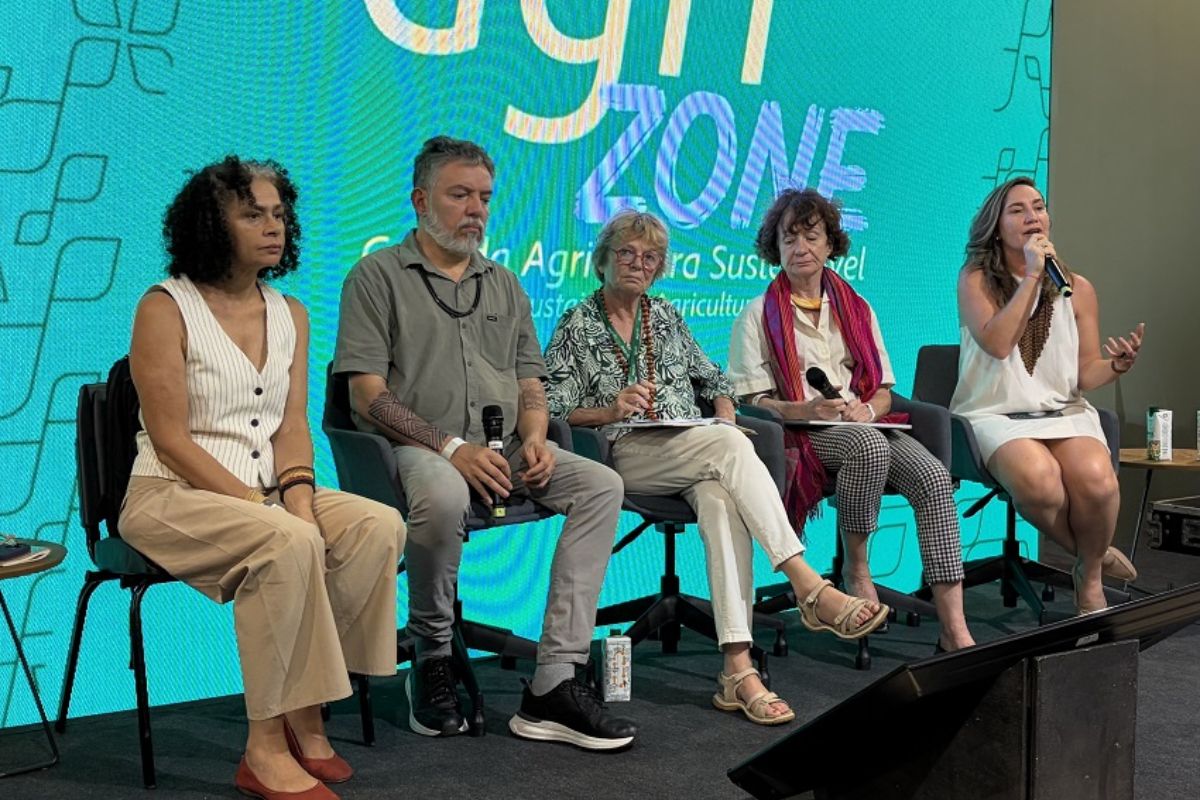
Agroecology in Brazil has taken center stage in environmental discussions by being presented on November 21 at the COP30 AgriZone in Belém (PA), as a concrete response to the climate impacts affecting rural production, according to a report published.
The meeting brought together researchers, public managers, and social organizations to discuss viable adaptation pathways, highlighting agriculture as one of the human activities that most influences ecosystems.
During the discussion, experts emphasized that the speed of environmental changes requires production models capable of maintaining ecological balance, social justice, and economic viability, especially in strategic regions like the Amazon.
-
India’s Sugar Export Cuts and Ethanol Shift Amid El Niño Threat Could Impact Global Prices and Stocks

-
Quarantine Pest Threatening Palm Trees Puts Brazilian Authorities on Alert, Prompts Monitoring at University of Taubaté and Potential Control Measures Across São Paulo
-
Global Alert: Report Finds 159 Pesticides in Coffee Beans Sold in Europe, Posing Serious Risks to Millions of Farm Workers
-
Low-Demand Brazilian Beef Offal Gains Popularity Abroad: Indonesia Purchases $19.5 Million, Boosting Revenue and Reducing Waste



This approach gains strength precisely by articulating scientific knowledge, traditional practices, and social innovation, becoming a structuring axis of policies aimed at sustainable agriculture.
In this context, initiatives for research, management, and community strengthening were presented as pillars for resilient systems in a setting marked by increasingly frequent climate events.
Agroecological Transition at COP30 and Sustainable Agriculture in the Amazon
Discussions highlighted that transforming production systems requires understanding the relationship between agriculture and environmental changes.
The director of the National Institute for Amazon Research (Inpa), Henrique dos Santos Pereira, emphasized that agriculture has shaped societies throughout history and now needs to adapt to growing pressures.
At COP30, the theme was presented as a central part of strategies aimed at reducing vulnerabilities and developing solutions capable of integrating producers, governments, and scientific institutions.
Projects that combine forest management, organic production, and sociobiodiversity were cited as mechanisms for territorial strengthening, especially in regions where traditional communities act as guardians of areas with high biodiversity.
The relevance of these initiatives is also linked to the increasing climatic impacts on rural livelihoods.
Agroecology in Brazil serves as a foundation to guide practices that consider soil, water, climate, and local culture in an integrated manner, favoring community systems and minimizing risks of environmental degradation.
Embrapa’s Agroecology Projects and Agroecology in Brazil
Embrapa presented its 88 active projects related to agroecology, organic production, extractivism, and sociobiodiversity, many of which are developed in partnership with family farmers and social movements.
The institution also highlighted participatory seed improvement actions, where farmers contribute directly to the selection of varieties adapted to local demands.
This process involves community agro-industries and production chains structured in collaboration with rural organizations.
Another point presented was Embrapa’s platform aimed at Indigenous peoples, created to strengthen food security in territories that seek sustainable productive transition.
Programs such as the Women Producers of Good Living show the expansion of female protagonism in production systems.
However, the strengthening of research still requires new investments to address limitations related to climate change.
Within this scenario, agroecology in Brazil becomes a central axis of social and scientific innovation to guide rural adaptation strategies.
Food Security in Indigenous Territories and Fair and Inclusive Bioeconomy
French researcher Catherine Aubertin explained that the European Union has been revising its bioeconomy policy since 2012 to integrate sustainability and social justice, but still faces contradictions.
In Brazil, she stated, the debate is equally complex, and the Amazon emerges as a key piece in the formulation of models that value natural resources and community rights.
The researcher emphasized that a solid bioeconomy must be built with equity, recognizing the sociocultural diversity of the Amazon biome.
Agroecology appears as a bridge between science and traditional knowledge, allowing for the creation of resilient food systems and strengthening community territories.
In line with this vision, Florence Pinton from INRAE highlighted that understanding socio-environmental transitions depends on a systemic approach that considers institutions, cultural practices, and natural resource management.
Within this debate, agroecology in Brazil is seen as a pathway to integrate practical experiences and public policies capable of enhancing the adaptability of regions most sensitive to climatic effects.
At the end of the presentations, it became clear that building new productive models requires collaboration among scientists, farmers, and traditional peoples, reinforcing that agroecology in Brazil will continue to be a strategic theme in the coming years.