Portuguese
  Spanish


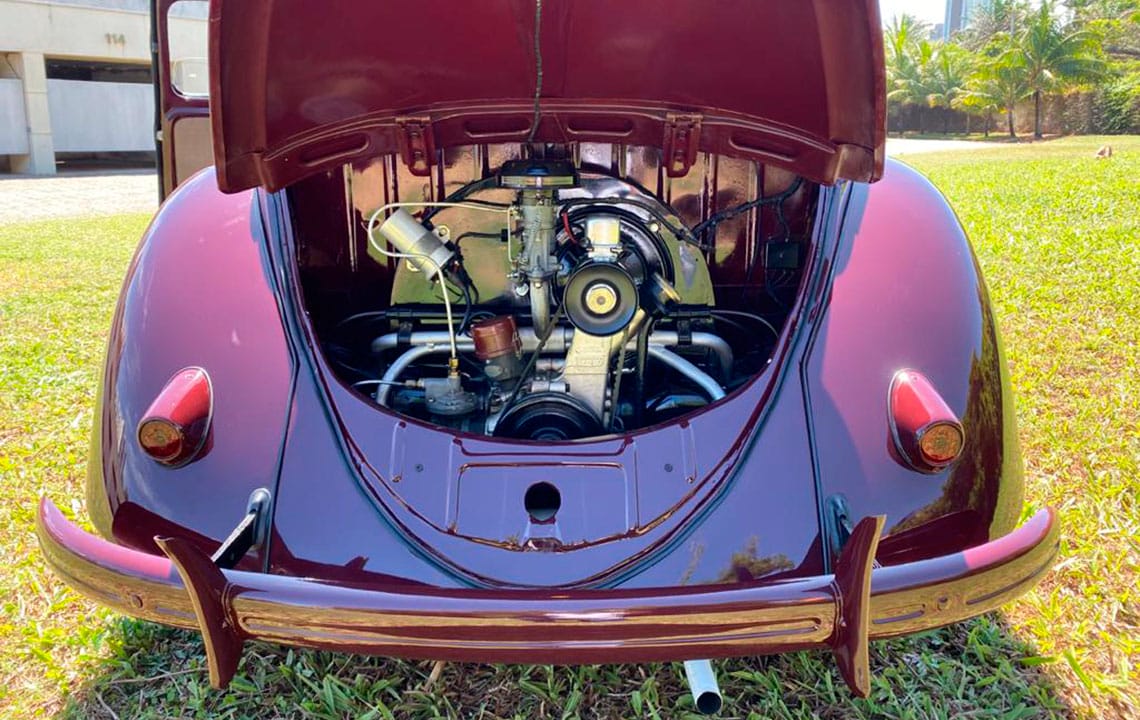

The Air-Cooled Engine: An Innovation of the 1920s by Ferdinand Porsche That Revolutionized the Automotive Industry. Used in the Iconic Beetle, It Relied on Air for Cooling. Despite Its Limitations, Such as Overheating While Stationary, It Marked an Era and Is Still Remembered by Enthusiasts.
In a dive into automotive history, we highlight an innovation that left its mark: the air-cooled engine, also known as Air Cooled. Designed by Ferdinand Porsche at the end of the 1920s at the request of the German government, this visionary system aimed at creating more accessible automobiles, like the Beetle.
The Beetle and the Air-Cooled Engine: A Duo That Changed the Course of Automotive History
In the historical context of World War II, the German government used the air-cooled engine to equip one of the most iconic and globally recognized cars, the Beetle.
The Air Cooled not only powered vehicles during critical moments in history but also stood out for its technical ingenuity.
-
2027 Toyota Corolla Cross Unveiled: New Design, Enhanced Fuel Efficiency, Reduced Maintenance Costs, Advanced Technology, Connected Services, and Up to 10-Year Warranty

-
Fiat Cronos Precision 2018: Affordable Sedan with Spacious Trunk and Reliable Maintenance
-
Volkswagen to Cut Production by 1 Million Cars by 2030, Reducing Jobs and Platforms, Focusing on More Profitable Models

-
Toyota Launches First 100% Electric Car in Brazil: bZ4X with 343 HP, All-Wheel Drive, 361 km Range, Priced at $419,990 BRL, Limited to 99 Units




This type of engine, unlike conventional ones, relies on the flow of atmospheric air to dissipate the heat generated during its operation.
Atmospheric air is absorbed and compressed by the engine’s first piston, directing it to the spherical chamber and being injected under high pressure into the cylinders.
This process, in turn, moves the piston and releases energy to propel the vehicle.
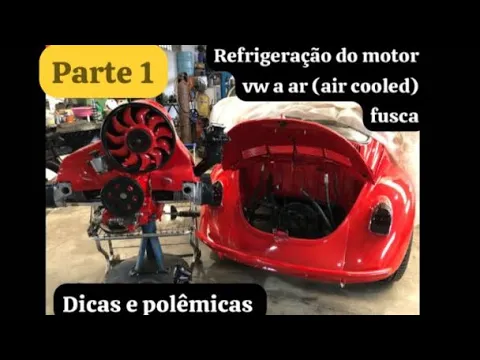

Challenges and Limitations: Understanding the Disadvantages of Air Cooled
Although it is a cheaper and simpler solution, the air-cooled engine has its disadvantages.
Notably, it does not cool the system when the car is stationary, and its parts tend to expand more quickly under high temperatures, accelerating wear.
This characteristic is a point of concern for enthusiasts and owners of vehicles equipped with this technology.
It is interesting to note that, at its peak, the air-cooled engine captured a significant share of the automotive market.
However, with the advancement of technologies and the search for more efficient and sustainable solutions, this technology gradually ceased to be manufactured.
Yet, we can see that despite its disadvantages, the air-cooled engine played a crucial role in the evolution of automobiles.
Its legacy lives on in the classic vehicles that still roam the streets and in the memories of those who appreciate the technical ingenuity behind this innovation.
In an ever-changing automotive world, it is always fascinating to revisit past technologies that shaped the industry.
The air-cooled engine, with its peculiarities and unique contributions, remains an intriguing chapter in the history of automobiles.
Source: CanalTech