





 Portuguese
  English
  Spanish
  3 min of reading
  0 comments


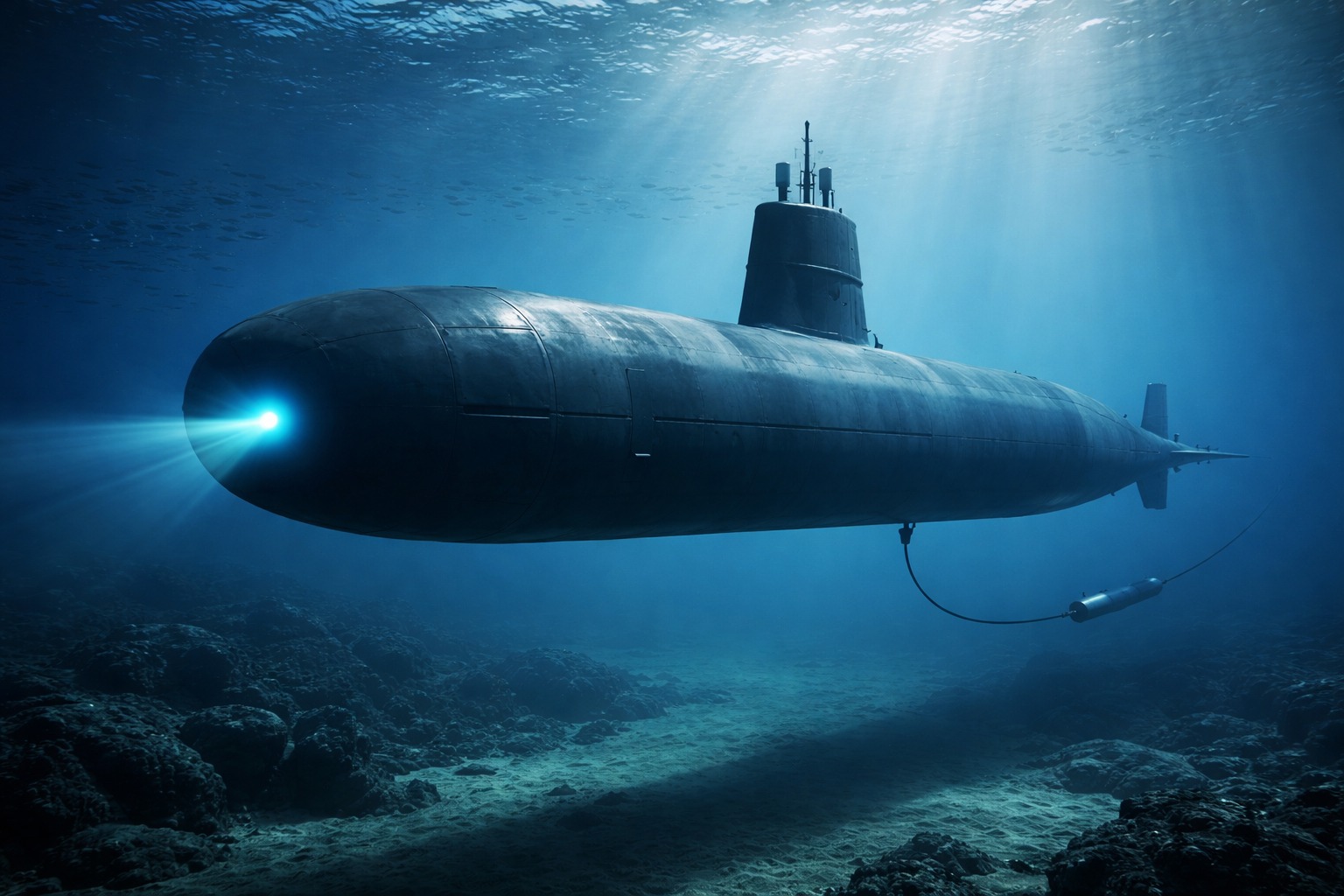
Autonomous Submarine BlueWhale Delivered to German Navy After Tests in the Baltic Sea, Integrating Anti-Submarine Warfare, Mine Detection, and Secret Operations with Weeks of Autonomy
The Israeli company Israel Aerospace Industries delivered the autonomous submarine BlueWhale to the German Navy at the naval base in Eckernförde, after extensive testing in the Baltic Sea, marking the introduction of the BlueWhale autonomous submarine into unmanned anti-submarine warfare operations and secret maritime missions.
Official Delivery After Tests in the Baltic Sea
The system was developed by Israel Aerospace Industries to support the German Navy in unmanned submarine operations.
The delivery took place after a series of operational tests conducted in the Baltic Sea, considered an extremely demanding operational environment.
-
Scientists were impressed to see birds with tiny heads solving problems like large primates: crows memorize hundreds of food caches, use tools, and even pass on knowledge to the group, challenging everything that was believed about the limits of the animal brain.

-
Almost 10,000 km/h, 110,000 feet altitude, and New York–Paris in less than an hour: Venus Aerospace tests a rotating detonation engine and aims to transform the Stargazer into a reusable Mach 9 hypersonic plane, but still needs to prove that the promise moves beyond the prototype.

-
Air bubbles from 3 million years ago extracted from Antarctic ice reveal that the current level of CO₂ has already surpassed that of the ancient, warm world, when the sea was up to 20 meters higher and there were no factories or cars burning fuel.
-
Brazil went to China to seek money and technology to reinvent TV and bring the internet to places where fiber does not reach. The mission negotiated with the BRICS Bank led by Dilma and paved the way for a Chinese rival of Starlink to connect the Amazon.



The autonomous submarine BlueWhale conducts maritime reconnaissance, detects surface and submerged targets, collects acoustic data, and identifies underwater mines.
The large autonomous underwater vehicle was officially delivered after completing these evaluations in real conditions.
The initiative marks the first unmanned submarine developed by an Israeli defense company and delivered to the German naval force, consolidating a significant step in technological cooperation between the two countries.

Joint Venture with Atlas Elektronik and Technological Integration
The system was developed through a joint venture with Atlas Elektronik, a subsidiary of the naval company TKMS.
The collaboration reflects the joint advancement in submarine technologies and the integration of specialized industrial capabilities.
A central element of the project is the incorporation of advanced anti-submarine warfare technology developed by TKMS and Atlas Elektronik.
The towed sonar capabilities enhance detection performance, reinforcing the role of the autonomous submarine BlueWhale in underwater surveillance and threat identification.
Michael Ozegowski, executive vice president of Atlas Elektronik, stated that the company supports the German Navy as part of the future Kurs Marine 2035+ plan and seeks to address current security threats with new technological solutions.
According to him, the rapid introduction of new technologies is a common goal for the industry and the Navy, significantly strengthening Germany’s defense capabilities.
State-of-the-Art Naval Sensor and Onboard Processing
The autonomous submarine BlueWhale is described as a large, fully autonomous underwater vehicle capable of integrating reconnaissance, advanced sensing, and data fusion into a single platform.
The vehicle incorporates a sophisticated set of sensors capable of detecting and tracking targets above and below the ocean surface.
It collects acoustic information, processes data onboard, and generates actionable results in real-time.
This onboard architecture reduces the reliance on external systems and allows for efficient autonomous decision support.
The system also acts in countermeasures against mines, locating sea mines on the ocean floor and enhancing its operational utility.
Designed for endurance, stealth, and operational flexibility, the autonomous submarine BlueWhale was built to support unmanned anti-submarine warfare and secret maritime missions, providing persistent situational awareness in complex environments.
Autonomous Support for Fleets and Extended Operations
The system functions as an extended sensing arm for manned naval platforms, operating independently for long periods and covering large maritime areas.
Its high-efficiency battery architecture supports weeks of continuous operation, allowing sustained information collection without frequent resupply needs.
According to TKMS, the platform is optimized for both open seas and challenging coastal waters, where complex acoustic conditions require advanced signal processing and adaptive sensing.
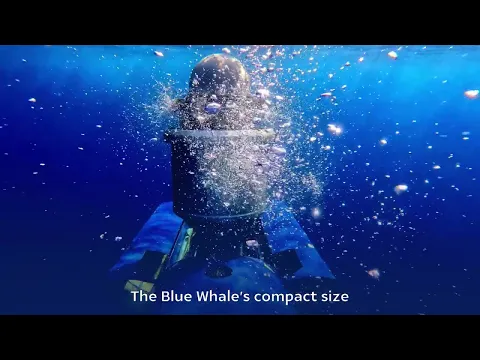
Designed with compact dimensions, the vehicle can be transported in a standard 40-foot container.
This feature enables transport over land, air, or sea, facilitating rapid deployment and operational scalability.
An integrated intelligent controller manages sensor inputs, communication systems, and power distribution, ensuring efficient mission execution.
Secure satellite communications allow integration with command and control networks, maintaining operational security.
According to IAI, the autonomous submarine BlueWhale combines autonomous navigation, integrated sensors, and advanced data processing to enhance underwater intelligence, surveillance, and reconnaissance capabilities.
The system strengthens naval operations in contested environments and enhances the persistent maritime awareness of fleets.
Thus, the delivery of the system to the German Navy consolidates a significant operational milestone, integrating autonomous technologies and industrial cooperation into a single submarine defense project.
With information from Interesting Engineering.







-

1 person reacted to this.