






 Portuguese
  Spanish
  6 min of reading
  0 comments


Don’t expect a smoking cone: billions of years of erosion have erased the original shape, and today only the forest covers the place. What remains are the rocks, which hold lava conduits and minerals capable of telling how the planet was when the continents were still forming. A true living geological archive.
Hidden under the Amazon rainforest, in the south of Pará, an extinct volcano about 1.9 billion years old is considered by Brazilian researchers to be one of the oldest ever identified with preserved structure. Named Amazonas Volcano, it places the Amazon at the center of international studies on the formation of the Earth’s crust and the planet’s first continents, in a past so remote that it is difficult to imagine.
The discovery, made by Brazilian scientists in the early 2000s, gained attention again in May 2026 and has been further studied by institutions such as the Federal University of Ceará, Unicamp, and USP. It is worth clarifying from the start: although some reports describe the Amazonas Volcano as “the oldest in the world,” it is more accurate to say that it is among the oldest ever identified with its structure still preserved, as there are records of even older volcanic rocks in other parts of the planet, but without such well-preserved formations.
A giant of almost 2 billion years

With approximately 22 kilometers in diameter, the ancient volcano once had a cone about 400 meters high, and its volcanic activity would have lasted an impressive 300 million years, during the geological period known as the Paleoproterozoic, when the Earth was still assembling its first stable continental blocks.
-
Federal Police involved in the case to identify the person responsible for hacking the Civil Defense system, which sent ten false alerts, frightened residents of different capitals, and turned messages about real risks into notifications with “misanthropy” and even alien attacks.

-
Extreme drought causes ghost village to reappear at the bottom of the reservoir that supplies Athens, revealing houses, a school, and ruins swallowed since the 1980s as the lake shrinks and exposes the water crisis threatening the capital of Greece.

-
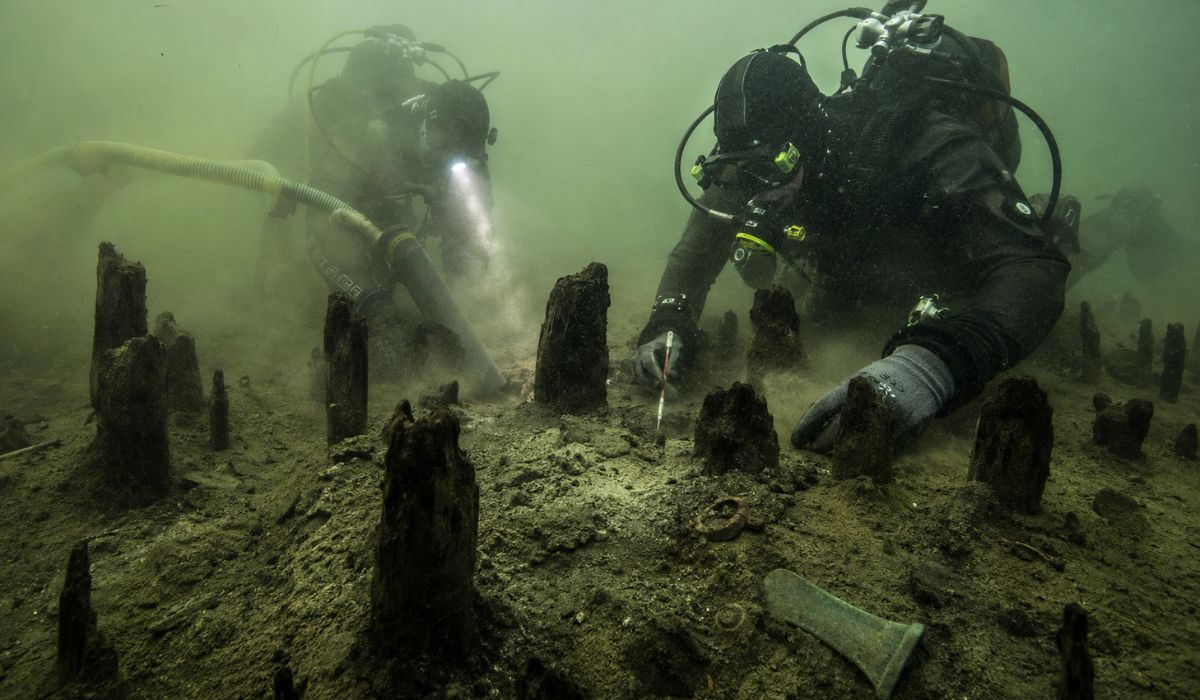
An entire village lay asleep at the bottom of a lake for 3,000 years: divers suction sediments in Italy and reveal more than 600 wooden stakes, bronze tools, and traces of a Bronze Age settlement hidden underwater.
-
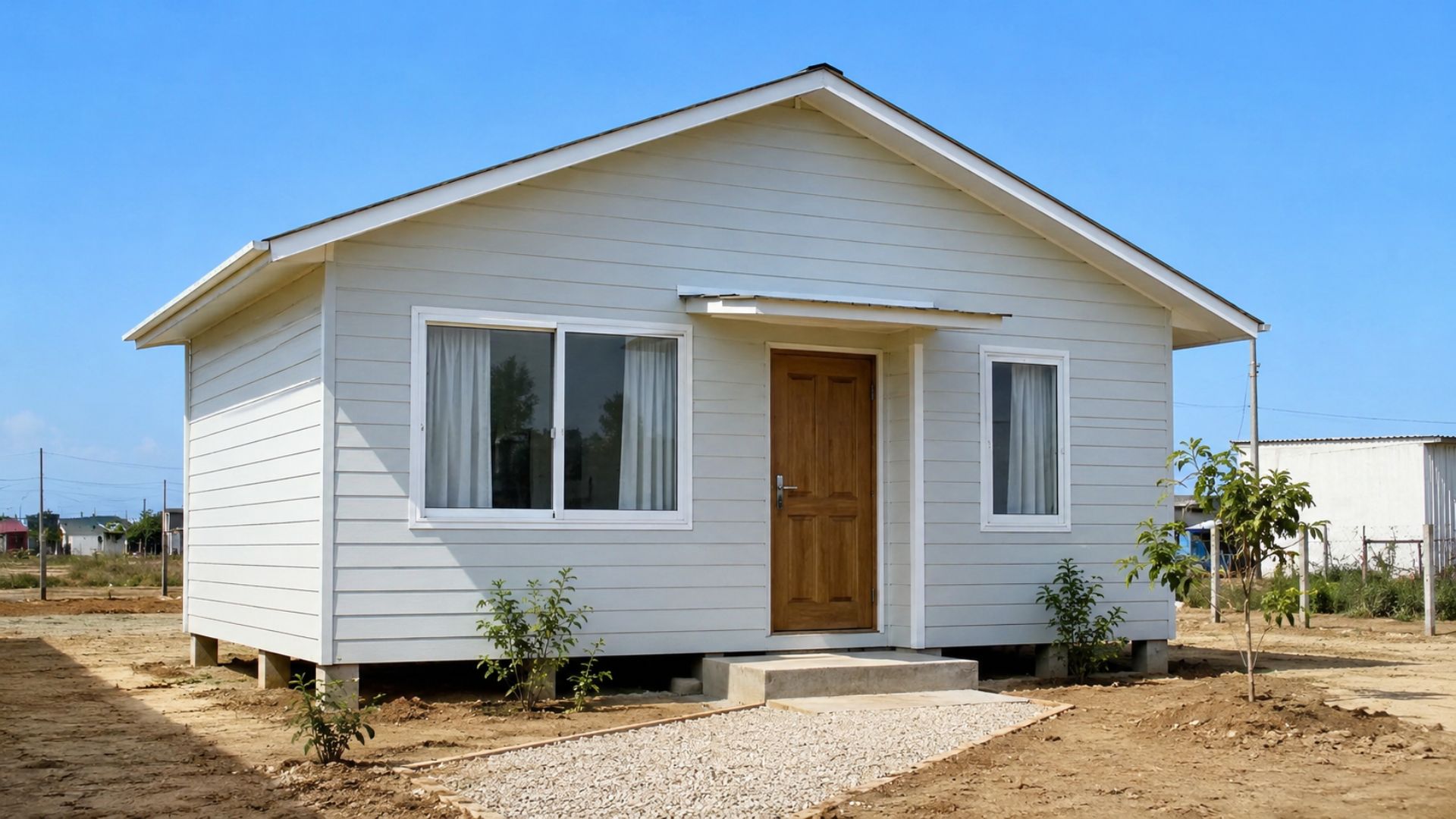
They call it the “Shopee house” and even cardboard, but the R$ 20,000 house is a certified Wood Frame from Alea, financed by Minha Casa Minha Vida: understand if it’s worth more than masonry.


Located in the Uatumã region, the complex sparked scientific interest in the early 2000s, around 2002. Since then, detailed analyses of rocks, minerals, and underground structures have reinforced the hypothesis that it emerged in an extremely remote period, long before the appearance of various mountain ranges we know today, which helps explain the fascination geologists have with the formation.
Why no one sees the volcano
Those who imagine finding a smoking mountain in the Amazon will be surprised. The Amazonas Volcano no longer has a visible cone or crater, because billions of years of erosion, climate changes, and landscape transformations have completely worn away its original form, leaving today only the forest covering what was once an imposing volcanic structure.
Despite this, what remains hidden in the depths is a treasure for science. Even after so much time, the volcano still preserves rocks from the ancient magmatic system, with lava conduits, mineral deposits, and deep structures that have remained intact enough to allow detailed analyses. It is precisely this preservation that makes the Brazilian case so special for scholars of the primitive Earth.
What Brazilian science discovered
The research that helped unveil the volcano has a national signature. A study by researchers from the Federal University of Ceará, UFC, and Unicamp, published in 2021 in the scientific journal Journal of South American Earth Sciences, determined that the volcanic rocks in the region are about 1.8 billion years old and are associated with ancient volcanic calderas, circular structures lowered through which lava and gases were expelled.
According to UFC professor and geologist Felipe Holanda dos Santos, these calderas resemble those in the famous Yellowstone National Park in the United States. The work, resulting from André Massanobu Ueno Kunifoshita’s master’s research at Unicamp, also found evidence of deep crystallization in the rocks, indicating that magma circulated through crust fissures at a time when the planet was still consolidating its first stable continents.
An archive of the primitive Earth
More than a curiosity, the volcano functions as a geological time capsule. The minerals preserved in the rocks help scientists investigate the chemical composition of the primitive Earth, providing valuable clues about what the ancient atmosphere was like, the planet’s thermal behavior, and the process of continent consolidation almost 2 billion years ago.
Research conducted by other institutions, such as USP, reinforces this picture. Geologist Caetano Juliani points out that the volcanism in the region was the result of intense tectonic plate movement, with the oceanic crust sliding under the continental, and that the Amazon would have gone through several major phases of volcanic activity, around 2 billion, 1.88 billion, and 1.78 billion years ago. Remote sensing modeling also suggests that the volcanic system may be much larger than already identified, with much of it buried under layers of sediments.
The connection with the mineral wealth of the Amazon
This volcanic past has a direct connection with one of Brazil’s greatest assets. According to researchers, the intense magmatic activity that marked the region billions of years ago was fundamental for the formation of mineral deposits that today make the Amazon one of the richest areas in the country in underground resources, in a direct link between ancient geology and the current economy.
Part of the rock foundations that support the Amazon rainforest may have originated from this ancient magmatic system, considered fundamental to understanding the geological evolution of the entire region. Understanding how and when these volcanoes acted helps not only to reconstruct the planet’s history but also to guide the search for minerals, in a theme that connects basic science to the economic potential of Northern Brazil.
A Brazil that once had volcanoes
The discovery also dispels a common impression about the country. Although today there are no active volcanoes in Brazilian territory, the North of the country was, in a distant past, a region marked by intense volcanic activity, as highlighted by Professor Felipe Holanda, which greatly changes the image we usually have of our geography.
It is curious to think that where there is now tropical forest, rivers, and biodiversity, there was once lava, smoke, and eruptions of great proportions. The Amazonas Volcano, now silent and extinct, is proof that Brazil also had its chapter in the volcanic history of the Earth, even though in a time so remote that it completely escapes the scale of human life. And there is, it is important to emphasize, no risk of new eruptions, as the structure has been extinct for billions of years.
The Amazonas Volcano, hidden beneath the forest in the south of Pará, is one of those treasures that show how Brazil holds surprising chapters of the planet’s history. An extinct volcano almost 2 billion years old, with a rare preserved structure, that helps science understand how continents formed and why the Amazon is so rich in minerals. More than an age record, it is an invitation to look at Brazilian soil with different eyes, recognizing the value of national research in uncovering secrets kept for billions of years.
And you, did you know that Brazil harbors an extinct volcano almost 2 billion years old hidden in the Amazon? Were you surprised to discover that the North of the country was once a land of lava and eruptions? Leave your comment, tell us what impressed you most about this discovery, and share the article with those who love science, geology, and the mysteries of our planet.




-

-

-

-

17 people reacted to this.