






 Portuguese
  Spanish
  3 min of reading
  0 comments


Vale Mining Detected Cracks in the Forquilha III Dam in Minas Gerais, Increasing the Risk of a Collapse. The Site, at Level 3 of Emergency Since 2019, Is Being Monitored, and the Area Has Already Been Evacuated.
Since 2019, the residents of Ouro Preto have lived under the shadow of fear, always waiting for news they would never want to hear.
The Forquilha III dam, located at the Fábrica mine, was already marked by the imminent danger of collapse. But a new discovery has brought to light an even more frightening reality. And no, it’s not what you are thinking – at least for now.
Last Friday (13), the Vale mining company announced the discovery of superficial cracks in the structure of the dam. Although the company claims that the stability conditions have not changed, the risk is not negligible.
-
China could reduce iron ore imports from 80% to 50% of consumption by 2030, while its share in global steel production falls from 52% to 46%, in a shift that could reshape the global market, says CMRG.

-
Brazil is sitting on one of the largest lithium reserves in the world, in the Jequitinhonha Valley, but national mining has almost become an appendage of China: 97% of the metal’s export goes to a single country, which also dominates refining.
-
Iron ore falls to 762 yuan in China as real estate sales decline and steel production hits lowest level since 2018
-
Brazil has minerals, clean energy, and a waiting market, but it could miss a billion-dollar opportunity if it doesn’t speed up the race for green minerals, while the steel industry seeks to reduce emissions.


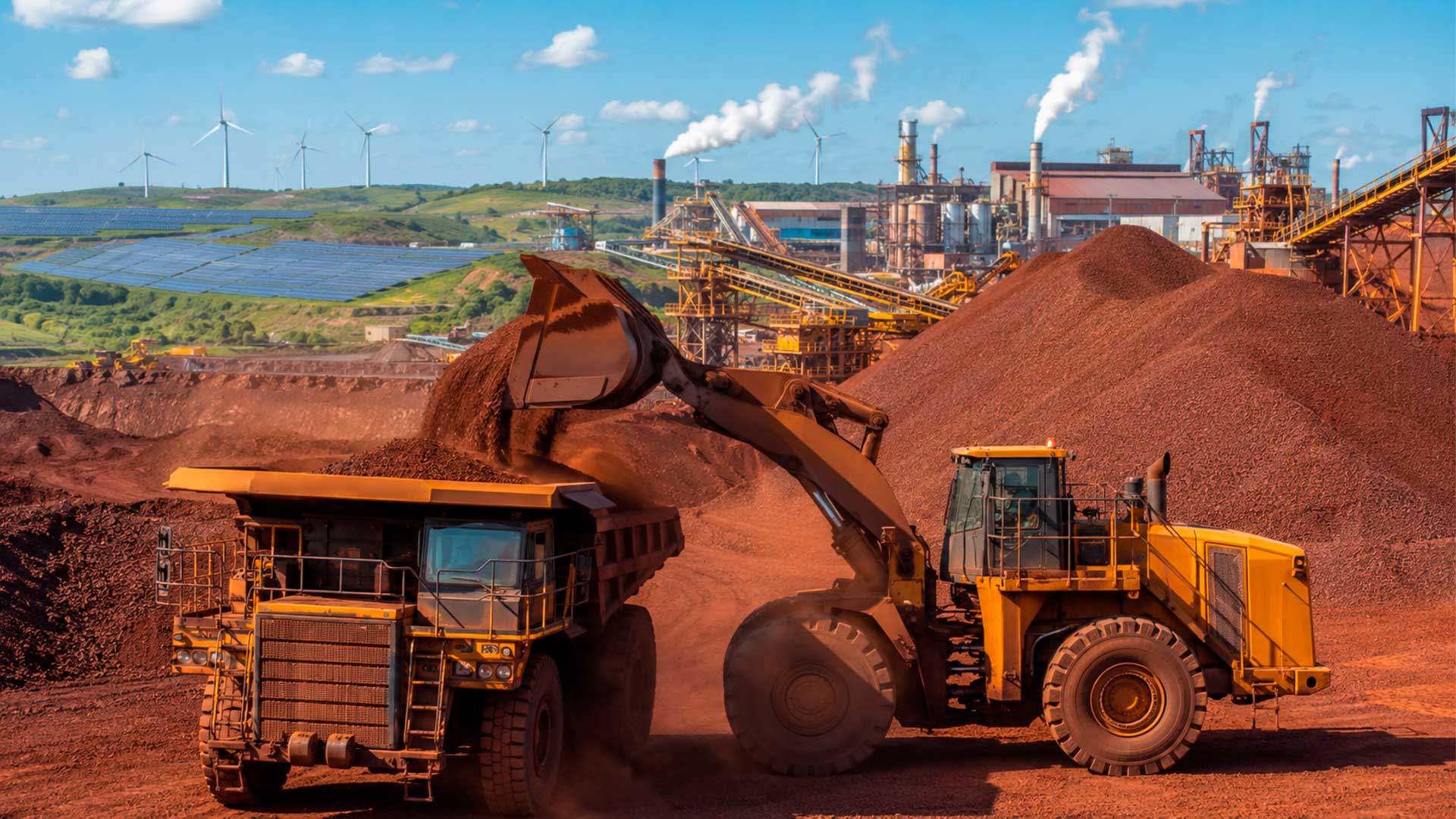
The maximum alert has been triggered, with the surrounding area already being evacuated in case of a catastrophe. What is being done to prevent a new environmental disaster?
Cracks Found in Inspection
The Forquilha III dam has been in Level 3 emergency state since 2019, the highest on the scale of the National Mining Agency (ANM).
This means an “imminent risk of collapse.” However, Vale seeks to reassure the population by stating that the site is permanently monitored.
The cracks recently found surfaced during a routine inspection, conducted as part of safety procedures.
In immediate response, the mining company informed the competent authorities and initiated the execution of an action plan to investigate the situation and carry out the necessary corrections.
According to the company, the dam has a downstream containment structure and a completely evacuated self-rescue zone, with no presence of at-risk communities.
History of Problems
This is not the first time that the Forquilha III dam has shown anomalies. In April of this year, an anomaly was identified in one of the 131 drainage devices of the structure.
On that occasion, the mining company also assured that the stability conditions had not been compromised, with monitoring being carried out daily.
The dam was evacuated in 2019, and since then, several safety measures have been implemented to prevent a collapse.
Among these measures, the de-characterization of the dam is underway, with an expected completion by 2035. The process involves the removal of mining tailings and the environmental recovery of the area.
Vale’s Future Plans and Risks
The expected completion date for the de-characterization works in 2035 raises questions, especially considering the history of environmental disasters in Brazil involving mining companies.
In the event of a collapse, the basins of the Rio das Velhas and the Rio Paraopeba would be the most affected, with devastating consequences for the environment and riverine communities.
The Vale reaffirms its commitment to advance the de-characterization of the structure and reduce the emergency level of the dam, seeking to minimize risks to the population and the environment.
Current Situation and Perspectives
Although the risk of collapse is real, continuous monitoring and implemented safety measures are deemed essential to prevent a disaster.
The ANM, for its part, has not yet responded to the latest information released by Vale, but new details are expected to emerge soon.
What stands out is that the Vale mining company, even after the Brumadinho disaster, faces similar challenges, raising questions about the effectiveness of the preventive actions taken.
In any case, the current scenario of the Forquilha III dam in Ouro Preto is a red alert for authorities and the population. With cracks being detected and a history of problems, the question remains: is Brazil prepared to prevent another environmental tragedy? And furthermore, will the speed of the works and containment measures be sufficient to protect the region and avoid another disaster like that of Mariana?






Be the first to react!