






 Portuguese
  Spanish
  4 min of reading
  0 comments


Federal Court demands new analysis from ANSN on radiological risks before the advancement of Caldeira and Colossus projects
A decision by the Federal Court placed two important rare earth projects in the South of Minas under a new stage of technical evaluation.
The ruling, signed on May 26 by substitute federal judge Rosilene Maria Clemente de Souza Ferreira, ordered the National Nuclear Safety Authority (ANSN) to reassess the radiological risks associated with the ventures.
The Caldeira and Colossus projects are located in the municipalities of Caldas and Poços de Caldas, in Minas Gerais.
-
China could reduce iron ore imports from 80% to 50% of consumption by 2030, while its share in global steel production falls from 52% to 46%, in a shift that could reshape the global market, says CMRG.

-
Brazil is sitting on one of the largest lithium reserves in the world, in the Jequitinhonha Valley, but national mining has almost become an appendage of China: 97% of the metal’s export goes to a single country, which also dominates refining.
-
Iron ore falls to 762 yuan in China as real estate sales decline and steel production hits lowest level since 2018
-
Brazil has minerals, clean energy, and a waiting market, but it could miss a billion-dollar opportunity if it doesn’t speed up the race for green minerals, while the steel industry seeks to reduce emissions.


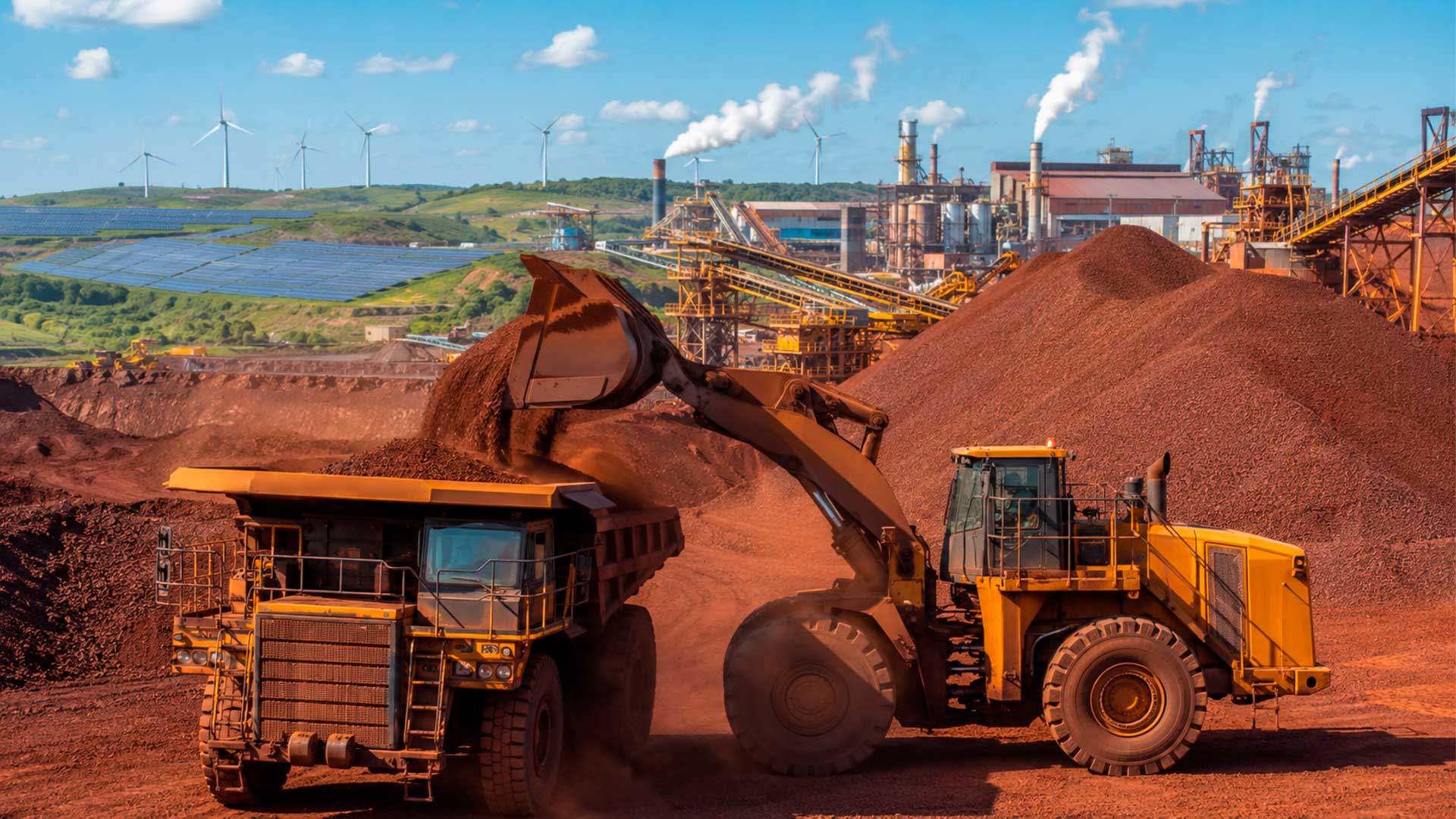
The initiatives are developed by Meteoric Caldeira Mineração Ltda. and Viridis Mineração Ltda.
The decision partially granted a collective writ of mandamus. The result obliges the ANSN to issue a conclusive and definitive technical opinion before the continuation of the environmental licensing process.
Technical gaps lead Federal Court to apply precautionary principle
The judicial analysis identified technical doubts, incomplete information, and scientific uncertainties related to the studies presented by the ventures.
The ruling highlights that a preliminary conclusion is not sufficient when questions about radioactivity, waste, and effluents remain.
The text also points out a regulatory inconsistency.
The ANSN initially classified the projects as exempt from radiological control. At the same time, it recognized the need for additional studies to consolidate this conclusion.
This scenario led the magistrate to apply the precautionary principle, an instrument widely used in Environmental Law when there are potential risks not yet fully clarified.
Caldeira Project presents samples above the legal exemption limit
Data cited in the ruling show that samples from the Caldeira Project recorded radioactivity concentrations of 13.74 Bq/g.
The index exceeds the legal exemption limit set at 10 Bq/g.
This result may classify certain materials produced by the venture as waste subject to radiological control.
A new evaluation should clarify the composition of these residues and determine if there is a need for stricter regulatory control.

Project Colossus faces questions due to lack of information
The Project Colossus appears in the decision for a different reason.
The ruling highlights the lack of data considered essential to assess the composition and potential risk of the effluents related to the enterprise.
The absence of this information was pointed out as a factor preventing a definitive conclusion on the need for radiological control.
Environmental licensing may move to federal level
The technical discussion may also change the definition of the body responsible for environmental licensing.
Enterprises involving radioactive materials may require the participation of federal agencies, including Ibama.
The Federal Court considered that defining this competence depends first on the technical conclusion of the nuclear authority.
A definitive statement from ANSN has become an indispensable step for advancing the environmental process.
Companies defend studies conducted and claim to follow regulatory standards
Viridis Mineração Ltda. reported that it has been addressing the radiological issue with technical rigor since the beginning of the Project Colossus.
More than 6,000 samples were analyzed according to the criteria established by the standard CNEN NN 4.01, according to the company.
The company also stated that the preliminary classification by ANSN indicated levels of radioactivity below regulatory limits.
The project was designed to operate in a closed system, without the discharge of effluents, according to the mining company.
Meteoric Caldeira Mineração Ltda. stated that it fully complies with environmental and regulatory legislation.
More than 22,000 analyses of uranium and thorium were conducted during the studies of the Caldeira Project, according to the company.
The results were evaluated by CNEN and ANSN, which reportedly indicated no risks to human health and the environment.
ANSN states it has not yet received official notification
The National Nuclear Safety Authority reported that it had not yet been officially notified about the court decision.
The agency highlighted that the processes followed the procedures outlined in the CNEN NN 4.01 standard.
Inspections, inspections, and sample collections may occur during future operational stages of the enterprises.
Definitive conclusions about potential radiological risks will depend on the progress of the projects and subsequent regulatory evaluations.
The future of rare earth exploration in Minas Gerais now undergoes a new technical analysis that may directly influence environmental licensing, regulatory competence, and the next steps of these strategic enterprises for the Brazilian mineral sector.
Should mining projects with significant economic potential advance quickly or require maximum caution when there are still technical doubts about radioactivity?


Be the first to react!