Portuguese
  Spanish


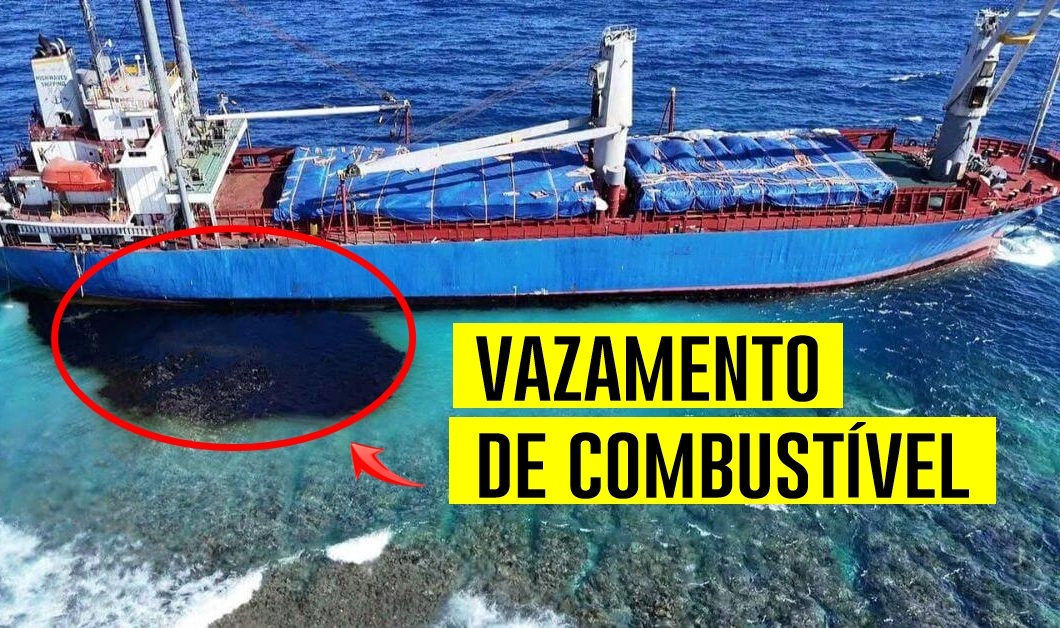

A 90-Meter Ship Ran Aground, Causing A Fuel Leak That Threatens Marine Life And The Coral Reefs Near The Accident Area.
Recently, two serious maritime incidents in the Red Sea drew the attention of authorities and experts. Both cases, occurring near the Egyptian coast, exposed challenges related to maritime safety and environmental impact. See all the details of the fuel leak that generated major concerns.
The Grounding Of The VSG Glory And Fuel Leak
On November 22, 2024, the general cargo ship VSG Glory ran aground near the city of El Quseir, Egypt. The incident was caused by a combination of adverse weather conditions and a technical failure. Strong winds and high waves caused the ship to lose control and collide with a coral reef.
The vessel was carrying 4,000 tons of bran, 50 tons of solar oil, and 70 tons of diesel. In addition, there were 21 passengers on board. The impact caused a 60-centimeter fracture in the hull, allowing seawater to flood the engine room. This resulted in a small oil leak that affected the surrounding waters.
-
The U.S. Navy Conducts Submarine Tests in Idaho Lake to Detect Underwater Noises Hidden by the Ocean

-
Nuclear Submarine USS Alexandria Retired After 35 Years, Having Completed Over 1 Million Miles in Missions

-
MODEC Introduces New Hull Design for FPSO Gato do Mato to Produce Up to 120,000 Barrels of Oil Per Day in Brazil’s Pre-Salt Region
-
This Massive 12-Meter, 21-Ton Underwater Drone Can Operate Autonomously for Up to Five Days


Efforts To Contain The Fuel Leak
Authorities quickly reacted to prevent greater damage. A containment operation was initiated, using 200 meters of rubber barriers and 100 meters of oil-absorbent barriers. The priority was to prevent the leak from spreading and causing further harm to the ecosystem.
However, the weather conditions continued to be challenging. Strong winds displaced some barriers onto the beach, increasing the difficulty of the containment work. Local residents reported the return of the smell of oil and visible signs of contamination in the area.

The VSG Glory, which was already leaning, worsened its position. Sounds of friction between the vessel and the reef were heard, causing further concern about the possibility of new structural damage.
Sinking Of The Tourist Boat Sea Story
Just three days after the VSG Glory incident, on November 25, the tourist boat Sea Story sank near Marsa Alam, also in the Red Sea. The boat was on a diving expedition that was supposed to last six days, departing from Porto Ghalib and scheduled to return to Hurghada.
There were 45 people on board, including 31 tourists from various nationalities and 14 Egyptian crew members. The weather conditions, again unfavorable, played a crucial role in the accident. Winds of 34 knots and waves up to four meters made it impossible for the vessel to withstand the bad weather.
Despite the adverse conditions, the trip had been initiated, even with the Red Sea Port Authority issuing warnings and suspending maritime traffic due to the weather.
Rescue Operations
Rescue operations were intense. Helicopters and a frigate from the Egyptian Navy were mobilized to save the victims. Of the 45 occupants, 28 were rescued alive, while 17 were initially reported missing. Later, four bodies were recovered, reducing the number of missing persons to seven.
The survivors were taken to hospitals for medical evaluation. Among them were tourists from countries such as Germany, the United States, Ireland, Norway, Spain, China, and others. The search for the missing continues, with intensified efforts to find signs of life or locate the remaining bodies.
Environmental And Human Impacts
The two incidents brought environmental and human concerns to the forefront. In the case of the VSG Glory, the oil leak threatens the region’s rich biodiversity, including coral reefs that play a vital role in the local ecosystem. In the case of the Sea Story, in addition to the loss of human lives, there is a risk of pollution caused by debris and possible waste released into the sea.
Environmental authorities reinforced monitoring and containment measures to minimize damage. However, the recovery of the affected ecosystems may take months or even years.
Lessons And Future Measures
The incidents highlight the importance of respecting weather conditions and alerts issued by authorities. In addition, they reinforce the need for revisions to maritime safety protocols, especially in sensitive regions such as the Red Sea.
As investigations continue, experts point to the urgency of more effective preventive measures. Improving communication between crews and authorities, along with more rigorous monitoring of weather conditions, are essential steps to prevent future tragedies.
The international community is closely watching the developments and actions of the Egyptian government. Ensuring the safety of maritime operations and protecting the environment are challenges that require immediate and long-term solutions.