Portuguese
  Spanish


Research With Ultramarathon Runners Reveals High Presence of Precancerous Tumors in the Colon, Even Among Those Considered Healthy and Active
A new study presented at ASCO 2025, the world’s largest oncology conference, raised an unexpected alert: marathon and ultramarathon runners between the ages of 35 and 50 have significantly higher rates of precancerous tumors in the colon than the general population. The information was published by the Daily Mail this Sunday, 01/06.
Of the 100 runners assessed, 41% had at least one adenoma, a type of polyp that can develop into cancer. Another 15% had advanced adenomas, and more than half reported rectal bleeding, a symptom often overlooked by doctors but that can be indicative of colorectal cancer.
According to oncologist Dr. Timothy Cannon, who led the research, the motivation for the study came from observing that several of his patients with colon cancer, still young and extremely active, were long-distance runners.
-
South Korea Tows 18 Concrete Blocks Weighing Up to 48,000 Tons Over 36 km to Construct a 3.2 km Underwater Tunnel Between Busan and Geoje, Installed Nearly 50 Meters Deep

-
Chinese Tianwen-2 Mission Targets Near-Earth Asteroid After 1 Billion Kilometer Journey to Collect Ancient Samples, Aiming to Uncover Clues About Water, Organic Compounds, and Solar System Origins Before Heading to a Comet

-
France Constructs 900-Meter Sea Wall in Brest, Expands Port by 14 Hectares for Marine Renewable Energy Hub
-
New Discovery Suggests Prehistoric “Hobbits” May Have Survived on Komodo Dragon Remains





The central hypothesis is that extreme running diverts blood flow from the colon to the leg muscles, which can cause microscopic intestinal infarctions, cell death, and accelerated regeneration of cells, a scenario that favors mutations associated with cancer.
Although the research is observational and not conclusive, the data is concerning. “If you run long distances and notice blood in your stool, do not ignore it. Get a colonoscopy, even if you are not yet of the recommended age for the preventive exam,” Dr. Cannon warned.
The discovery also raises doubts about the constant consumption of energy bars and gels, common among runners, as they are ultra-processed foods, a category already linked to increased risk for various types of cancer.
Young, Healthy, and Shocked by the Diagnosis
Cases like that of Phil Decker, diagnosed with stage 4 colorectal cancer while training for a marathon, illustrate the shock experienced by patients who strictly followed a healthy lifestyle.
Other examples include Radwah Oda, diagnosed at 33, and Laurie Koshers, a vegetarian and daily runner, who was surprised at 44 with the same diagnosis. The case of John B. Johnson, a marathon runner at 35, reinforces the pattern identified by the study.
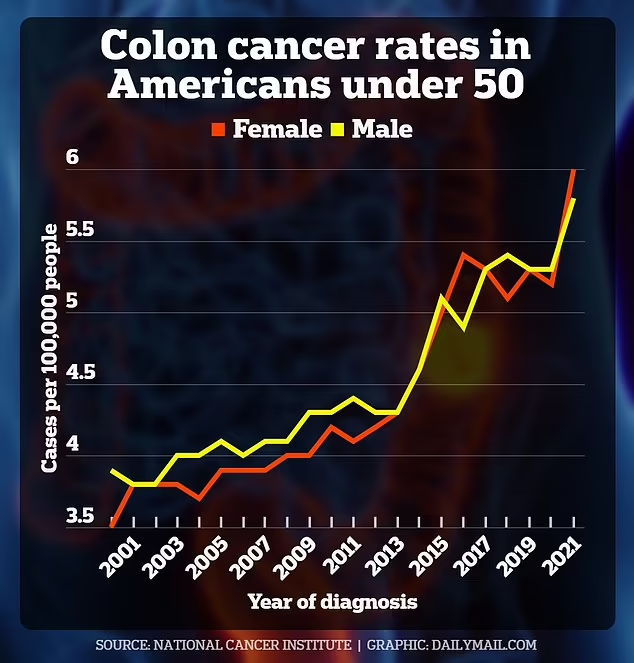
These personal accounts have intensified the debate about the silent epidemic of early colorectal cancer: in the U.S., cases among people under 50 are rising, while decreasing among older individuals.
According to data from the American Cancer Society, more than 20,000 people under 50 will be diagnosed with colorectal cancer in 2025. Among young people aged 20 to 34, the rate of new cases is expected to rise by 90% by 2030. Among adolescents, the jump has been 500% since the 2000s.
The lingering question: is running the cause or just a factor among many? There is still no consensus. Genetic factors, diet, intestinal inflammation, and dietary habits, such as excessive use of supplements and processed foods, are all under investigation.
The message from the medical community, however, is clear: prevention and attention to signs are crucial, even among those who consider themselves “invulnerable” to the disease. After all, as one of the patients said: “I was doing everything right, and still, I was caught by surprise”.