Portuguese
  Spanish


The Volcano In Italy, Considered The Volcano With The Highest Destructive Potential In All Of Europe, Shows Signs Of Activity That Could Bring Devastating Impacts To The Planet.
Since 2005, the volcano in Italy, known as Campi Flegrei, has been showing signs of activity beneath its surface. Located near Vesuvius, famous for burying Pompeii in 79 A.D., it is considered the volcano with the highest destructive potential in all of Europe. And the threat doesn’t stop there: scientists believe that an eruption of this supervolcano could trigger global consequences, from climate change to impacts on daily life around the world.
Volcano In Italy: The Sleeping Giant
The name Campi Flegrei means “burning fields” and describes a volcanic complex formed by various craters. Its last recorded eruption occurred in 1538, nearly 500 years ago. Despite this, it is still not classified as active, but recent studies suggest that the volcano may be entering a phase of progressive activity.
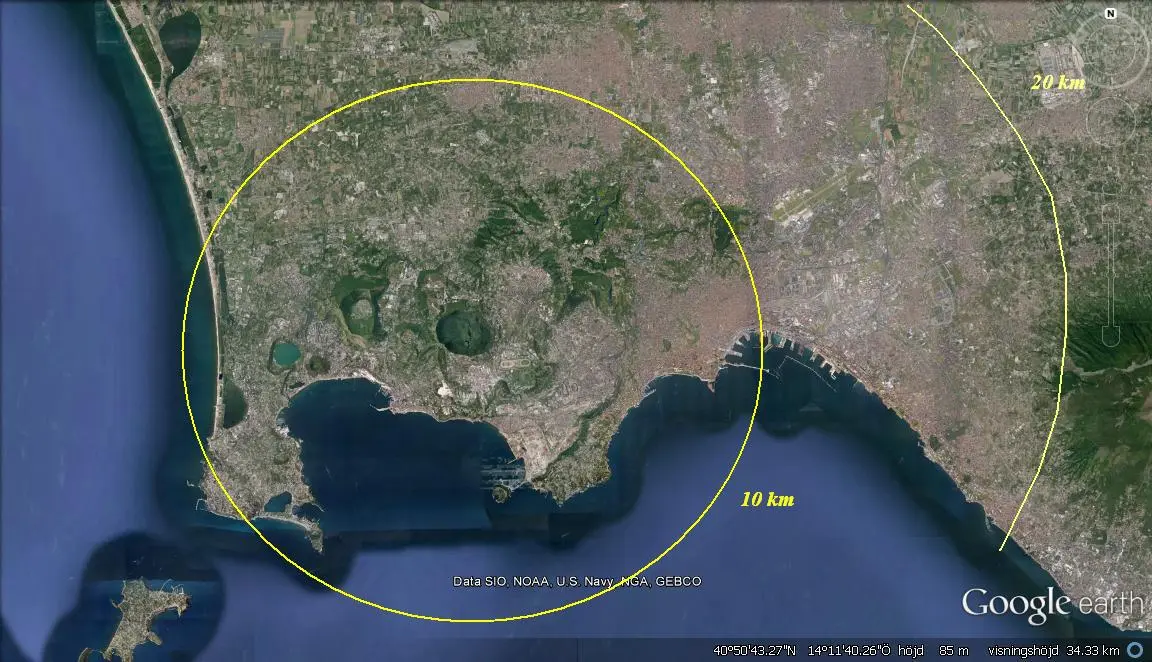
These “burning fields” have already had a terrifying impact on the history of the Earth: about 39,000 years ago, one of its eruptions was so violent that it is believed to have contributed to the extinction of the Neanderthal man. The force of the event was so great that remnants of magma from that time have been found in Greenland, 4,500 kilometers away.
-
AI Security System in Brazil Aims to Cut False Alarms by Differentiating Pets from Intruders, Enhancing 24/7 Monitoring for Homes and Businesses

-
Archaeologists Discover 1,500-Year-Old Byzantine Mosaic with Greek Biblical Inscription in Israel, Uncover Ruins of 10 Buildings Near Kiryat Gat
-
Ohio Carpenter Finds 308-Gram Meteorite the Size of a Baseball After Dreaming of Its Location

-
Chinese Student Builds Humanoid Robot for $2,100 at Age 20, Now Leads Robotics Startup in China


A Supervolcano And Its Dangers
Campi Flegrei is classified as a supervolcano due to its ability to release more than a thousand cubic kilometers of volcanic material in a single eruption. Each day, it releases an impressive 2,273 m³ of carbon dioxide, while some of its craters, such as Solfatara, have intensified carbon dioxide (CO2) emissions, dumping up to 5,000 tons per day in the past year.
In the last 19 years, the ground around the volcano in Italy has risen over 134 centimeters, resulting from internal pressure buildup. For specialists, this is a sign that magma is moving, potentially leading to a major eruption in the future.
Effects Of A Possible Eruption
If it erupts, the volcano in Italy could blanket the globe with clouds of ash and gases, blocking solar radiation and causing what is known as a “volcanic winter.” This phenomenon causes global cooling, alterations in rainfall patterns, and the occurrence of acid rain. On the other hand, the increase in carbon dioxide emissions in a short period could also intensify the greenhouse effect, raising temperatures.
The impact would be devastating not only for Europe but for the planet as a whole. Air transport systems would be disrupted, crops could be destroyed, and the global economy would face severe crises.
It’s Not Time To Panic
Despite the signs of movement, Campi Flegrei is still considered inactive. Current activity, according to experts, is limited to the release of gases and ground displacement. However, with the title of the volcano with the highest destructive potential in all of Europe, it remains under constant surveillance by scientists.
What is clear is that the awakening of a volcano in Italy like Campi Flegrei would not just be a local event—but an event with the potential to transform the planet.