






 Portuguese
  Spanish


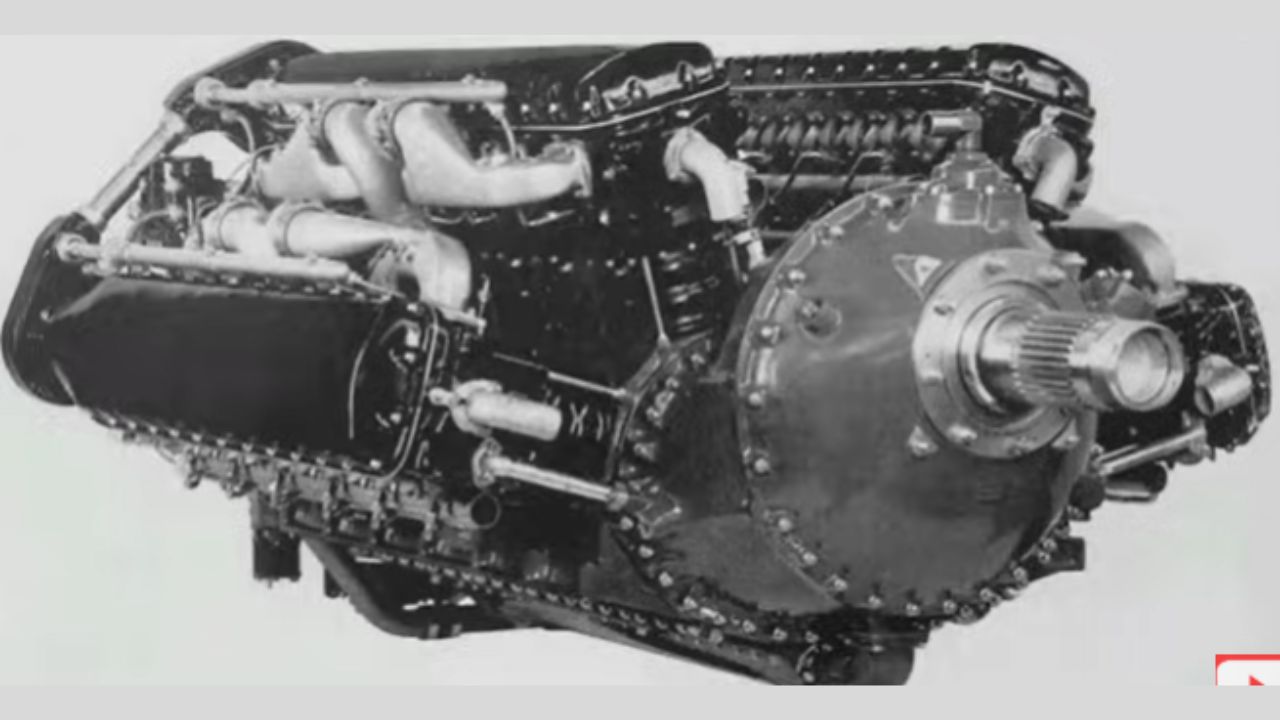


Created From the Union of Two V12s, This Rare 24-Cylinder Engine Was One of the Biggest Bets of Military Engineering, but Ended Up Becoming a Footnote in the History of World War II.
At the height of the technological race in the 1930s, when the imminence of a global conflict required engineering leaps, the United States Army Air Corps made an audacious order: an aircraft engine with power and size never seen before. The response from Allison Engine Company was the V3420, an impressive W24 engine that, as detailed by the portal Vehicles and Stories, represented the pinnacle of the technology of the time, but which, due to a series of factors, never equipped the combat fleets as planned.
This colossal engine was born from an idea that was both practical and brilliant: to merge two of its already renowned V12 engines, the Allison V-1710, into a single block. The result was a mechanical masterpiece of 24 cylinders and 56 liters of displacement, capable of generating power numbers that astonished the competition. Even with its success in prototypes, the giant had its production limited to about 150 units, becoming a coveted relic and a case study on innovation and timing in wartime.
The Origin of the Titan: How a 24-Cylinder Engine Was Born?
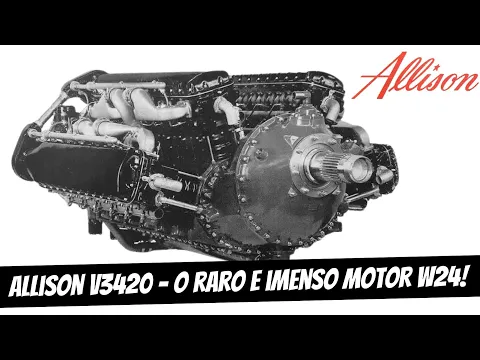

The military demand for a high-performance engine was not a mere whim, but a strategic necessity. To operate larger, heavier bombers with greater autonomy, a mechanical heart of corresponding caliber was required. In 1937, Allison presented its solution, the V-3420, whose name derives from its 3,420 cubic inches of displacement. The chosen architecture, as pointed out by the analysis of Vehicles and Stories, was that of a W24 engine, which consisted of two banks of V cylinders (V12) mounted in a single crankcase, with the crankshafts synchronized to drive a single propeller.
-
Nivea Blue Tin Cream: Popular Post-Beach and Pool, But Pharmacist Warns About Missing Ingredients and Common Summer Mistakes Regarding UVA and UVB Protection.

-
Archaeologists Recover Colossal Structure Lost for Over 1,600 Years Under the Sea, Including 22 Monumental Blocks Weighing Up to 80 Tons, Intriguing Experts.
-
Longest Solar Eclipse of the Century Will Turn Day to Night for Over 6 Minutes, Allowing Star Gazing; Won’t Recur for 156 Years
-
At 17, she hand-painted her first watercolor design for school uniforms; her brand grew without investors, sold 135,000 pieces, and aims for $3 million in revenue by 2026.


This “tandem” approach was a masterstroke in terms of logistics and development. By using the V-1710 as a base, an already approved and in-production engine, Allison ensured that the overwhelming majority of internal components, such as pistons, connecting rods, and valves, were interchangeable. This not only accelerated the project but also simplified maintenance and parts supply, crucial factors for any military equipment. The final configuration was a “W” with a 30° angle between the two V12 engines.
Cutting-Edge Engineering: The Technology Behind the Giant
The W24 engine V-3420 was not only large; it was incredibly advanced for its time. Built with extensive use of lightweight alloys to optimize the power-to-weight ratio, its dry weight was approximately 1,184 kg, a remarkable number for a unit with its capacity. Each of the 24 cylinders featured four valves, two spark plugs, and a sophisticated mechanical fuel injection system from Bendix Stromberg, ensuring efficient combustion of the high-octane gasoline (between 100 and 130 octanes) it consumed.
To push the limits of performance, the design included a massive mechanical supercharger with intercooler, a cutting-edge feature that cooled the intake air, increasing its density and allowing for a much richer air-fuel mixture. Thanks to this technological package, the power of the Allison V-3420 could reach an impressive 2,885 horsepower. The entire system was liquid-cooled, ensuring more stable thermal control during high-demand operations, a vital characteristic for long-duration flights.
Why Did Such a Powerful Engine Never See Combat?
Here lies the great paradox of this story. Despite all its power and innovation, and having performed well in tests in various experimental aircraft, such as the Douglas XB-19 and the Boeing XB-39, the W24 engine from Allison was never produced on a large scale. The complexity of the project created delays in development, and when the engine finally reached a stage of maturity, the scenario of World War II had already changed drastically.
The strategic focus of the air forces shifted to simpler, more reliable solutions, and, primarily, already available in large volumes. Moreover, the advent of jet propulsion was already emerging as the inevitable future of military aviation, making the investment in such a complex piston engine less appealing. As emphasized by the site Vehicles and Stories, the limited production sealed the fate of the V-3420 as an engineering marvel that essentially “arrived too late to the party”.
The grandeur of a project like the W24 engine Allison V-3420 makes us ponder: is the bet on complex and revolutionary technologies worth the risk, even if they do not reach mass production? Or is the simplicity of tested and proven engines always the best path, especially in times of urgency?
Share your thoughts in the comments; we want to know what you think about this fascinating story of engineering!


