






 Portuguese
  Spanish


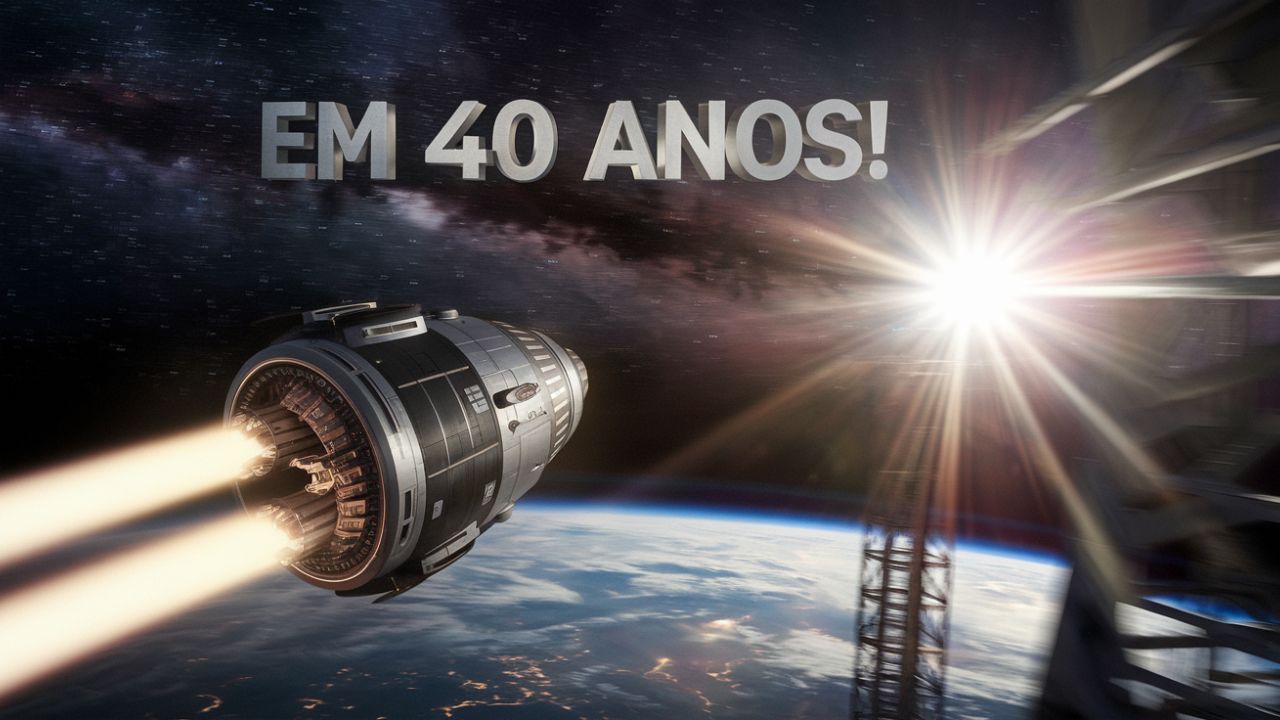


Bold Project Promises to Send a 1,000 kg Spaceship to Alpha Centauri in Just 40 Years Using Sun-Proximate Electron Beam Technology, Revolutionizing Space Exploration Like Never Before.
Exploring another star system during your lifetime. For many, the idea seems straight out of movies like Star Trek. However, scientists have been working on real projects to reach Alpha Centauri, the closest star system, using futuristic technologies.
Traveling to the stars is undoubtedly one of humanity’s greatest challenges. But, thanks to revolutionary proposals like Breakthrough Starshot and a new concept involving electron beams, we are closer to turning this fantasy into reality.
The Challenge of Interstellar Travel
Traveling from one star to another is not just complicated — it is nearly impossible with current technologies. To give you an idea, Voyager 1, our most distant spacecraft, would take thousands of years to reach Alpha Centauri.
-
James Webb Telescope Uncovers Unexpected Clues on Mysterious Moon, Potentially Redefining Planetary Origins

-
$1.5 Billion Sleipnir Vessel Transforms Ocean into Floating Construction Site with 12 Hybrid Engines and Capacity to Lift 20,000 Tons

-
23 Years After Tragedy, Brazil’s Alcântara Space Center to Launch New Suborbital Rocket in 2026 with South Korean SEBIT Project Targeting Near-Space Tests
-
Entrepreneur Turns Neighbor’s Coffee Grounds Waste into Eco-Friendly Pellets, Earning Up to $40,000 Monthly in Brazil


The main problem is the distance. Alpha Centauri is 4.25 light-years from Earth. This means that even traveling at the speed of light, it would take us over 4 years to get there. However, reaching significant fractions of that speed would already be a huge achievement.
Breakthrough Starshot: The First Step Toward the Stars

The Breakthrough Starshot project is one of the boldest when it comes to interstellar travel. The idea is to use an extremely powerful laser to propel an ultra-light solar sail. This probe, weighing just a few grams, could reach up to 20% of the speed of light.
At this speed, the probe could reach Alpha Centauri in just 20 years. Sounds incredible, right? But the small size of the payload limits what can be explored. This is the main challenge of the project.
The New Proposal for Electron Beams
What if we could send something larger? Scientists suggest using electron beams fired from a solar stellite — a static satellite positioned near the Sun. This beam could push a spacecraft weighing up to 1,000 kg, much larger than the Breakthrough Starshot probe.
The idea is fascinating but full of obstacles. The satellite would need to survive the extreme heat of the Sun, and the spacecraft would require innovative materials to withstand the forces of the beam. Still, this approach promises to propel the spacecraft well beyond the Solar System in just 40 years.
What Does This Mean for the Future of Space Exploration?
If this technology becomes feasible, we would be making a giant leap in space exploration. Imagine what we could discover with a 1,000 kg spacecraft exploring Alpha Centauri. We could search for signs of life, study exoplanets in detail, or even plan future crewed missions.
This new approach also opens doors for other advancements. If we can build solar stellites, humanity could create an interstellar transport system that previously seemed impossible.
Alpha Centauri: The Promise of a New Home?
Alpha Centauri is not only the closest star system; it is also one of the most intriguing. With three stars and at least one confirmed planet, named Proxima b, the chances of finding habitable conditions are real.
Proxima b is in its star’s habitable zone, which means it may have liquid water on its surface. And where there is water, there is hope for life. This is one of the reasons that make Alpha Centauri our preferred destination for interstellar missions.


