





 Portuguese
  English
  Spanish
  3 min of reading
  0 comments


Lunar meteorite NWA 12593 preserves marks of three different impacts and helps scientists investigate a decisive period in the history of the Moon, early Earth, and Vesta, when asteroid collisions still left deep marks in the inner Solar System.
Lunar meteorite analyzed by scientists preserves marks of a colossal impact that occurred 3.5 billion years ago on the Moon, revealing clues about bombardments that hit early Earth and Vesta, in the belt.
Lunar meteorite records impacts
The Northwest Africa 12593 lunar meteorite, known as NWA 12593, holds evidence of three events. The analysis was conducted by Carolyn Crow, University of Colorado Boulder, and colleagues.
The first event, dated by radiometric methods, occurred about 3.5 billion years ago. It transformed part of the lunar surface into molten material, similar to a lava flow.
-
A giant parrot that doesn’t fly, weighs up to 4 kg, and smells like honey almost disappeared from the planet, but an extreme program in New Zealand used predator-free islands, genetics, fake eggs, and a controlled diet to save the kakapo from extinction.

-
Flush system promises to save up to 50% of water in the bathroom by replacing traditional parts with a simple tilting tank, without a button, without a seal in the drain, and with an adjustment from 1 to 6 liters per use.

-
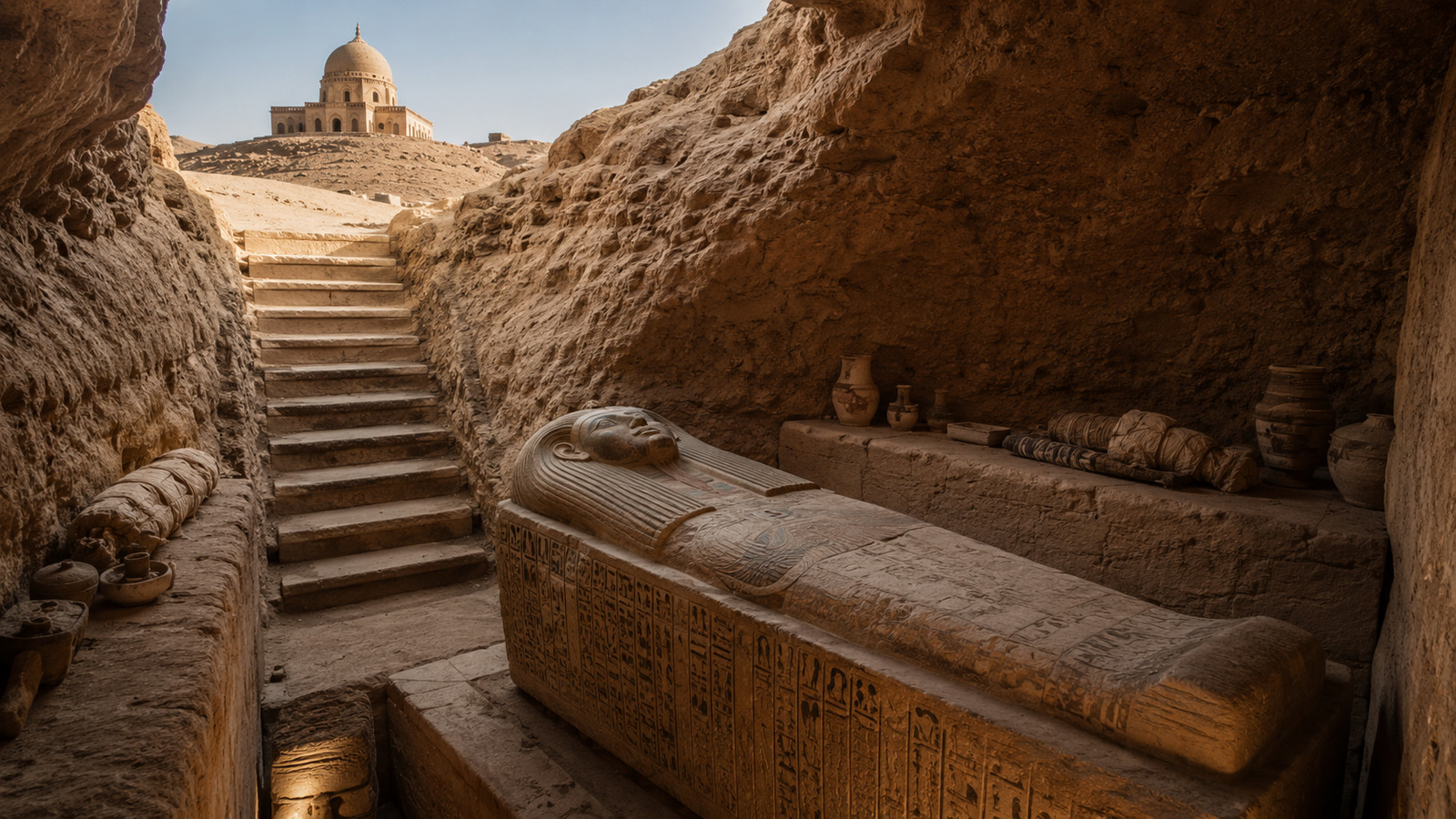
Archaeologists descend a forgotten staircase in Aswan, Egypt, and find a huge limestone sarcophagus beneath the Aga Khan necropolis, with hieroglyphs, mummies, and signs of a cemetery used for centuries.

-
The equipment uses water evaporation cooling, promises to reduce up to 5°C indoors, consumes only 20 VA, and transforms dual-flow ventilation into a natural alternative to air conditioning.



This extreme heat generated cubic zirconia, a mineral used in jewelry, but formed only at very high temperatures. In the samples, traces called the cubic zirconia phase heritage were identified.
Why the finding matters
The Earth changed in its first billions of years, when life, atmosphere, and oceans emerged. Few rocks preserve this phase, due to erosion, subduction, burial, and surface remodeling.
Records kept on the Moon help reconstruct events that may also have affected our planet. The first fossil evidence of life on Earth appears about 3.5 billion years ago.
Crow highlighted that understanding catastrophic impacts is an important part of investigating how life was established. The lunar meteorite functions as a record of a period poorly preserved in Earth’s rocks.
Lunar breccia and journey to Earth
The second impact recorded in NWA 12593 is linked to the formation of the rock. The meteorite is a breccia, material composed of fragments joined after a smaller impact that broke the molten layer.
The researchers’ comparison is with broken concrete, full of parts held together by cement. In the lunar case, the fragments were gathered and fused by the impact.
The third event is indicated by the presence of the meteorite on Earth. A more recent collision must have dislodged the fragment from the Moon and launched the breccia towards the planet.
The age of the first impact coincides with known records on Earth and Vesta, the fourth largest asteroid in the belt. This rare coincidence suggests a connection between three celestial bodies during the Solar System’s transition to sporadic impacts.
The results were published on May 12, 2026, in the journal Geology. What do you think this lunar meteorite reveals about the history of the Moon, Earth, and major impacts in the Solar System? Leave your opinion in the comments and share your reading about this discovery.
With information from SCI.NEWS








Be the first to react!