Portuguese
  Spanish


MG U9 Pickup, from Chinese MG Motor, Promises to Arrive in Brazil with 224 hp Diesel Engine, Over 1,000 km Autonomy and Integrated Bed, Repeating Success in Markets like Australia and Asia.
MG Motor is preparing the arrival of the U9 in Brazil as its first medium pickup to compete in the segment with Toyota Hilux and Ford Ranger.
The strategy mirrors the approach adopted in Australia, where the model is already sold with a 2.5 turbodiesel engine, 4×4 traction, over 1,000 km autonomy with an 80-liter tank, and state-of-the-art technology and safety features.
Here, the launch is projected to occur starting in 2027, in line with the brand’s schedule to expand the portfolio after MG4, S5, and the electric sports car Cyberster.
-
End of an era in Brazil: beloved sedan by Brazilians is discontinued despite having a 2.0 engine with 151 hp, CVT transmission, 466-liter trunk, and up to 650 km of range.

-
New Law Proposal in Brazil Could Heavily Penalize Drivers: Dangerous Overtaking May Become a Serious Offense with Fines Increased Tenfold and a 12-Month License Suspension; Update on 2026 Progress

-
Electric Revolution: Watts W125 Motorcycle Offers 160 km Range, 90 km/h Speed, and Affordable Price Starting at $3,000
-
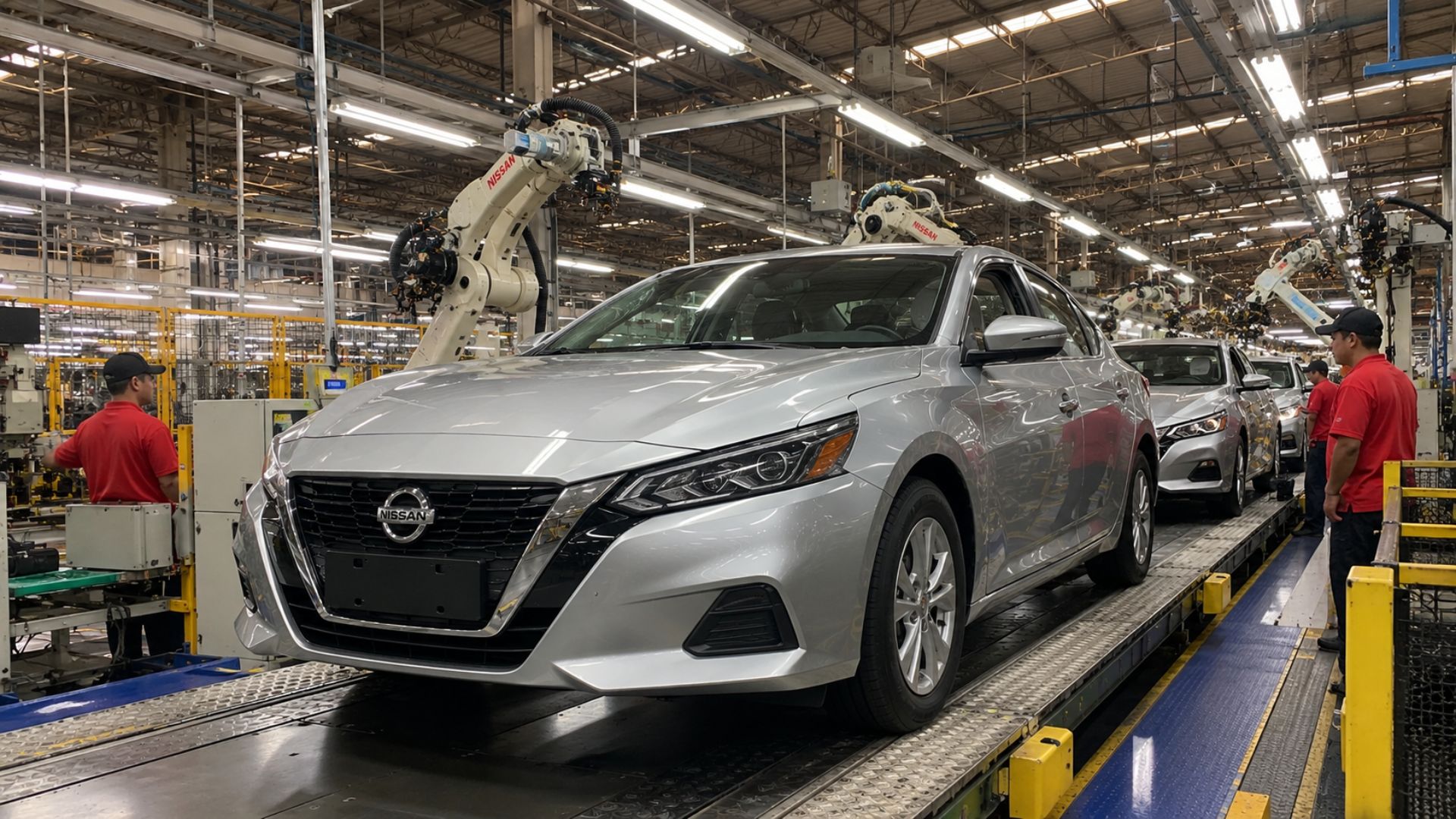
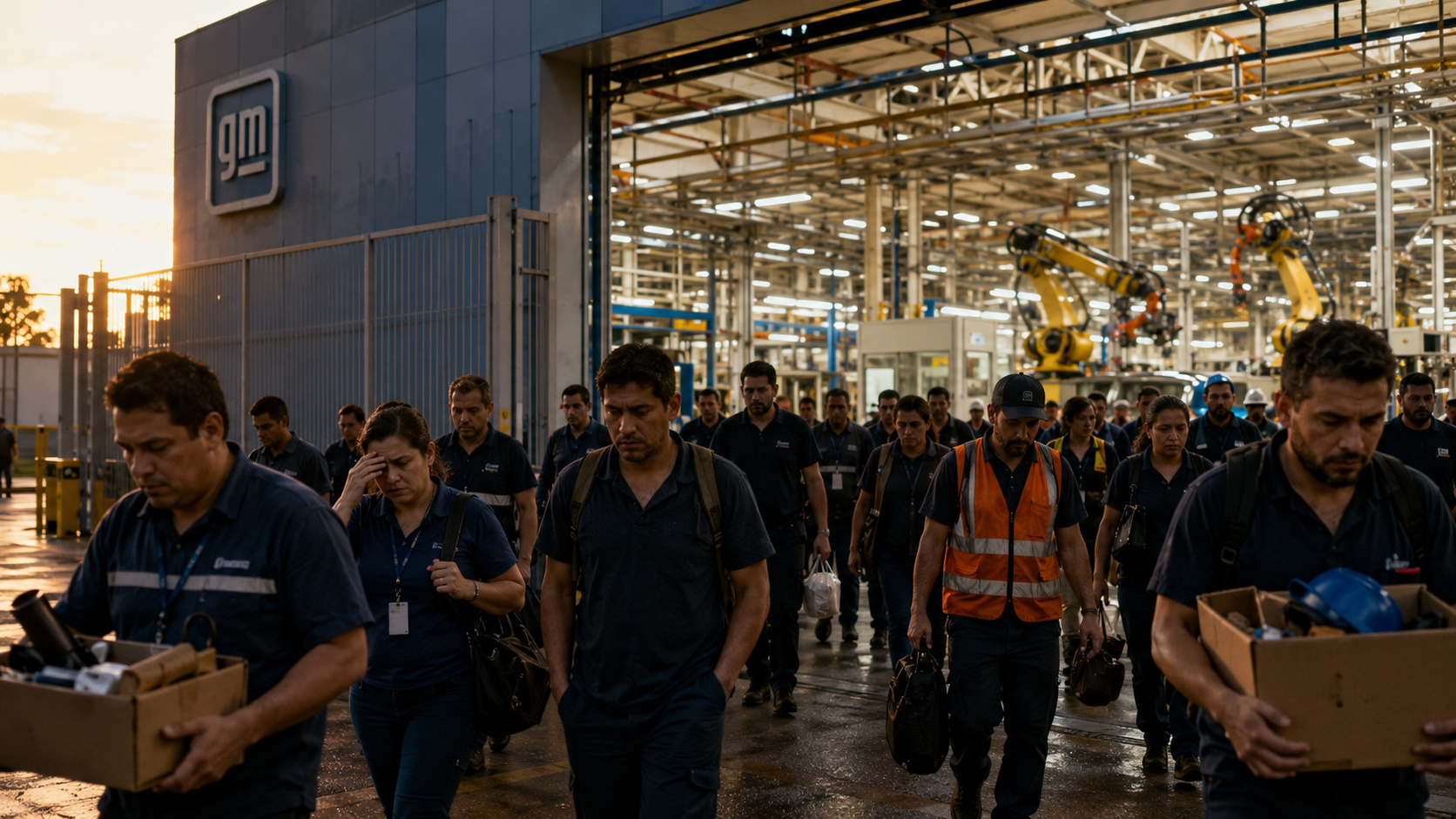
General Motors Replaces Over a Thousand Workers with 50 Cobots at Electric Vehicle Plant, UAW Union Criticizes Move Amid Industry’s Automation Push


Robust Design and Integrated Bed
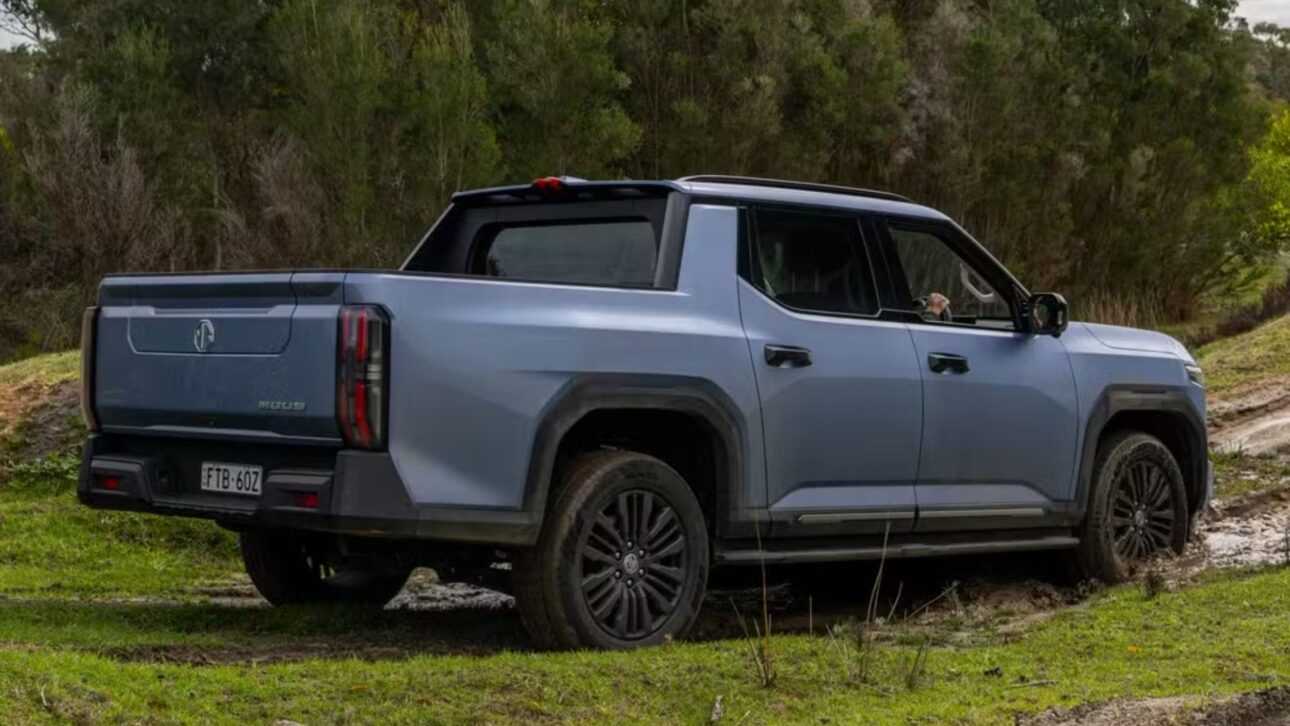
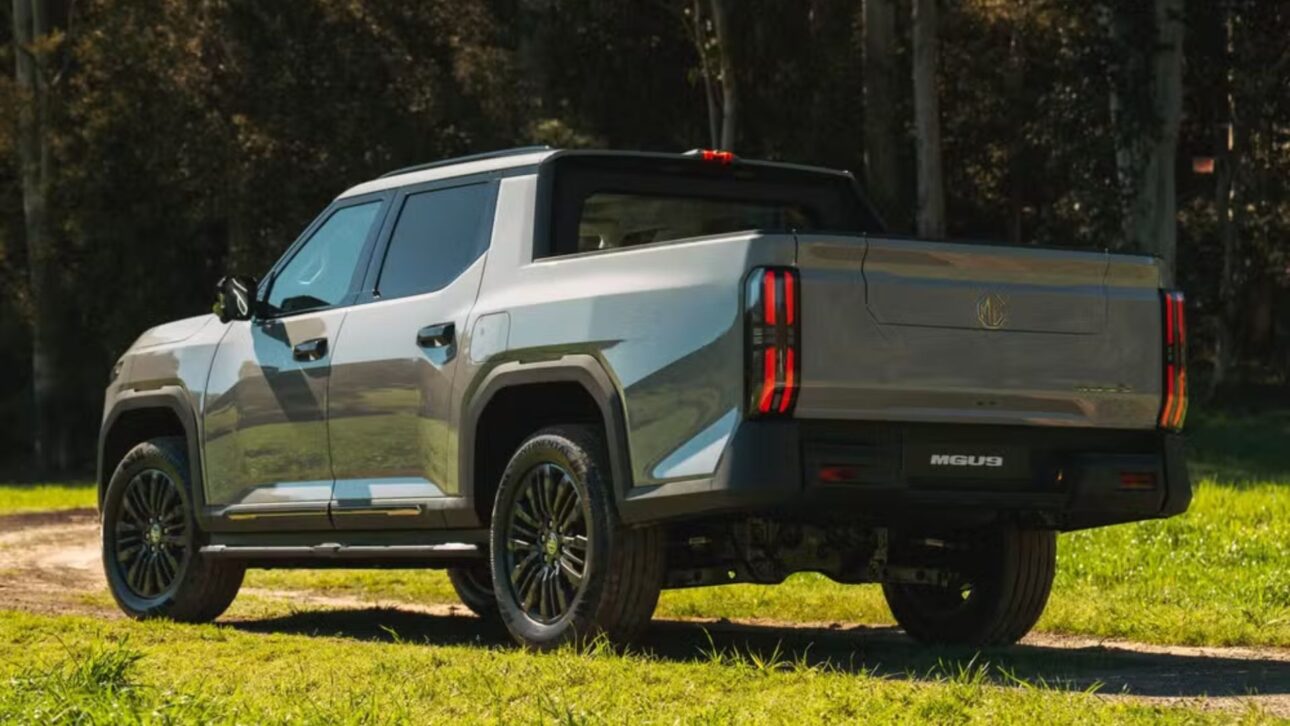
The U9 adopts straight lines, imposing proportions, and a rear with vertical taillights.
What stands out most, however, is the integration between the cabin and the bed, a solution that increases structural rigidity and brings the proposal closer to North American styling.
Although it uses a ladder frame chassis, the pickup employs continuous body sides, without the typical separation between cabin and “tub.”
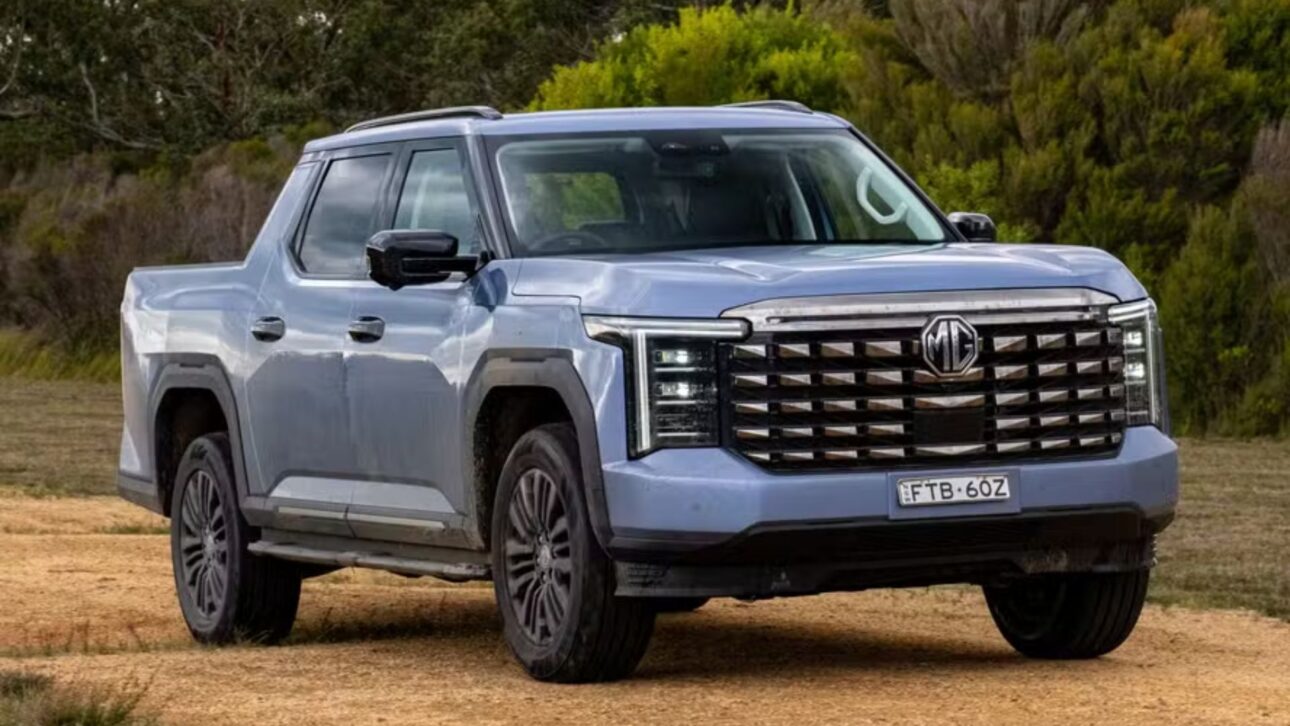
In markets where it is already sold as LDV Terron 9, this choice is pointed out as a factor for improving on-road behavior without sacrificing off-road robustness.
Dimensions and Capacities
The size confirms the “monster” vocation of the project.
The length exceeds 5.50 meters, the width is around 2.00 m, the height is close to 1.86 m, and the wheelbase is 3.30 m.
The bed can hold 1,200 liters, with a usable area of about 1,561 mm in length by 1,500/1,600 mm in width, depending on the version.
Off-road numbers include ground clearance of 220 mm (215 mm with load), approach and departure angles of 29° and 25°, and breakover angle of 20°.
With regard to payload, there are variations: versions with a rear leaf spring reach up to 1,100 kg capacity; others, with independent multilink rear suspension, range between 825 and 870 kg.
Towing capacity with brakes of 3,500 kg is standard.
Electric Midgate and Versatility
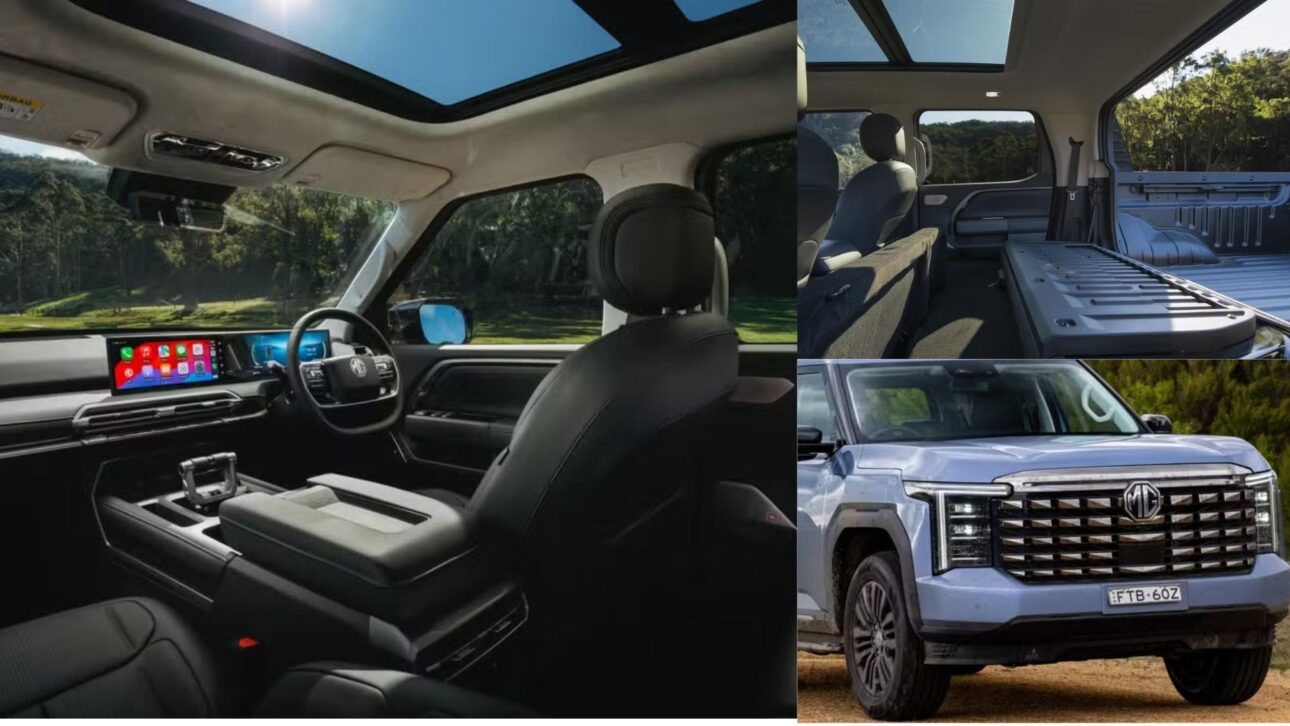
One of the functional differentiators is the Smart Hatch (Midgate), an electric rear panel that connects the cabin to the bed.
When folded down, it extends the cargo compartment and allows for the transport of items up to 2.4 meters.
The solution also increases the total volume to 1,600 liters with the rear seats folded down.
The integrated step rear tailgate eases access.
These features are already offered in the higher versions of the model in Australia and should guide the package for Brazil.
Technological Interior
Inside, the U9 features two 12.3-inch screens — instrument cluster and multimedia — with wireless Apple CarPlay and Android Auto, induction charger, and 360° cameras.
Depending on the trim level, there is driver’s seat with massage, ambient lighting, panoramic sunroof, and JBL sound system.
In terms of safety, the features include autonomous emergency braking, adaptive cruise control, blind spot monitoring, cross-traffic alert, and lane assist.
Diesel Engine and All-Wheel Drive
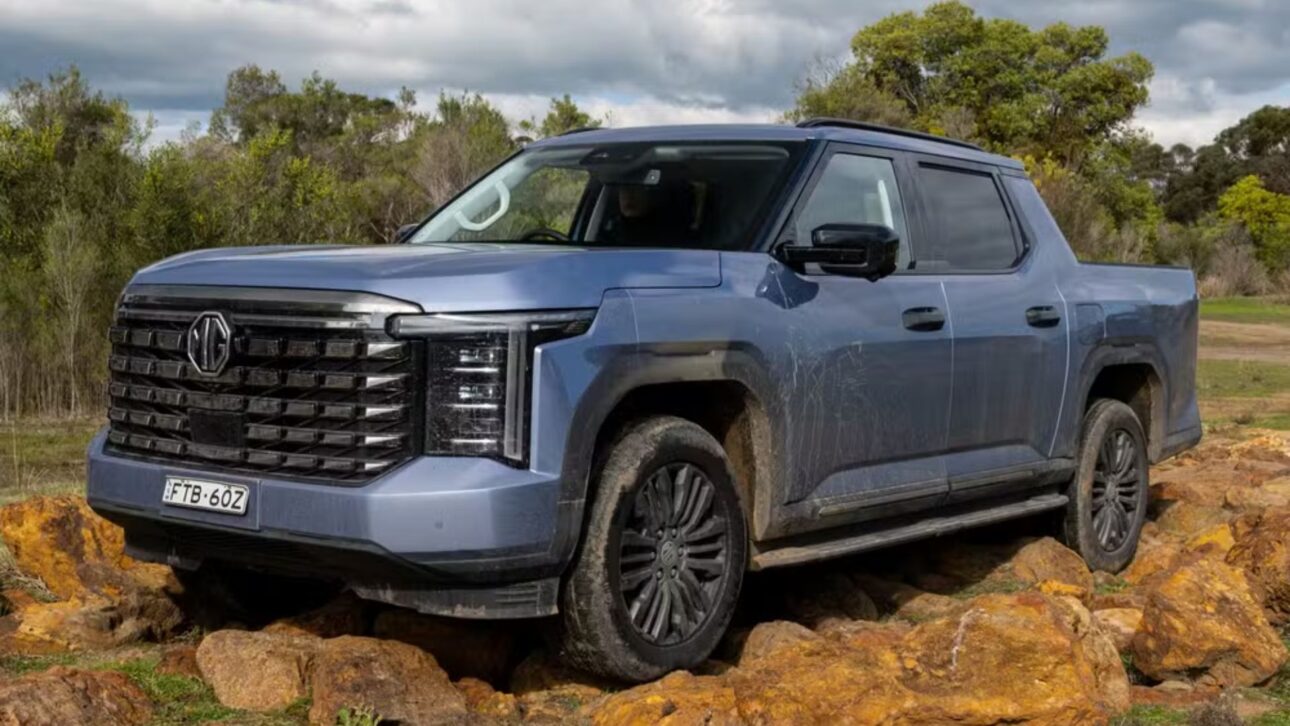
At launch, the U9 is expected to repeat the setup already seen in other markets: 2.5 turbodiesel four-cylinder engine, ZF eight-speed automatic transmission, and 4×4 drive with rear differential lock.
More expensive versions include front locking.
In terms of power, the technical sheets released by MG and LDV indicate 160 kW and 520 Nm (approximately 218 to 224 hp and 53 kgfm), a common variation according to the measurement standard.
With an 80-liter tank, the official consumption of 7.9 L/100 km projected in Australia results in autonomy exceeding 1,000 km.
Comfort and Robustness
The front suspension is always independent.
In the rear, the product combines two solutions according to positioning: leaf spring, better indicated for heavy loads and that supports the target of 1 ton or more of payload, and independent multilink, aimed at comfort and stability for urban and road use.
The adoption of the leaf is the natural way to comply with Brazilian legislation that restricts the use of diesel engines to vehicles with a minimum capacity of 1 ton.
MG’s Strategy in Brazil
The Brazilian operation of MG debuts with MG4, S5, and Cyberster.
The brand has already activated national websites and social media, confirmed 24 initial dealerships in 2025, and announced plans to expand the network in 2026.
The U9 pickup enters as the second move, with a planned arrival for 2027.
In parallel, industry sources report studies for local production in the medium term, still without any official announcement regarding location or schedule.
Partnership with Volkswagen
The U9 is part of the global family of the project sold as Maxus Interstellar X and LDV Terron 9.
Specialized publications point out that the new Volkswagen Amarok for South America, scheduled for 2027, will share the platform of this setup developed by SAIC.
In the meantime, the global Amarok continues to be based on the Ford Ranger, produced in South Africa.
Plug-In Hybrid Version
In addition to diesel, a U9 plug-in hybrid (PHEV) is planned in markets like Australia starting from 2027, according to local brand executives.
If confirmed in Brazil, it will compete directly with the BYD Shark and the Ford Ranger PHEV, expanding the range of electrified options in the segment.
For now, there is no official technical sheet released for the hybrid system.
Launch in the Brazilian Market
The most likely schedule places the MG U9 in Brazil after the consolidation of the network and the trio of electrics.
The initial configuration tends to prioritize the diesel 4×4 with 1 ton payload capacity and 3.5 t towing capacity, combining utility attributes with technology and comfort package.
As the global offer evolves, the brand may consider versions focused on comfort and, at a later stage, the plug-in hybrid option.