Portuguese
  Spanish


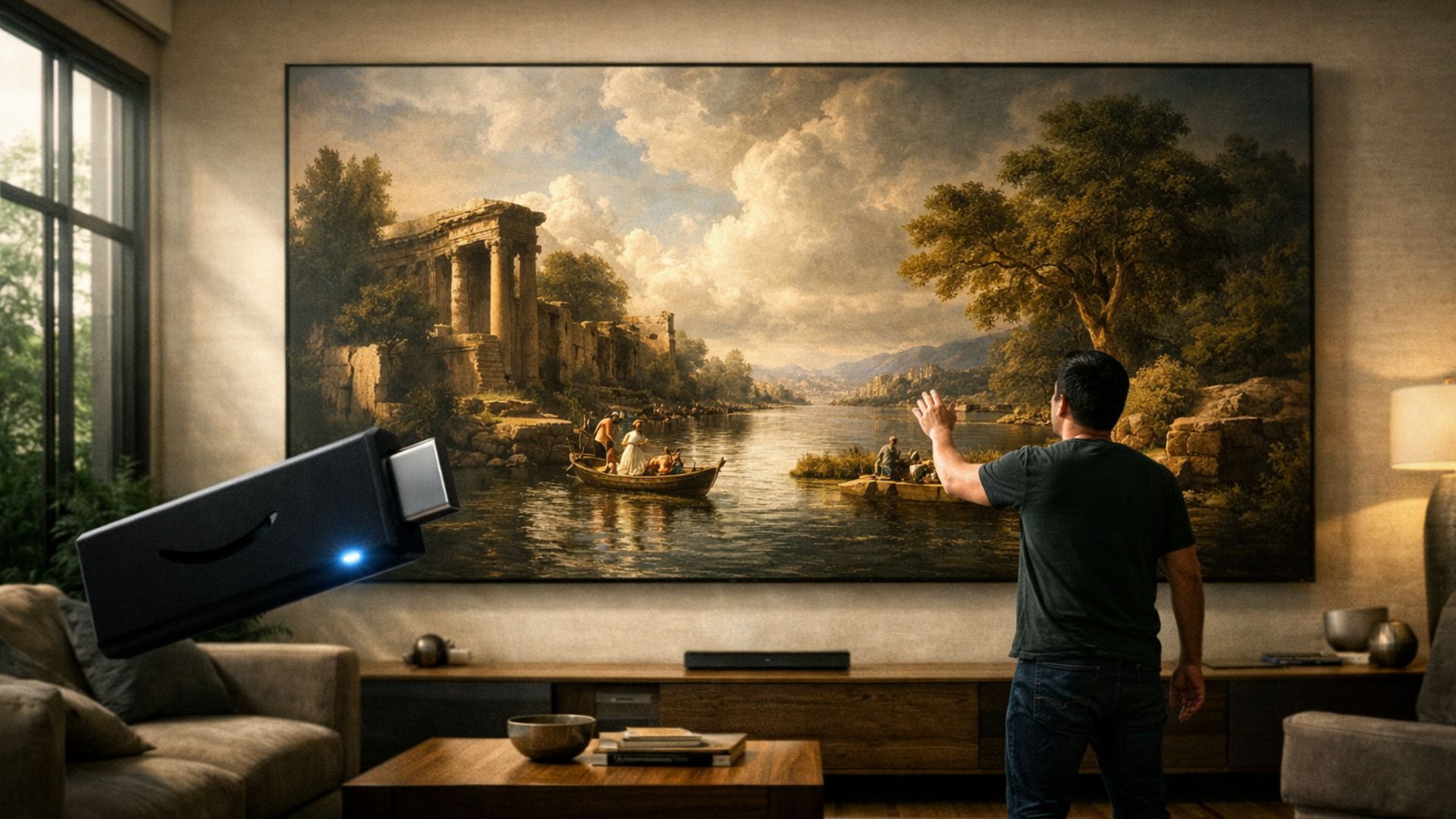

Amazon’s strategy combines performance, design, and artificial intelligence to transform TVs into entertainment hubs and decorative pieces, with new devices that prioritize speed, advanced connectivity, and integration with smart assistants in different consumption profiles.
By presenting the new generation of the Fire TV Stick HD and starting the pre-sale of the Ember Artline line, Amazon reinforces its strategy for home entertainment by uniting portability, voice command, and visual appeal aimed at room ambiance.
According to the company, the announcements were made on April 15, with deliveries expected later this month in selected markets, indicating a coordinated effort to reach different user profiles within the same digital ecosystem.
While the streaming dongle targets those looking to upgrade their television without changing devices, the new TVs advance into the decorative segment, where the screen also functions as a digital frame when not in use.
-
Why did a company that was already earning US$ 1 million decide to completely change its strategy? The answer begins with used bottles, worms, and an unexpected decision.

-
Where it almost never rains, residents hung giant nets in the desert mountains and started to ‘fish’ drinking water from the fog: the nets can collect thousands of liters per day directly from the mist.

-
Young people from Minas created a robot without screws or metal parts, betting on a strong and flexible structure to compete against a thousand teams in Houston and took Brazil to the top of world robotics for the first time; Sofia, 15, also made history with an unprecedented leadership award.

-
Detectorist found a 900-year-old silver coin


This simultaneous positioning helps to understand why the launches were presented as complementary, connecting convenience, aesthetics, and technological integration in a single brand expansion strategy within the home environment.
Thinner and Faster Fire TV Stick HD

Focusing on practicality, the new Fire TV Stick HD arrives with a reduction of about 30% in width compared to the previous generation, a feature that facilitates use in televisions installed close to the wall or with limited space for connections.
In addition to the physical adjustment, the device received performance improvements that, according to Amazon, represent a gain of over 30% in speed, directly impacting the opening of applications and the overall fluidity of navigation.
In everyday experience, this means less waiting time when starting content and a more responsive interface, especially relevant for users who use entry-level models and often face slowness in previous versions.
Another relevant point involves power supply, as the device can operate directly through the TV’s USB port, eliminating the need for an outlet in many scenarios and reinforcing the proposal for simplicity in installation.
If this option is not available, it is still possible to use a USB-C cable with an external power source, maintaining flexibility for different configurations and even for use while traveling or in temporary environments.
Wi-Fi 6, Bluetooth 5.3, and Alexa with AI
In the field of connectivity, Amazon has incorporated support for Wi-Fi 6 and Bluetooth 5.3, technologies that contribute to more stable connections and better performance when using wireless accessories, such as compatible headphones and speakers.
Even though it is a device aimed at HD streaming, the update seeks to reduce interference and network fluctuations, improving consistency in content playback under different usage conditions.
In terms of software, the Fire TV Stick now features the updated platform experience and the presence of integrated Alexa+, an enhanced version of the assistant with AI-based features.
According to Amazon, this evolution allows for interpreting more natural commands, suggesting content with greater accuracy, and controlling connected devices in a more contextualized manner within the smart home.
At the same time, the company has reorganized the system interface, highlighting categories such as movies, series, sports, and live broadcasts, in an attempt to reduce steps to reach the desired content.

Accessibility features gain prominence
Among the usability innovations, the Adaptive Display appears, a feature that will allow enlarging texts, menus, and visual elements of the interface to facilitate reading under different conditions.
The proposal goes beyond subtitle adjustments and seeks to offer more accessible navigation throughout the entire system, including catalog, settings, and recommendation areas.
With this, Amazon reinforces the inclusion of tools that cater to users with visual impairments, expanding the device’s reach without drastically altering the organization of the interface.
Ember Artline bets on design and frame effect
Alongside the stick, the Ember Artline line emerges with a focus on design, proposing to transform the television into a decorative element integrated into the environment when not in use as the main screen.
The models come with matte 4K QLED screen, support for Dolby Vision, HDR10+, and Wi-Fi 6, in addition to an approximate thickness of 38 millimeters, maintaining a profile considered slim for the category.
The comparison with design-oriented televisions is inevitable, although Amazon takes a distinct approach by concentrating all the hardware in the device itself, eliminating external modules.
This choice allows for a compact appearance without sacrificing connectivity, maintaining the proposal for direct wall installation with a look closer to that of a traditional painting.
Another differentiator is the interchangeable magnetic frames, with 10 finish options that include variations resembling wood, light metals, and dark tones.
More than 2,000 works and AI customization
When the art mode is activated, the television offers access to more than 2,000 works at no additional cost, covering styles ranging from classic paintings to contemporary photography and video content.
The integration with Amazon Photos expands usage possibilities, allowing users to display personal images in full screen or in automatic compositions, without the need for complex manual adjustments.
As a complement, the Match the Room feature uses artificial intelligence to analyze photos of the environment and suggest works that resonate with the colors and style of the space.
This feature seeks to reinforce the feeling that the TV is part of the decor, selecting visual content that is more compatible with the setting in which it is placed.
Price, launch, and arrival in Brazil
In the United States, the Fire TV Stick HD was launched for US$ 34.99, with deliveries expected to begin on April 29 in selected markets.
The Ember Artline line arrives in 55 and 65-inch versions, with prices starting at US$ 899.99, positioning itself in a higher range within the portfolio.
The first units are set to be shipped on April 22 in the United States and Canada, with later expansion to other countries according to the company’s schedule.
So far, there is no official confirmation regarding the arrival of the new products in Brazil, leaving the availability scenario in the national market undefined.