





 Portuguese
  English
  Spanish
  4 min of reading
  0 comments


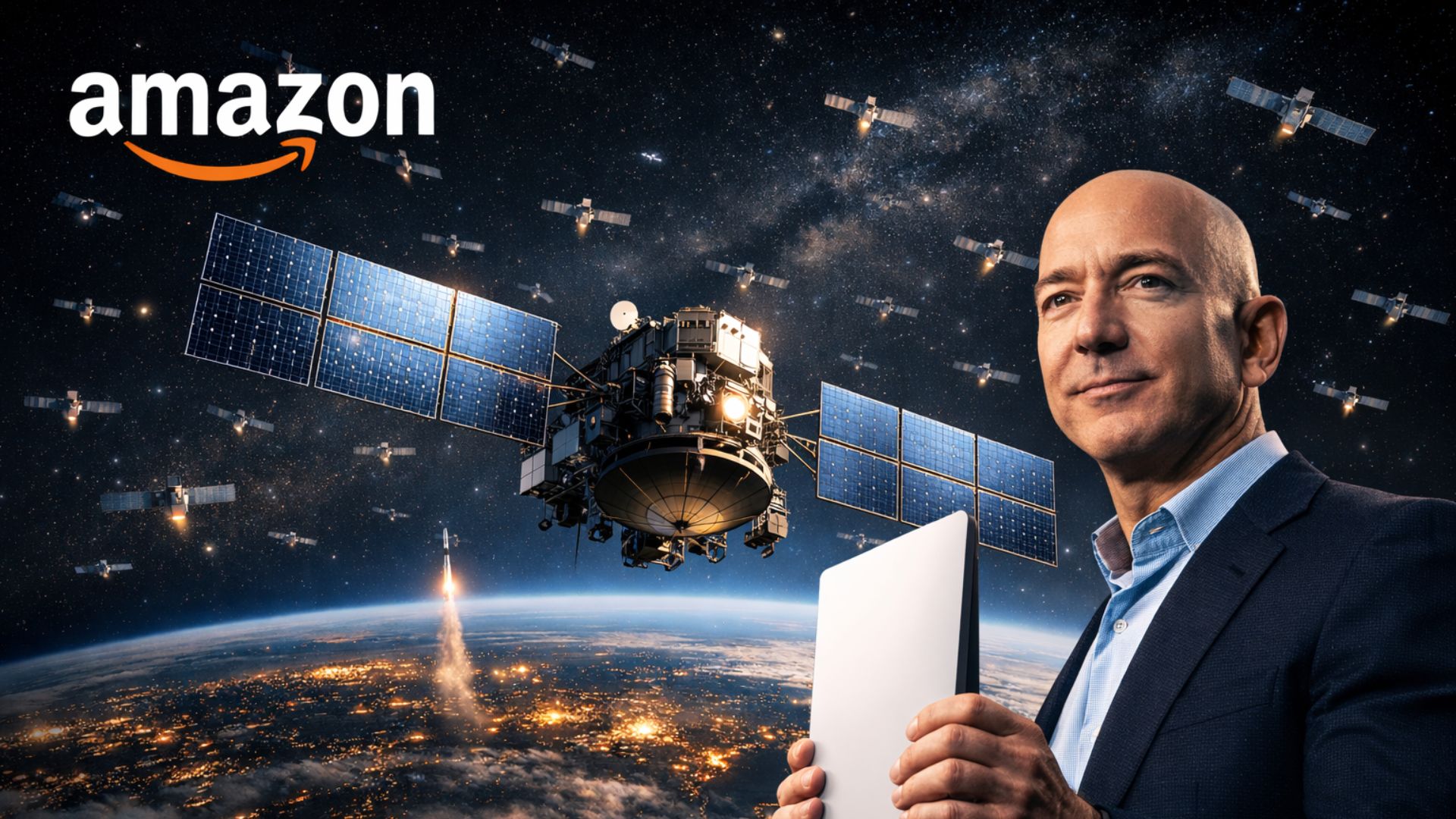
The Amazon announced on Tuesday (14) the purchase of the satellite operator Globalstar for US$ 11.57 billion, expanding its bet on space connectivity and trying to close the gap with Starlink, the SpaceX arm that leads the global market by a wide margin.
By incorporating the company, the American giant now has an already operational network in low orbit, as well as frequencies and technical capacity for direct communication with mobile devices, a feature that has gained relevance in areas without traditional coverage.
Still in the regulatory approval phase, the transaction is expected to conclude in 2027 and reinforces a front considered strategic since 2019, when Jeff Bezos launched Project Kuiper, later renamed Amazon Leo in 2025.
-
Scientists analyzed the DNA of 1,200 living people and believe they have found the exact place where humanity was born 200,000 years ago: a giant lake in northern Botswana that is now a desert.

-
JBL Flip Essential 3 SE is launched with 30W of power (20W + 10W), Bluetooth 5.4, Auracast for multiple connections, IP67 water and dust resistance, up to 12 hours of battery life, and a price of approximately R$ 660 in China.

-
A Finnish startup presented at CES 2026 the world’s first electric motorcycle with a solid-state battery that charges in 5 minutes, travels 600 kilometers, and lasts 100,000 cycles without losing capacity.

-
China launched 23 satellites into space in just 30 hours using two different rockets from two different bases in an orbital blitz that brings Beijing closer to assembling its own version of Starlink with 13,000 satellites, while Elon Musk already has 6,000 operational, and the race for space internet has never been so intense.

Despite recent advances, the project still operates on a reduced scale, which keeps the company behind its competitor in terms of deployment pace, in a sector where speed and spectrum occupancy directly influence global competitiveness.
Dispute for satellite internet market

With the acquisition, Amazon shortens a path that could take years to traverse internally by absorbing an already established operator in voice, data, and tracking services aimed at corporate, government, and consumer clients.
While accelerating this integration, the company is also trying to expand its own constellation, designed to reach about 3,200 satellites in low orbit by 2029, although it currently operates just over 200 units in operation.
In contrast, Starlink has already surpassed the mark of 10,000 satellites and has more than 9 million users globally, consolidating an advantage built from frequent launches and logistical dominance in sending equipment to space.
This disparity helps to size the challenge faced by Amazon, which still depends on external suppliers to place its satellites in orbit, impacting deadlines, costs, and predictability of expansion.
The role of Globalstar in Amazon’s strategy
Based in Covington, Louisiana, Globalstar gained notoriety by providing satellite communication technology used by Apple, including the Emergency SOS available on compatible devices.
Currently, the company operates about two dozen satellites and has been developing a new generation of network with support from Apple, an initiative aimed at expanding coverage and technical capacity.
According to previously released information, this expansion could raise the constellation to 54 satellites, including backup units, which enhances the robustness of the system and its capacity to serve different types of service.

By acquiring this asset, Amazon not only strengthens its presence in satellite broadband but also expands its operations in direct communication with devices, a segment considered strategic for mobility, security, and connectivity in remote areas.
It was also reported that the existing partnership with Apple will be maintained, ensuring the continuity of services already offered to users while Amazon seeks to integrate these solutions into its broader technological ecosystem.
Regulatory pressure and launch challenges
In addition to direct competition with Starlink, Amazon faces regulatory pressures that require a significant portion of its network to be activated within defined deadlines, increasing the urgency of project execution.
The original license stipulated the operation of half the constellation by July 2026, but delays in satellite production and limitations in launch availability led the company to request more time to meet this requirement.
In this scenario, SpaceX’s advantage becomes evident, as the company controls its own rockets and maintains a high launch cadence, allowing for continuous coverage expansion and reduced operational costs.
Even so, analysts believe that the acquisition strengthens Amazon’s position in the sector, although it does not fully resolve the main bottleneck, which remains the ability to launch satellites into orbit more frequently.
Amazon Leo expansion and next moves
The start of Amazon’s commercial satellite internet service was initially scheduled for this year but has been adjusted to mid-2026, reflecting the challenges faced in implementing the infrastructure.
Despite this, the company has already made agreements in sectors such as aviation and telecommunications, seeking to position its network as a competitive alternative to Starlink in corporate and institutional markets.
More than just increasing the number of satellites, the purchase of Globalstar accelerates access to frequencies, consolidated operations, and technical knowledge in a sector that combines connectivity, mobility, and critical services in different environments.
With the expansion of orbital internet gaining momentum and attracting new investments, the decision to grow through acquisition positions Amazon more competitively in a competition that involves technology, scale, and global presence.








Seja o primeiro a reagir!