Portuguese
  Spanish




Scientists Warn That Heat- and Chlorine-Resistant Microscopic Organisms Can Spread Severe Diseases and Challenge Water Treatment Systems
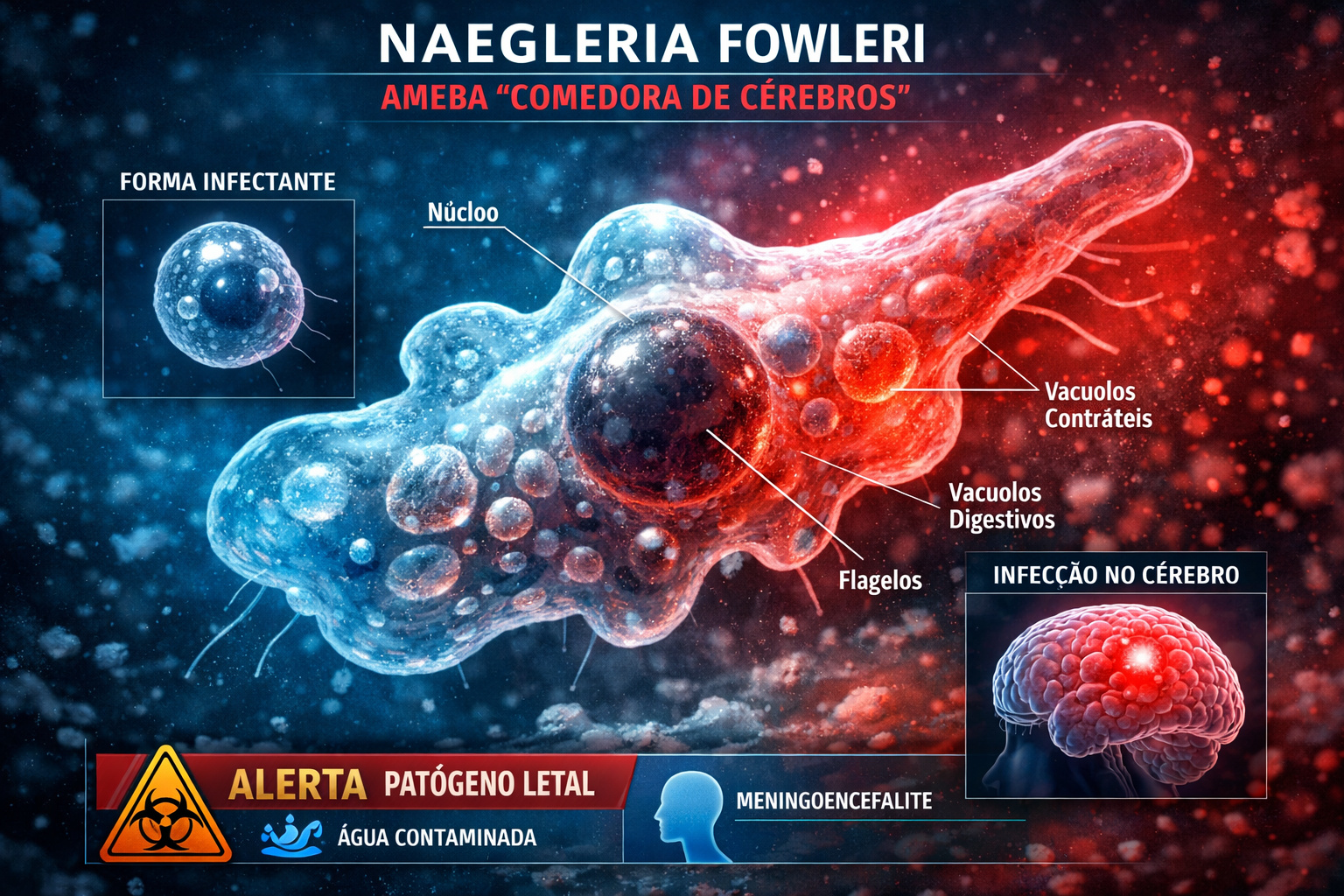
Free-living amoebas, microscopic organisms found in soil and water, are spreading worldwide at an alarming rate. Although many species are harmless, some can cause severe and even fatal infections. Furthermore, experts say the situation is likely to worsen.
The information was reported by “Galileu,” based on an article published in the journal Biocontaminant in December. According to environmental researchers and public health authorities, climate change, the deterioration of water systems, and limited monitoring are facilitating this expansion. Thus, the risk can no longer be ignored.
With rising global temperatures, heat-adapted amoebas find ideal conditions to multiply. Consequently, regions once considered safe are beginning to report unexpected cases. In this regard, global warming acts as a biological catalyst.
-
Excavation for Solar Park in Germany Uncovers Rare Celtic “Princely Tomb” with Elite Warrior Buried with Gold, Weapons, Etruscan Jug, and Two-Wheeled Chariot in Bad Camberg

-
NOAA Scientists Discover Mysterious, Perfectly Aligned Holes on the Mid-Atlantic Ridge Seafloor, Origin Still Unknown

-
California Startup Develops Giant “Space Sling” to Launch Vehicles at Mach 6, Reducing Fuel Use and Enabling Thousands of Satellite Deployments

-
ChatGPT Alerts FBI to Prevent Planned Murder of 8-Year-Old in Brazil’s Espírito Santo



Naegleria Fowleri and the Almost Always Fatal Brain Infection


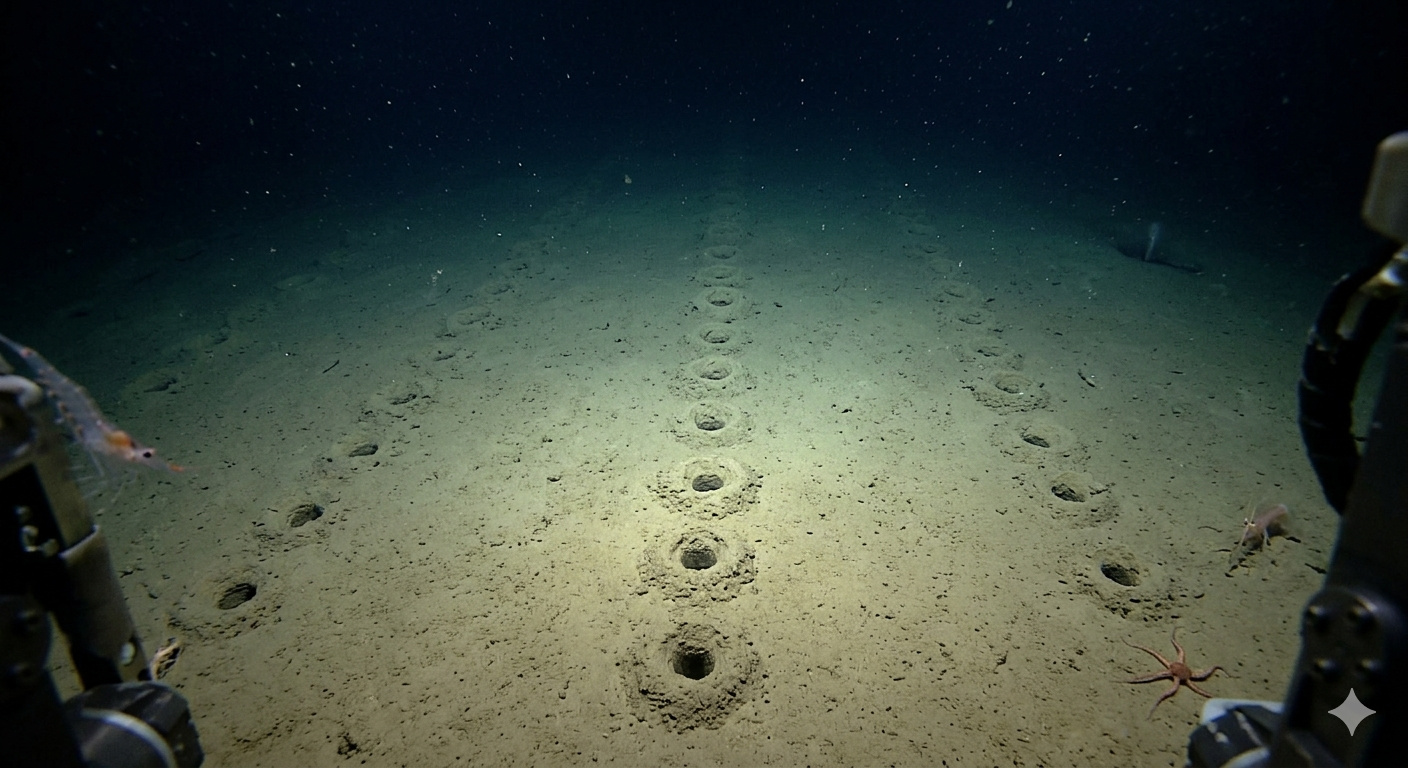
Among the most dangerous species is Naegleria fowleri, known as the “brain-eating amoeba.” This species can cause a rare but almost always fatal brain infection. Contamination occurs when contaminated water enters through the nose during activities such as swimming.
So far, more than 33 countries have reported approximately 500 cases. Most have occurred in the United States, Mexico, Australia, and Pakistan. Moreover, in 2025, an outbreak in India killed 19 people and affected another 69. Thus, the problem has gained international proportions.
Another concerning species is Balamuthia mandrillaris. This amoeba can cause Granulomatous Amoebic Encephalitis (GAE), a severe infection of the brain and spinal cord. Although rare, the disease presents high lethality. Therefore, even a few cases raise a health alert.
According to Longfei Shu from Sun Yat-sen University in China, these organisms survive extreme conditions. They tolerate high temperatures and resist strong disinfectants like chlorine. Additionally, they can live within water distribution systems deemed safe. In this way, they become even harder to eliminate.
“Trojan Horse” Effect Amplifies Invisible Threat
Beyond the direct risk of infection, researchers highlight the so-called “Trojan Horse” effect. In this phenomenon, viruses and bacteria survive inside amoebas. Thus, they are protected from conventional disinfection processes.
Consequently, drinking water systems can become indirect vectors for pathogens. At the same time, this interaction may promote increased antibiotic resistance. Therefore, the impact goes beyond individual risk and affects global public health.
Although most amoebas are harmless, the increasing number of severe cases raises concerns among experts. For this reason, scientists advocate for urgent investments in environmental monitoring. Additionally, they recommend advanced water treatment technologies.
According to the authors, tackling the problem requires integration among public health, environmental research, and water management. In this context, isolated solutions will not be sufficient. On the contrary, a coordinated effort will be necessary.
“Amoebas are not just a medical or environmental problem,” Shu stated. “They exist at the intersection of both.” Therefore, addressing them requires integrated strategies that protect public health from the source.
In light of this scenario, the question that remains is: Are we prepared to face microscopic threats that are strengthening with the warming of the planet?
Have you ever imagined that a microscopic organism present in water could pose such a silent risk? Do you believe that Brazil is prepared to face this challenge?