Portuguese
  Spanish


Born in Philadelphia, Maria Beasley became wealthy with a barrel-making machine, but made history with the folding lifeboat she patented in 1882. With 15 patents, from foot warmers to steam generators, she was one of the most successful inventors of the 19th century.
Few names encapsulate the forgotten ingenuity of 19th-century women as well as Maria Beasley. According to the Institute for Transportation at Iowa State University (InTrans), she was a true “engineering dynamo” and, although she made a fortune with industrial machines, it was a lifeboat that etched her name in the history of transportation.
Between the late 1870s and the late 1890s, Beasley accumulated 15 patents, ranging from foot warmers to one of the most important innovations ever created for maritime safety. At the top of this list was her folding lifeboat, patented in 1882 and, years later, associated with passenger ships including the legendary Titanic.
From Barrels to Fortune: The Inventor Few Know
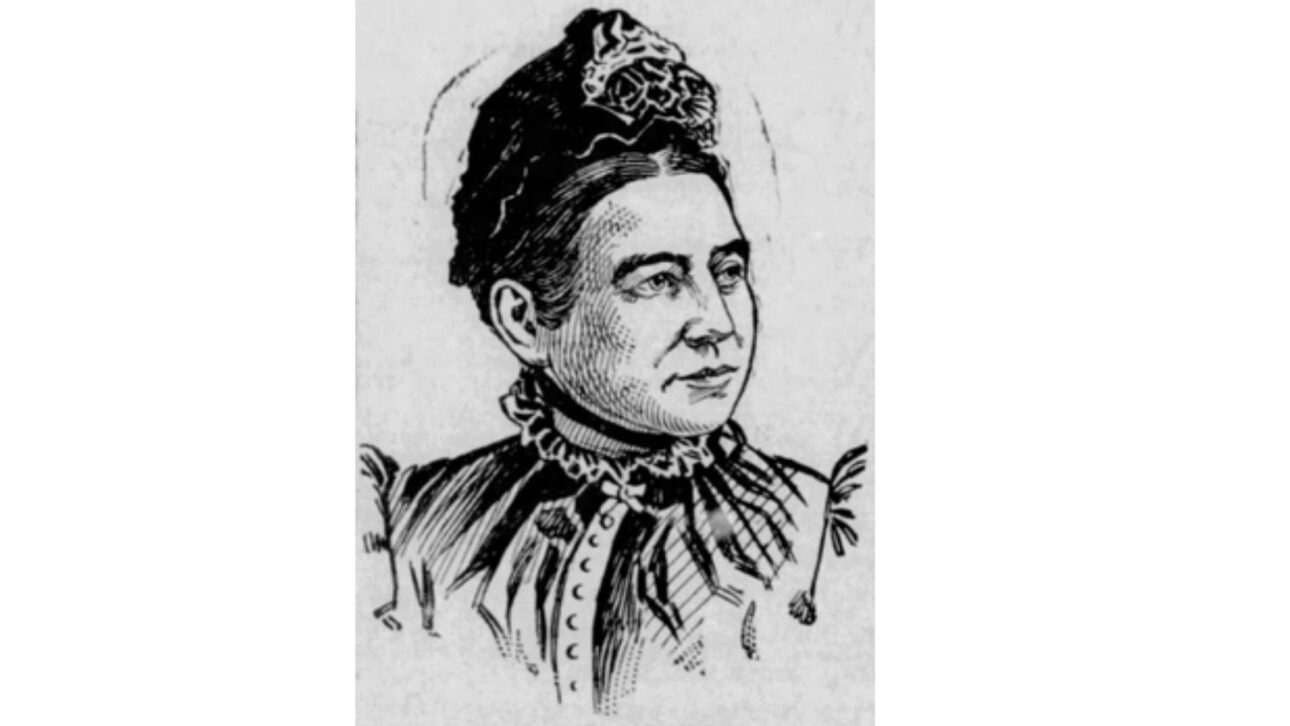
Before making it to the list of great women inventors in history, Maria Beasley started on the more practical side of business. Born in Philadelphia, Pennsylvania, she patented her first invention in 1878: a barrel-making machine. The device earned her, according to the source, an “unprecedented payment of more than $20,000 per year,” equivalent to well over $450,000 today.
-
China launches a 16-ton rocket that lands backwards, returns just 6 minutes after separation, and is captured by 4 hooks in a net at sea, challenging Elon Musk’s SpaceX technology.

-
China takes a one-ton detector 2,400 meters under a mountain, uses cosmic particles to “X-ray” 3 km of rock, and transforms a 300,000 m³ underground laboratory into a giant scanner of the planet.

-
While medicine is still unable to transplant an eye capable of seeing, scientists have created a “heart-machine” that circulates liquid through the vessels and keeps a human eyeball alive for hours outside the body in a $5.3 million project.
-
China finds beneath a 4,500-year-old stone city six secret tunnels that descend 6 meters, cross concentric walls, and reappear outside the gates in a fortified complex of 138 hectares.


The press of the time did not let the achievement go unnoticed. In 1889, the Evening Star newspaper in Washington wrote that Beasley had made “a small fortune with the machine.” By 1901, the Arkansas Democrat reported that the equipment could produce 1,500 barrels per day, an impressive volume for the industry of that time.
The Folding Lifeboat That Immortalized Her
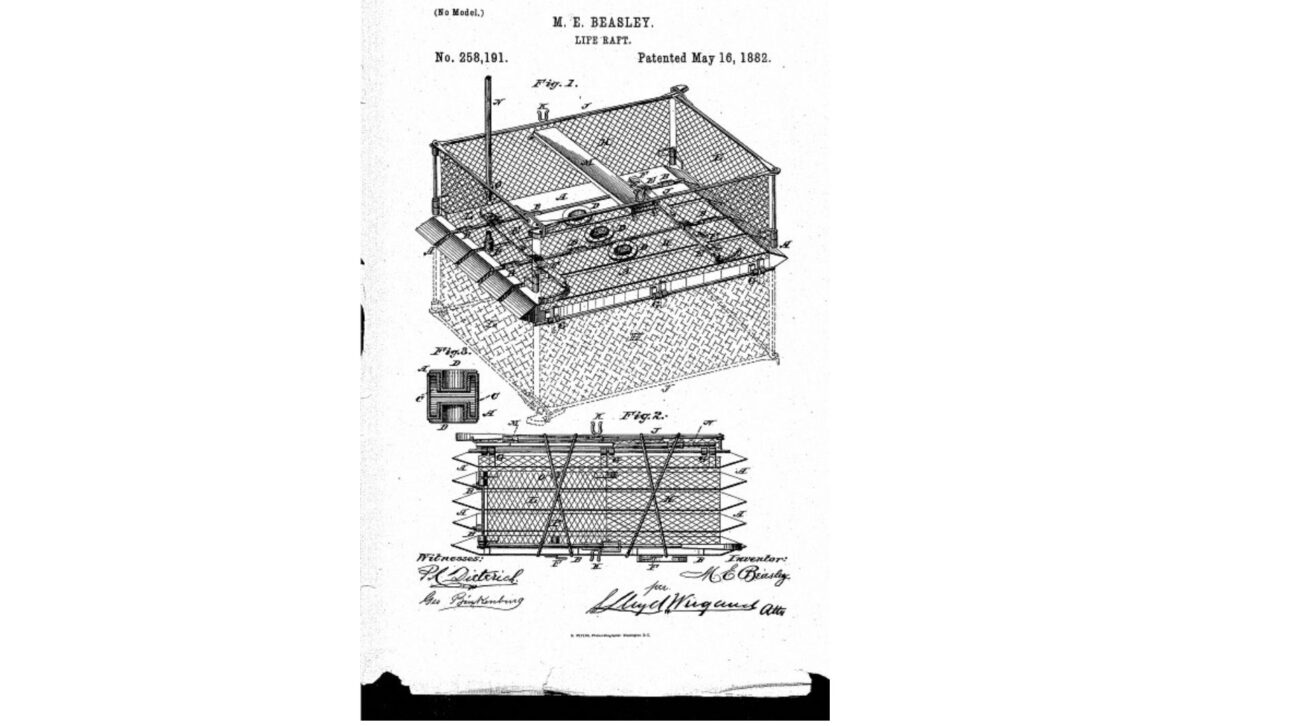
However, it was far from the barrel production lines that Beasley left her most lasting mark. In 1882, she patented a foldable lifeboat, a design that would, with later improvements, add up to two patents aimed at improving this type of rescue vessel.
The goal was clear: save lives. Like other inventors of her time, Beasley saw engineering as a way to make transportation safer. According to InTrans, projects like hers would help save countless lives in the following years, at a time when crossing the ocean by ship was still a considerable risk.
Ocean Liners, Immigrants, and Luxury on the Waves
To understand the weight of the invention, one must look at the turn-of-the-century scenario. Between the late 1800s and early 1900s, millions of immigrants crowded the ocean liners in search of a better life on the other side of the Atlantic.
At the same time, these ships also transported wealthy passengers, offering “extravagant spaces at sea, comparable to those of luxury hotels and restaurants.” There were people of all classes crossing the ocean, but there were not always enough lifeboats for everyone, a flaw that would soon prove tragic.
The Titanic and the Tragic Proof that Lifeboats Mattered
The most dramatic example of this gap has a well-known name: the RMS Titanic. During its maiden voyage, between England and New York, the British ocean liner collided with an iceberg and sank in the Atlantic in the early hours of April 15, 1912.
There were over 2,000 people on board, and more than 1,000 died. The ship had too few lifeboats, but the 20 available vessels still managed to save about 700 passengers, and it is precisely this type of boat, heir to designs like Beasley’s, that many credit for these lives.
Far Beyond the Sea: Heaters, Generators, and Baking Molds
Reducing Beasley to the lifeboat, however, would be unfair to her creativity. Her list of patents included everything from a foot warmer to baking trays and molds, including a steam generator, patented in 1886, and even a power generator for train cars.
Not surprisingly, it was said that her inventions “were not only profitable but also diverse.” With 15 registered patents, Beasley was seen as a professional inventor, something extremely rare for a woman in the 19th century.
The legacy of an “engineering dynamo”
More than a century later, the name Maria Beasley continues to appear on lists of influential women in engineering and innovation. The nickname “dynamic force of engineering” aptly summarizes a career that combined technical talent and business acumen, at a time when very few women managed to register even one patent.
Her story still holds a relevant lesson today. Beasley made a difference by bringing something unique to the transportation sector with her machines and lifeboats. Now, new frontiers are opening in this same field, from electrification to artificial intelligence, and the challenge remains: what can each of us still invent to change the way the world moves?
And you, were you already familiar with this inventor?


From barrel maker to one of the minds behind the modern lifeboat, Maria Beasley proved that a good idea can cross centuries and oceans.
Had you heard of this inventor before? Do you think stories like hers should be more remembered in history and engineering classes? Comment below and tag that friend who loves discovering the stories behind great inventions.