Portuguese
  Spanish


Experiments from the University of Southern Denmark showed that extreme pressure causes marine snow to release carbon and nitrogen during descent, creating immediate food for microbes, rapidly increasing bacterial activity, and raising new questions about how much carbon the oceans can store and for how long.
Scientists have identified an unexpected source of food in the ocean depths, where extreme pressure seems to transform falling particles into an immediate supply of carbon and nitrogen for microbes. The discovery broadens the understanding of marine ecosystems and carbon storage. The discovery also offers an explanation for sustaining microbial communities away from the sunlit surface.
The study, conducted by researchers from the University of Southern Denmark, analyzed the so-called marine snow. These particles are formed by dead algae, microbes, and other organic materials that slowly descend through the water column.
Pressure releases nutrients in the ocean depths
When marine snow reaches between two and six kilometers deep, hydrostatic pressure begins to expel dissolved organic matter from the particles. The process works like a juicer, releasing compounds that can be consumed immediately.
-
Paraná was once the seabed 400 million years ago, and scientists from UEPG found a mollusk fossil never before recorded in Ponta Grossa, turning exposed rocks into evidence of ancient oceans that covered the region and still hide new marine species preserved for millions of years.

-
14.6-liter hydrogen engine surprises by delivering 600 horsepower, using more than 90% of the diesel engine structure, and still operating with less pure fuel, reducing changes in manufacturing and installation in heavy vehicles.

-
USA releases UFO photos taken during astronauts’ flight on the space shuttle Columbia, revealing a triangular object changing position over Earth and admitting that there is still not enough data to identify its origin.
-
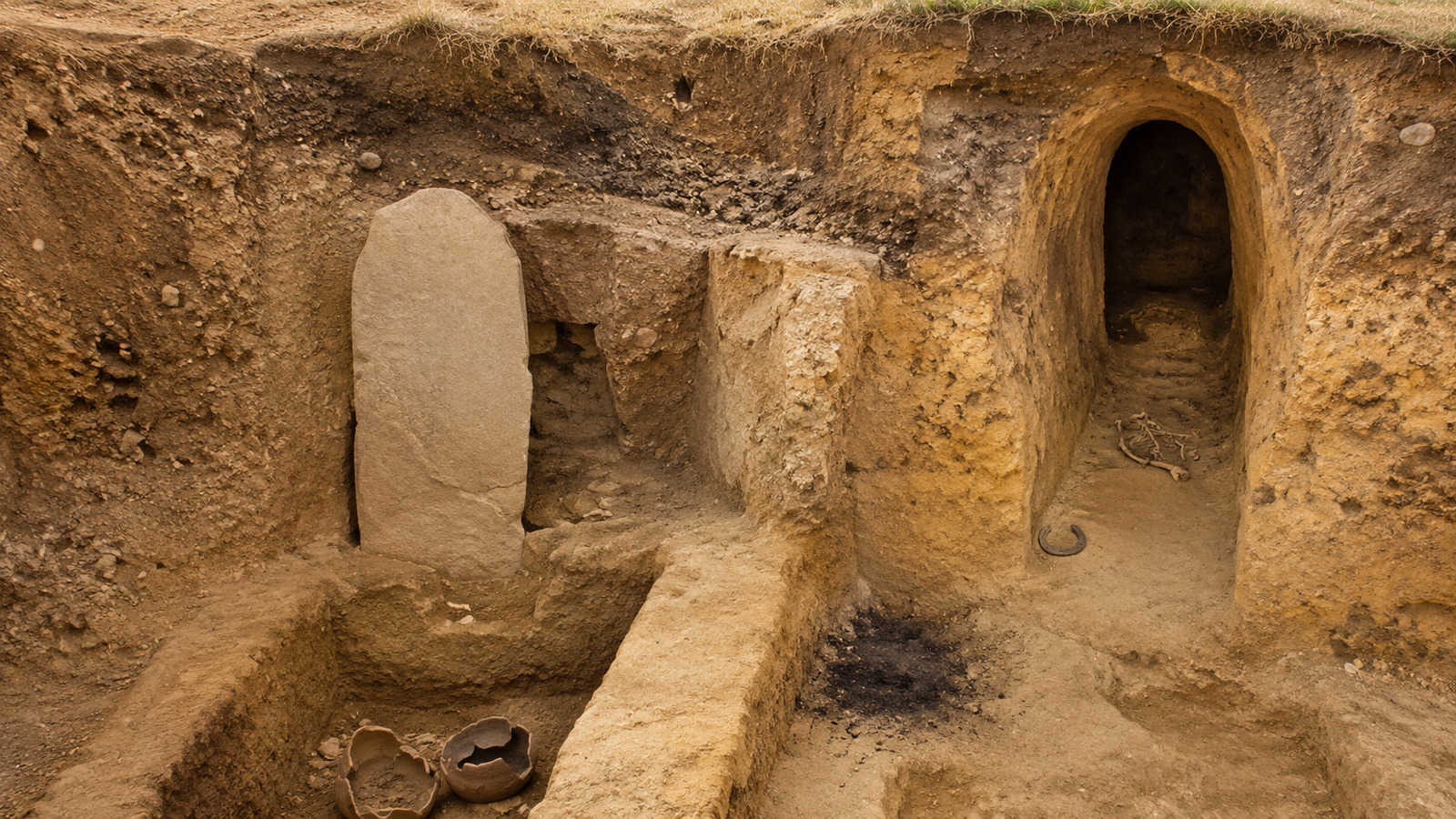
Archaeologists find a hidden medieval tunnel under a Stone Age tomb in Germany, with a fox skeleton, horseshoe, pottery, signs of a fire, and a sealed entrance that may have concealed clandestine rituals.


Peter Stief, the study’s lead author, explained that the pressure extracts the dissolved organic compounds. These materials become available to free microbes present in the surrounding water, altering the idea that the great depths would be extremely nutrient-poor.
The results were published in the journal Science Advances. The researchers estimate that the particles can lose up to 50% of the original carbon and between 58% and 63% of the nitrogen during the descent.
Carbon may remain buried for less time
For years, scientists considered that a large portion of the carbon carried by marine snow ended up buried in the sediments of the ocean floor. The new work indicates that a significant portion may escape before reaching the seabed.
This leakage changes the carbon pathway. Instead of being trapped in sediments for millions of years, part of it remains dissolved in deep waters for hundreds or thousands of years, before gradually returning to the surface and then to the atmosphere.
The difference is important because prolonged burial represents a much more lasting form of storage. Oil and natural gas, for example, were formed by processes of accumulation and burial of organic matter over extensive periods.
For Stief, the mechanism influences how much carbon the ocean can store and for how long. The information can also help researchers understand climate processes and improve models used to represent carbon behavior.
Experiment simulated extreme pressure
The team recreated marine snow in the laboratory with diatoms, microscopic algae that naturally form clusters as they sink. The artificial particles were placed in rotating tanks developed to reproduce high pressure without allowing them to settle.
This system allowed measurement of how much carbon and nitrogen escaped under conditions similar to those found in the deep ocean. The tests showed that up to half of the carbon in each particle could leak during sinking.
Most of the released material was composed of proteins and carbohydrates. These compounds are easily consumed by deep-sea microbes, serving as a quick energy source in environments previously considered limited in food.
Microbes reacted in just two days
The microbial response was intense. In two days, the amount of bacteria increased 30 times, while respiration rates grew sharply, indicating almost immediate utilization of the released nutrients.
The same pattern appeared in different species of diatoms. This suggests that the leakage caused by pressure may occur widely in the oceans, although confirmation outside the laboratory still depends on new observations.
Next step will be in the Arctic Ocean
The team plans to search for molecular signatures of this process in surface and deep waters during an expedition to the Arctic, aboard the German ship Polarstern.
The identification of these signatures in nature could confirm whether the mechanism observed in the laboratory also occurs in the open ocean. The research received support from Danish institutions and the European Union’s Horizon 2020 program.