Portuguese
  Spanish


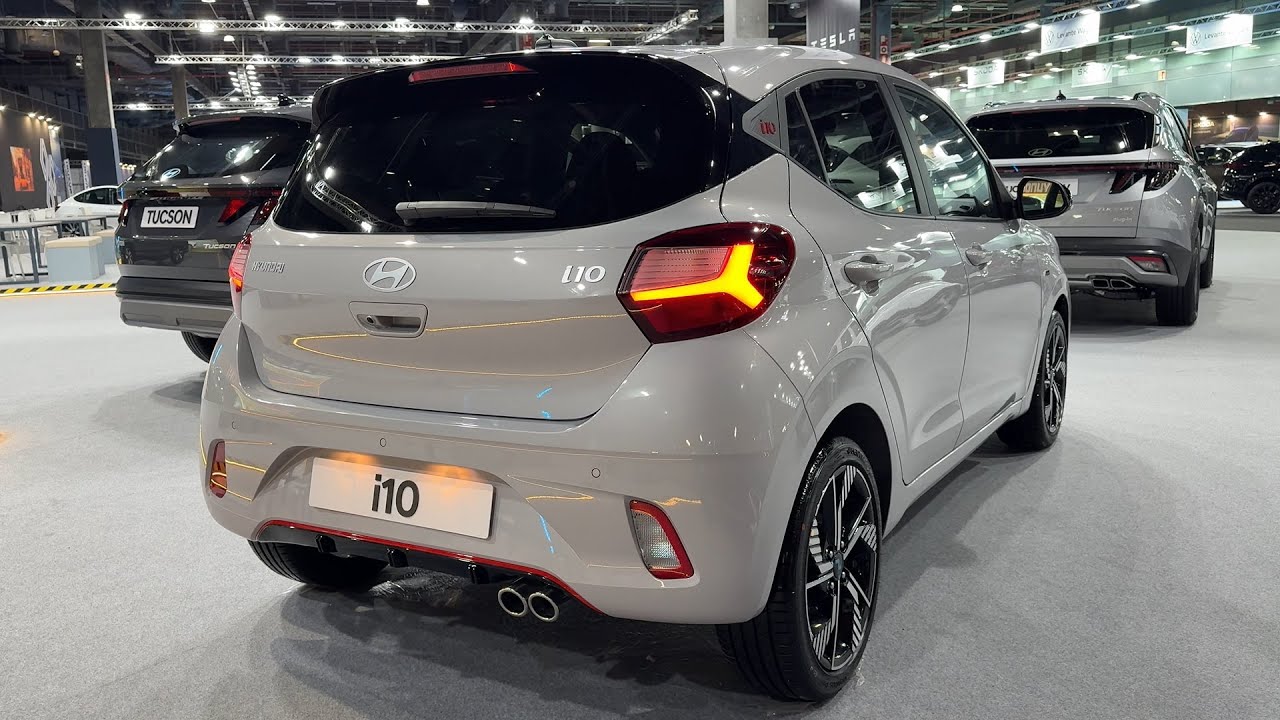

Hyundai Grand i10 Nios costs around R$ 29,100 in India, has a 1.2 engine, CNG option, AMT, 6 airbags, and would compete with Kwid, Mobi, and C3.
Hyundai continues to strongly invest in the affordable compact segment in India with a hatch that practically occupies the space many Brazilians expect from a “popular HB20.” The Hyundai Grand i10 Nios starts at ₹5.55 lakh, about R$ 29,100 in direct conversion, without considering taxes, freight, homologation, dealership margins, or import costs to Brazil.
Even as an entry-level compact hatch, the model combines a list of features hard to find in cheap cars sold in the Brazilian market. The Grand i10 Nios offers a 1.2 Kappa engine, versions with 5-speed manual gearbox or AMT automated transmission, factory CNG option, and 6 airbags as standard across the entire Indian lineup.
In practice, the car fits exactly in the range occupied in Brazil by models like Renault Kwid, Fiat Mobi, and Citroën C3, but with an engine, safety, and equipment package closer to superior compact hatches.
-
New Law Proposal in Brazil Could Heavily Penalize Drivers: Dangerous Overtaking May Become a Serious Offense with Fines Increased Tenfold and a 12-Month License Suspension; Update on 2026 Progress

-
Electric Revolution: Watts W125 Motorcycle Offers 160 km Range, 90 km/h Speed, and Affordable Price Starting at $3,000

-
General Motors Replaces Over a Thousand Workers with 50 Cobots at Electric Vehicle Plant, UAW Union Criticizes Move Amid Industry’s Automation Push
-
Bosch and Nikon 3D Print Entire Aluminum V8 Engine Block, Sparking New Competition in the Automotive Industry



Hyundai Grand i10 Nios uses a 1.2 Kappa engine and delivers up to 83 hp in a hatch smaller than the HB20
The Grand i10 Nios uses the well-known 1.2 Kappa four-cylinder engine, with a displacement of 1,197 cm³. In gasoline versions, the power reaches about 83 hp, equivalent to approximately 82 cv, while the torque is around 113.8 Nm.


Hyundai offers the hatch with a 5-speed manual gearbox or AMT automated transmission, something rare in such cheap cars in various emerging markets.
Depending on the version, the compact can also receive more equipped modes, including 8-inch multimedia, wireless charger, cruise control, and keyless entry.
Even as a compact urban car, the Grand i10 Nios tries to position itself above extremely basic models. The focus is on delivering a cheap premium hatch feel, not just a minimalist low-cost vehicle.
Indian hatch from Hyundai also has a CNG version with consumption of up to 27 km/kg
One of the most unusual points for the Brazilian standard is the offer of versions with factory CNG/GNV. Hyundai sells the Grand i10 Nios Hy-CNG Duo in India with a dual-cylinder system integrated into the trunk.

According to data released on Indian automotive sites, the CNG variants can reach about 27 km/kg, an extremely high number compared to Brazilian flex compacts.
Besides the economy, the dual-cylinder system tries to solve a classic problem of cars converted to gas: the excessive loss of trunk space.
Hyundai includes 6 airbags as standard even in the cheapest versions of the Grand i10 Nios
Hyundai also reinforced the safety of the Indian hatch. The Grand i10 Nios now comes with 6 airbags as a standard item, including side and curtain airbags.

The safety package also includes features such as:
- Electronic Stability Control (ESC)
- Vehicle Stability Management (VSM)
- Hill-start assist
- ABS with EBD
- Driver’s rearview monitoring
These features usually appear in more expensive categories in the Brazilian market.
Interior of the Grand i10 Nios tries to look like a superior hatch even though it’s an entry-level compact
Hyundai also bets on a more sophisticated interior look than usually seen in cheap compacts. Depending on the version, the model receives:
- 8-inch touchscreen multimedia center
- Android Auto and Apple CarPlay
- Wireless charger
- Steering wheel controls
- Digital air conditioning
- Rear air vents
- Keyless entry
- Push-button start
The result is a urban car that is small, but with a visual feel closer to larger compact hatches.
Hyundai Grand i10 Nios shows a type of cheap car that has practically disappeared in Brazil
While the Brazilian market has almost completely shifted to compact SUVs and more expensive hatches, India continues to receive extremely competitively priced small urban cars.
The Grand i10 Nios is a clear example of this. Even offering a 1.2 engine, automatic option, CNG version, and 6 airbags, the hatch still starts at a converted price far below what is practiced in Brazil for equivalent models.
In direct conversion, the initial price is below many compact used cars currently sold in the Brazilian market.
Technical specifications Hyundai Grand i10 Nios
| Item | Hyundai Grand i10 Nios |
|---|---|
| Country of sale | India |
| Starting price | ₹5.55 lakh |
| Approximate conversion | R$ 29.1 thousand |
| Engine | 1.2 Kappa |
| Displacement | 1,197 cm³ |
| Cylinders | 4 |
| Gasoline power | about 82 hp |
| CNG power | about 69 hp |
| Gasoline torque | 113.8 Nm |
| Transmission | 5-speed manual or AMT |
| Fuels | Gasoline and CNG |
| CNG consumption | up to 27 km/kg |
| Airbags | 6 as standard |
| Multimedia | 8-inch screen |
| Connectivity | Android Auto and Apple CarPlay |
| Trunk | 260 liters |
| Wheels | Up to 15 inches |
| Stability control | Yes |
| Hill assist | Yes |
The Grand i10 Nios shows how some markets still receive cheap compact cars with larger engines, more equipment, and superior safety.

The question is simple: if Hyundai can sell this in India for about R$ 29 thousand in direct conversion, many people in Brazil will inevitably look at their own market and ask why national compacts have become so expensive.