






 Portuguese
  Spanish
  5 min of reading
  0 comments


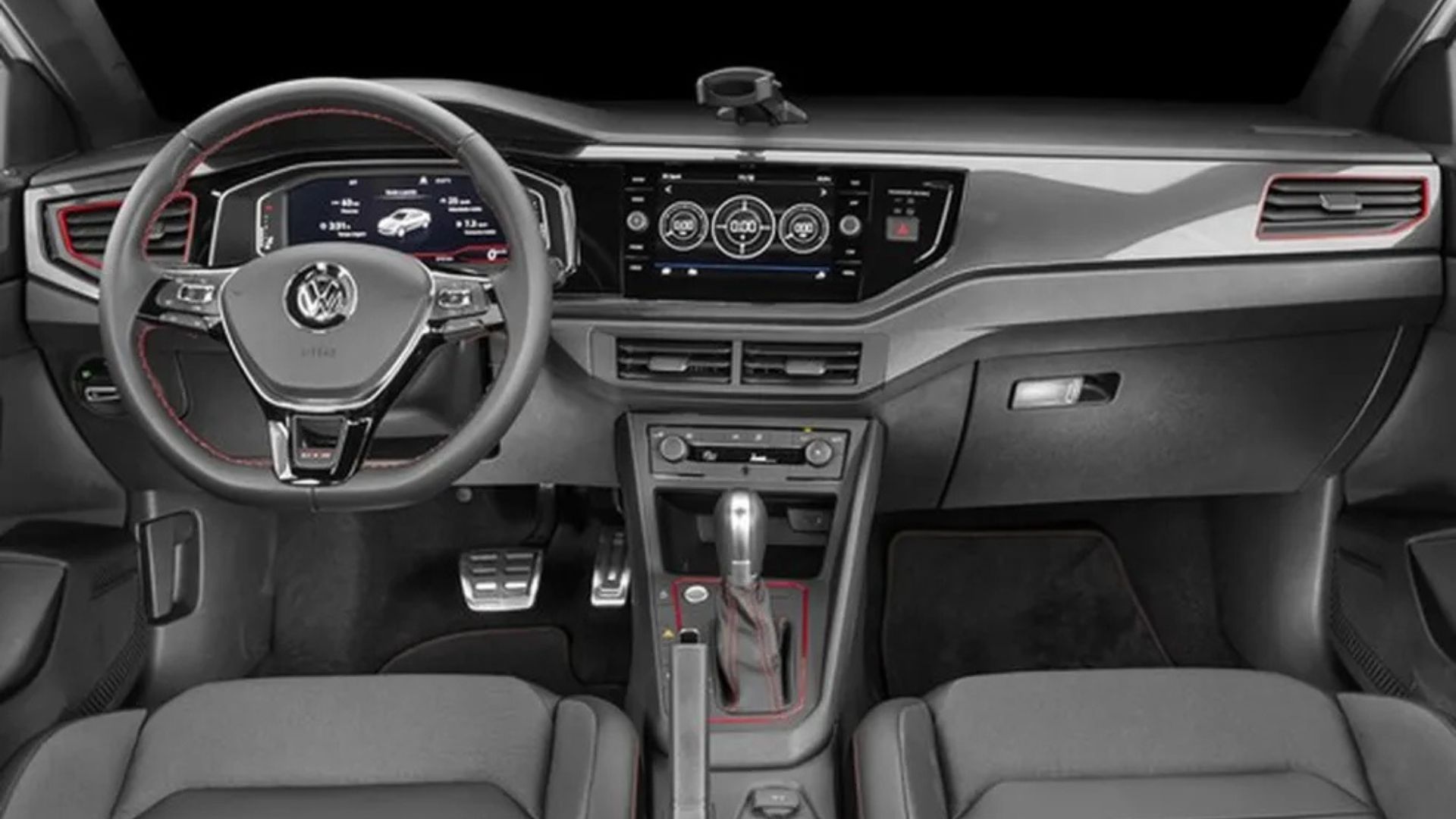
Volkswagen’s sports sedan preserves market value, combines strong performance, and maintains a trunk larger than many compact SUVs, in a configuration that has become uncommon among used cars in Brazil.
The Volkswagen Virtus GTS 2020 has established itself as an uncommon option among used sedans in Brazil by combining a 1.4 TSI turbo flex engine, automatic transmission, compact sports car performance, and a trunk of 521 liters in a body aimed at family use.
The version appears as a specific alternative for those seeking a used car with strong acceleration, good interior space, and a complete equipment package, without moving to more expensive premium models or sporty hatches with less luggage capacity.
In the Fipe Table of May 2026, the Volkswagen Virtus GTS 1.4 TSI 2020 is valued at R$ 103,763, a value very close to the suggested launch price of R$ 104,940, announced when the sedan arrived in the Brazilian market in 2020.
-
Three doors, concept look, and FIPE value of R$ 62,524: The 2013 Hyundai Veloster delivers a 1.6 engine with 140 hp, a 6-speed automatic transmission, and a design that still seems too strange to go unnoticed.

-
A Land Rover that used to do 1.8 km per liter now does 8 km per liter after a 34-year-old Kenyan engineer installed an ECU he designed himself, which is already being ordered from Zambia, Canada, and Pakistan.
-
Cheaper than new HB20, Onix, and Argo, this German sedan offers a 510-liter trunk, a 2.0 naturally aspirated engine, a 6-speed Tiptronic automatic transmission, and well-known mechanics; the 2016 Volkswagen Jetta Comfortline still attracts attention in the used market.

-
A mechanic opened the engine compartment of an 11-year-old Ford to replace a part and found a wallet with money, gift cards, and the badge of the worker who had assembled that car at the factory.


This behavior draws attention because a large part of used vehicles loses value over the years, especially after generation changes, increased average mileage, and the advancement of new technologies in more recent models.
In the case of the Virtus GTS, the price preservation is explained by the combination of a more restricted supply, valued mechanical set, and a consumer profile that still seeks compact sedans with above-average performance.
Virtus GTS 2020 had a short life in the Brazilian market
The Virtus GTS was sold in Brazil between 2020 and 2022, a period during which it occupied the top of the line of Volkswagen’s compact sedan before the range restructuring and changes made by the brand in the following years.

Produced at the Anchieta plant in São Bernardo do Campo, in the ABC region of São Paulo, the model also marked the return of the GTS badge on a new generation national product from Volkswagen, alongside the Polo GTS.
The proposal was to combine the base of the Virtus, known for its interior space and large trunk, with a more sporty calibration, exclusive visuals, and the 1.4 TSI flex engine, already used in other models of the brand.
The acronym GTS has historical significance within Volkswagen in Brazil, mainly due to its association with sports versions of models like Gol and Passat, which helped create additional interest in the sedan.
1.4 TSI turbo flex engine delivers compact sports performance
Under the hood, the Virtus GTS 2020 uses the 1.4 TSI turbo flex engine, with four cylinders, direct fuel injection, and turbocharger, a configuration that still stands out among used compact sedans.
The set delivers 150 horsepower and 25.5 kgfm of torque with both ethanol and gasoline, always paired with a six-speed automatic transmission with a torque converter.
With this setup, the sedan accelerates from 0 to 100 km/h in 8.7 seconds and reaches a top speed of 210 km/h, numbers that place the model in a performance range superior to most conventional compact sedans.
The response at low revs is favored by the torque available early, an important feature for highway overtaking and urban driving with less need for deep accelerations.
Even so, the Virtus GTS maintained a configuration more geared towards daily use than radical preparation, with a traditional automatic transmission and adjustments designed to preserve comfort in common commutes.
Volkswagen Virtus GTS consumption allows autonomy of up to 728 km
The performance did not prevent the Virtus GTS from presenting consumption compatible with the car’s proposal, especially when fueled with gasoline and used on highway routes.

According to energy efficiency data available for the model, the sedan records 7.6 km/l in the city and 9.8 km/l on the highway with ethanol.
With gasoline, the numbers rise to 11.1 km/l in urban cycle and 14 km/l on highway route, a result favored by the low-displacement turbo engine and the six-speed automatic transmission.
As the tank holds 52 liters, the approximate autonomy reaches 395 km in the city and 510 km on the highway with ethanol, considering the consumption data reported for the model.
With gasoline, the estimated range increases to about 577 km in urban use and can reach 728 km on the highway, a figure that reinforces the sedan’s appeal for longer trips.
521-liter trunk surpasses that of many compact SUVs
Besides performance, space is one of the main arguments of the Virtus GTS 2020 in the used car market, mainly because the model preserves the generous dimensions of the other versions of the sedan.
The car measures about 4.49 meters in length, 1.75 meters in width, and 1.47 meters in height, with a wheelbase of approximately 2.65 meters.
These measurements favor space for occupants, especially in the rear seat, an area where the Virtus has always stood out within the compact sedan category.
The 521-liter trunk is another relevant point, as it surpasses the cargo capacity of several compact SUVs sold in Brazil, even though these models usually attract consumers with the image of greater versatility.
In practice, the Virtus GTS delivers a rare combination: compact sports car performance, a spacious cabin, and enough luggage volume for family use or trips.

Virtus GTS equipment reinforces appeal among used cars
The equipment package also contributes to maintaining interest in the Virtus GTS, as the version occupied a superior position within the line and offered comfort, safety, and technology items.
Among the equipment, the sedan offered digital air conditioning, electric steering, stability and traction controls, hill start assist, tire pressure monitoring, front and side airbags.
The model also featured leather-covered seats, keyless entry, push-button start, front and rear parking sensors, cruise control, and an auto-dimming rearview mirror.
LED headlights, a multimedia center with cell phone mirroring, and exclusive visual details of the GTS version completed the package, while the Beats sound system appeared as an optional item.
By bringing these elements together in a sedan body, the Virtus GTS ended up in a specific position in the market, especially after its production ended.
Today, the demand for the model is based precisely on this combination of low supply, strong performance, complete package, and practical use, factors that help explain why the sedan maintains a high value among used sports cars.






Be the first to react!