






 Portuguese
  Spanish
  5 min of reading
  0 comments


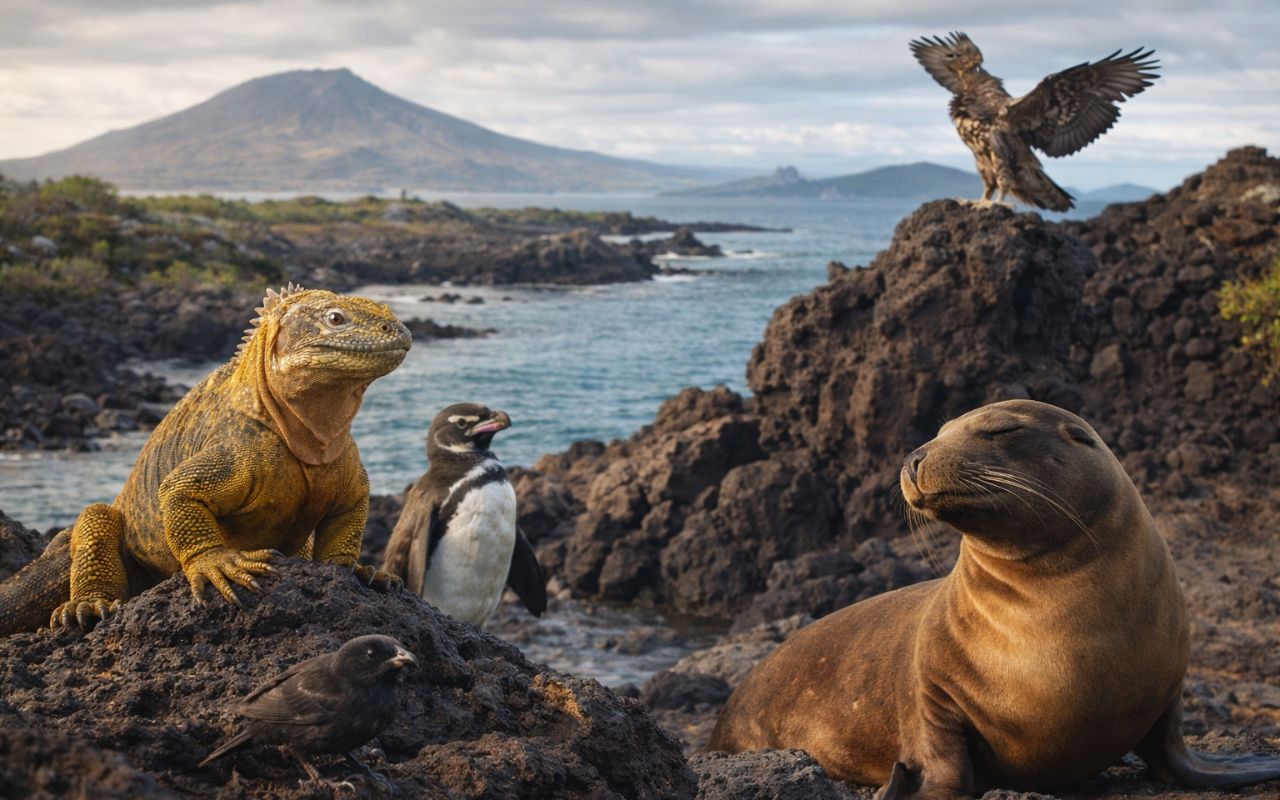
Discover The Animals Of The Galapagos Islands, Rare And Endemic Species That Evolved In Isolation And Still Attract The Attention Of Science Today.
The Galapagos Islands are known worldwide for housing animals that do not exist anywhere else on the planet. Located in the Pacific Ocean and belonging to Ecuador, the archipelago has become a scientific reference for gathering species that evolved in isolation, adapting to unique conditions over thousands of years.
This scenario caught the attention of researchers since the 19th century and remains essential for studies on biodiversity and conservation.
What makes the Galapagos Islands so special is the combination of geographic isolation, low human interference, and environmental diversity.
-
Space technology used to search for water on Mars is now hunting for invisible leaks under the streets of São Paulo, using satellites, AI, and chlorine signals to help Sabesp recover up to 6.7 billion liters of water.

-
Japan sends ship to extract mud rich in rare earths at nearly 6,000 meters deep in the Pacific, attempts to lift 350 tons per day from the seabed, and transforms sediments near Minamitori Island into a strategic weapon to reduce dependence on China.
-
Venus Aerospace promises a rotating detonation hypersonic engine that takes the Stargazer to Mach 9 and crosses oceans in 1 hour, but the flight that made history barely surpassed the speed of sound.

-
Brazilian student creates a cheap formula that makes plants grow up to 90% faster and wins an award in a global scientific competition.




As a result, many animals developed unique features to survive there, becoming clear examples of observable evolutionary adaptation to this day.
Why Are The Galapagos Islands So Important To Science?
A large part of the relevance of the Galapagos Islands comes from the fact that their animals helped transform the way science understands evolution.
When visiting the archipelago in the 19th century, Charles Darwin observed subtle differences between similar species living on distinct islands.
These variations were fundamental to the development of the theory of natural selection. To this day, researchers use the archipelago as a true natural laboratory.
The behavior, feeding, and even the physical shape of various species show how the environment directly influences the survival and reproduction of animals.
Unique Wildlife Makes The Galapagos Islands An Open-Air Natural Laboratory
Isolated in the Pacific Ocean, the Galapagos Islands concentrate some of the most unique animals on the planet.
The combination of geographic isolation, extreme climate, and historical absence of large predators allowed rare species to evolve uniquely, many of which exist only in this Ecuadorian archipelago.
Among reptiles, birds, mammals, and small rodents, the animals of the Galapagos Islands help scientists understand adaptation, survival, and environmental balance.
A Long-Lived Iguana That Survives Amid Volcanoes
The Galapagos land iguana (Conolophus subcristatus) is a clear example of extreme adaptation.
Exclusive to the islands, this species can live for up to six decades, even inhabiting areas affected by constant volcanic activity.
Although primarily feeding on vegetation, records from the Encyclopedia of Life (EOL) indicate that some individuals occasionally include insects, centipedes, and even organic remains in their diet.
This behavior varies according to the food supply in each region.
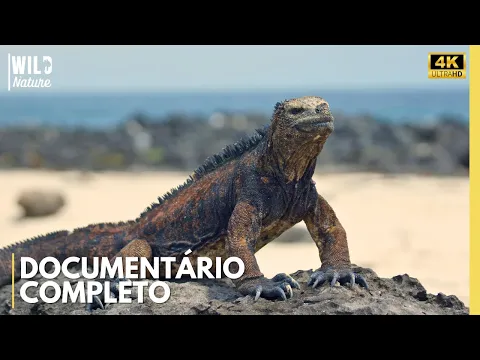

Despite there being between 8,000 and 10,000 iguanas, the IUCN classifies the species as vulnerable, as the presence of invasive species and environmental changes continue to pressure the population.
A Penguin That Lives Where Heat Predominates
Among the most unexpected species of the Galapagos Islands is the Galapagos penguin (Spheniscus mendiculus).
Unlike other penguins, it is the only one that naturally lives in areas close to the Equator, coexisting with high temperatures.
According to the EOL, these penguins use coastal cracks and caves as shelter and spend part of their time at sea to avoid overheating.

Their swimming style also diverges from the norm, with slower movements and their heads often above water.
Staying in a warm environment is only possible thanks to the Cromwell Current, which flows through the region. Small in size, these penguins measure around 49 centimeters and weigh on average 2.5 kilograms.
The Smallest Sea Lion Known Lives On These Islands
The Galapagos sea lion (Arctophoca galapagoensis) occupies a unique position among marine mammals.
According to the EOL, it is considered the smallest representative of the pinniped family.
This species almost always stays on the islands and rocky areas of the archipelago, where it rests and protects its pups. It does not undertake long migrations and maintains highly localized habits.
Hunting occurs at night when it feeds on fish and mollusks.
Males can reach 1.5 meters in length and around 64 kilograms, while females are smaller, weighing between 22 and 34 kilograms.
A Small Rodent That Reappeared After Decades Without Records
In the dry and little-explored environments of the islands lives the Galapagos Santiago rat (Nesoryzomys swarthi).
The species went nearly a century without being observed and was even considered extinct after 1906.
Only in 1997 did new records emerge, according to the EOL. Even so, the situation remains delicate.
The IUCN classifies the rodent as vulnerable, primarily due to the risk posed by the introduction of external animals to the ecosystem.
Currently, there is no accurate data on the total number of existing individuals.
An Unrivaled Hawk At The Top Of The Food Chain
The Galapagos hawk (Buteo galapagoensis) serves as the main aerial predator of the archipelago.
Although it is an endemic species, there is no consensus on the origin of its ancestors or when they arrived on the islands.

Its diet includes a wide variety of prey, such as marine iguanas, snakes, fish, and giant tortoise eggs. In addition, it is capable of capturing chicks and eggs of other native birds.
Before human occupation, small rodents also formed part of its diet, as described by the EOL.
The Birds That Helped Change Science
The Darwin’s finch (Geospiza fortis) gained worldwide fame for its role in the studies of Charles Darwin, conducted during the naturalist’s voyage aboard the HMS Beagle.
These birds, endemic to the Galapagos Islands, primarily feed on seeds but also consume flowers, buds, young leaves, and occasionally insects.

This dietary flexibility was essential for studies on adaptation to the environment.
The observations of the finches directly contributed to the development of ideas that would later underpin the theory of evolution.
Source: National Geographic Brasil


-

-

-

-

-

-

10 people reacted to this.