Portuguese
  Spanish


With Strange Appearance and Unique Abilities, the Naked Mole Rat Intrigues Scientists by Living Decades, Resisting Diseases and Having a Social Structure Similar to That of Insects
The naked mole rat, also known as the naked mole-rat, is one of the most curious animals in nature. With its unusual appearance and even more peculiar habits, it has attracted the attention of science and the public due to its rare and surprising biological characteristics.
This small mammal lives in underground colonies in regions of Kenya, Ethiopia, and Somalia. Its scientific name is Heterocephalus glaber.
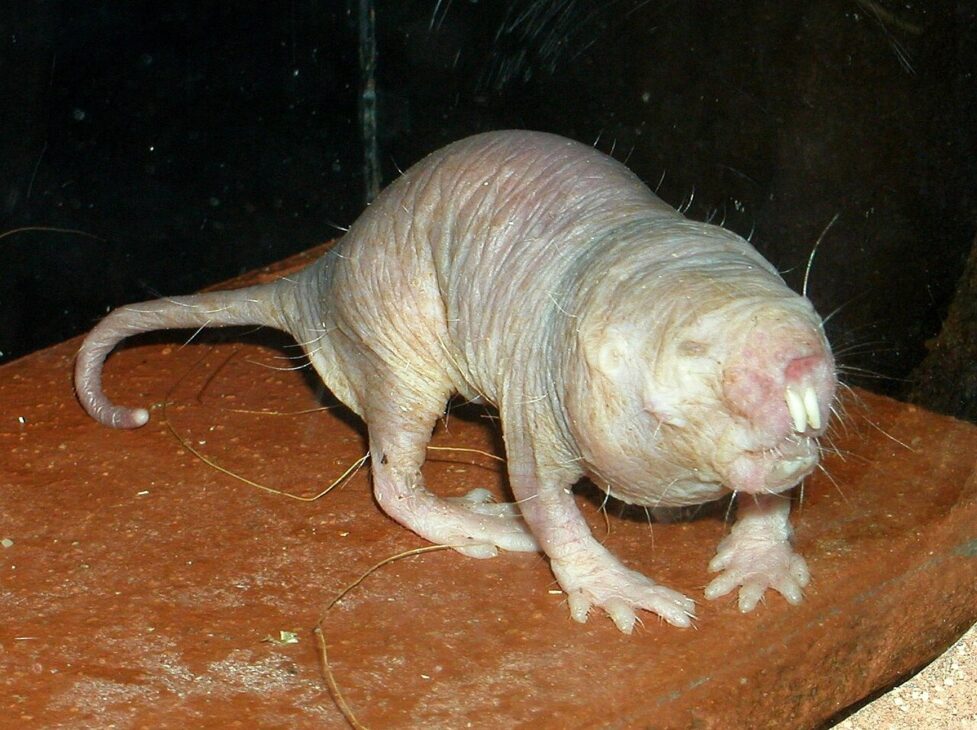
Its body is long, wrinkled, and virtually hairless. The teeth are large and used for digging tunnels. The appearance may be strange, but it is the result of adaptations to a life underground.
-
She spent 73 years breathing inside an iron lung, survived the aftereffects of polio, and became the last woman in the United States dependent on the equipment before dying at 78 years old.

-
Brazilian students created a $1 filter using pine bark, cotton, and 3D-printed parts to clean cassava wastewater, reduce the toxicity of a hazardous waste, and transform contaminated water into biofertilizer.

-
Astronaut from Artemis II steps down after mission to the Moon and decision surprises after a record of 406,771 km, a historic 10-day journey, and an unprecedented achievement for Canada.

-
A fossil kept for years in a small museum in Montreal concealed 450-million-year-old soft tissue, a discovery that has only happened once before in history.


The colonies can consist of dozens of individuals. They live in extensive tunnels, with kilometers of galleries dug beneath the ground. To maintain body temperature, the animals group together, as they cannot regulate heat alone like other mammals.
Surprising Resistance to Pain and Diseases
One of the most impressive characteristics of the naked mole rat is its resistance to extreme situations. It is insensitive to pain in many cases, survives with little oxygen, and lives for decades. While other rodents live only a few years, this animal can reach up to 40 years of age.
Another important fact is its resistance to cancer. Researchers have identified that naked mole rats practically do not develop tumors. This finding has attracted scientists from various parts of the world who seek to understand how this defense mechanism works.
The phenomenon known as neoteny is also noteworthy. This term refers to the ability to retain juvenile characteristics even after reaching sexual maturity. The thin and hairless skin is an example of this. This phenomenon may be related to the animal’s long lifespan.
A Mammal with Ant-Like Organization
The social organization of the naked mole rat is unique among mammals. It lives in a system called eusociality, something common among insects like ants and bees, but very rare among mammals. In this structure, there is a dominant female, known as the queen, who is the only one that reproduces.
Other colony members act as workers or soldiers, taking care of tunnel maintenance, foraging, and group defense.
The division of labor is clear: the queen produces the young, a few males serve as breeders, and the others care for the community. This organization ensures the survival and growth of the colonies, even in hostile environments.
Rare Animal and Valuable to Science
The scientific interest in this animal lies in these characteristics: cancer resistance, insensitivity to pain, longevity, and adaptation to low-oxygen environments. Furthermore, it serves as an example to understand how social living evolved in certain mammal species.
Five-Kilometer Tunnels and Young Ones Leaving the Colony
Some curiosities round out this scenario. The tunnels dug by a single colony can exceed five kilometers. To avoid inbreeding, young males leave the colony to seek out other groups.
The naked mole rat remains a mystery to science in many respects. Its existence is proof of how nature can create unexpected solutions to ensure survival. At the same time, it shows how much we can still learn from lesser-known species with unusual habits.
With information from O Antagonista.