






 Portuguese
  Spanish


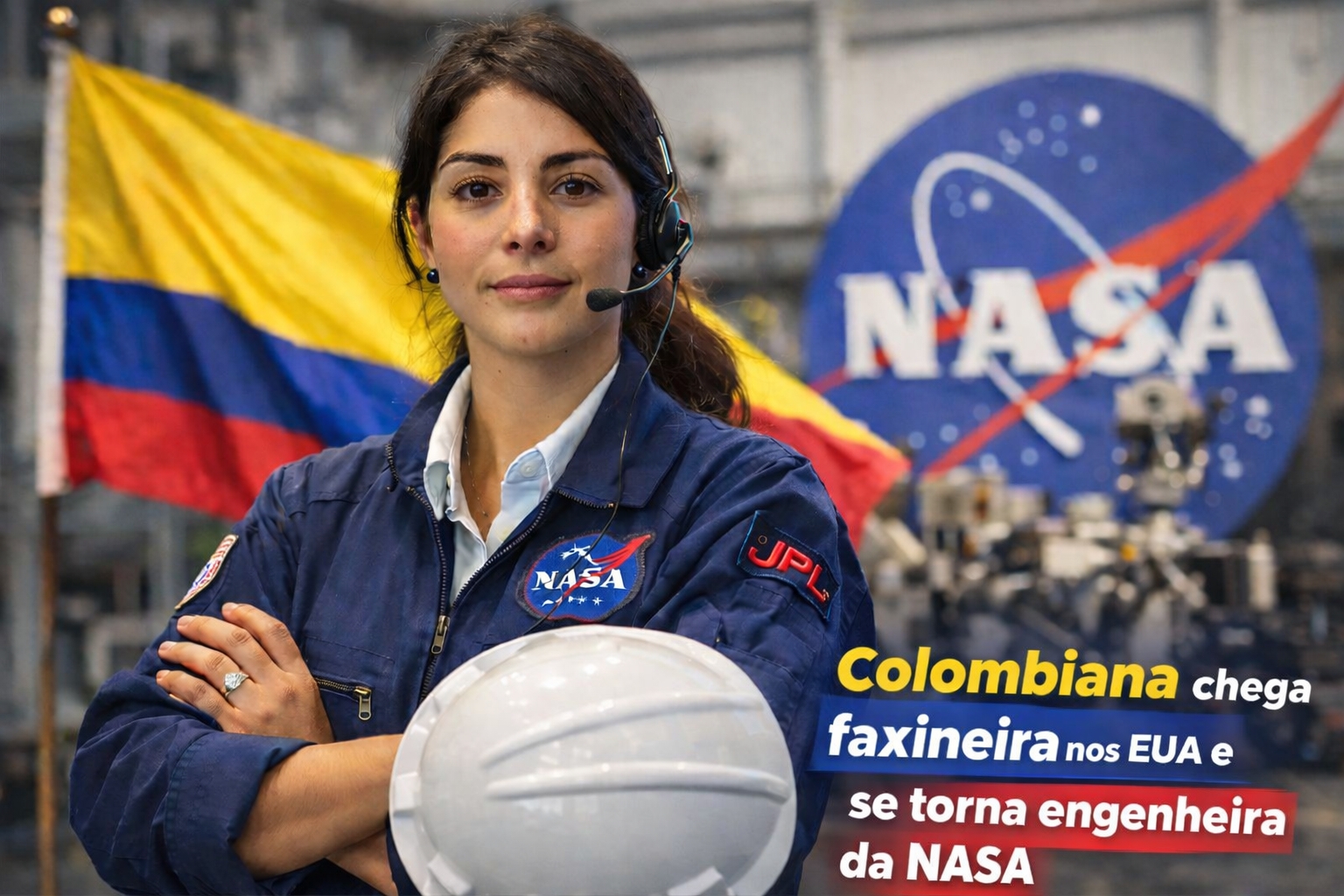


Diana Trujillo Left Colombia With Little Money, Worked as a Cleaner in the United States, and Today Is a NASA Engineer Leading the Robotic Arm of the Perseverance Rover on Mars.
Few people imagine that one of the most important engineers in the current exploration of Mars once cleaned houses to afford college. Diana Trujillo’s story is not a script for a motivational movie, but a real case of extreme persistence, immigration, study, and cutting-edge science.
At 17, she left everything behind, crossed borders without speaking English, and ended up becoming one of the most symbolic faces of NASA in the Perseverance rover mission.
A Suitcase, Few Dollars, and an Unlikely Dream
Diana Trujillo was born and raised in Cali, Colombia. As a teenager, she decided that she wanted to work at NASA, even without any prior contact with the aerospace sector. At 17, she embarked alone to the United States, bringing about 300 dollars and no fluency in English.
-
China Develops Custom 140-Ton Electric Mining Truck with 770 kWh Swappable Battery, Deploys 290 Units in Xinjiang’s Largest Zinc Mine

-
Meta to Launch Arena, a New Prediction App Targeting 3.56 Billion Users, Competing with Polymarket and Kalshi

-
Scientist Challenges Famous Human Evolution Theory, Argues Homo Sapiens Evolved Gradually Over Thousands of Years
-
15-Year-Old American Builds Ocean Generator with PVC Pipe and 3D-Printed Propeller for $12, Wins National Prize, Presents at White House, and Makes Forbes 30 Under 30 List




In official interviews published by NASA, Diana has stated that the culture shock was immense. To survive and invest in her studies, she accepted jobs that many would avoid. For years, she worked as a cleaner, cleaning houses while attending English classes and basic subjects at community colleges.
The space agency itself emphasizes that this period was crucial for her personal and professional development, as she needed to quickly learn to adapt, manage the little money she had, and not abandon her initial goal.
Study, Sacrifice, and Aerospace Engineering
After attending Miami Dade College, Diana was able to advance academically. She continued to the University of Florida and later graduated in aerospace engineering from the University of Maryland, one of the most respected institutions in the field in the United States.
According to the Association for Women in Science (AWIS), Diana always balanced intense study with work, which required extraordinary discipline. In their institutional profile, the organization states that her trajectory “is a clear example of how diversity and inclusion strengthen science and engineering.”
This academic journey opened doors to something that initially seemed unattainable: working directly on interplanetary missions.
From the Classroom to the Heart of NASA
Diana Trujillo joined the Jet Propulsion Laboratory (JPL), NASA’s center responsible for some of the world’s most complex space missions. Today, she works as an aerospace engineer and holds technical leadership positions related to the Perseverance rover, which has been exploring Mars since 2021.
According to official information from the NASA Jet Propulsion Laboratory, Diana leads the team responsible for the robotic arm of the Perseverance, an essential system for collecting samples of Martian soil, analyzing rocks, and preparing materials that could be brought back to Earth in future missions.
Additionally, she also served as a Tactical Mission Lead, a position that coordinates critical rover decisions in real-time. In institutional materials, NASA highlights that this type of leadership requires deep technical knowledge, quick thinking, and teamwork under extreme pressure.
International Recognition and Impact Beyond Science
Diana’s journey has been highlighted in media outlets such as CBS News, emphasizing the fact that she arrived in the United States with little money, without mastering the language, and still managed to achieve a strategic position in the exploration of Mars.
In statements to NASA, Diana often emphasizes that her story is not just about individual success. According to her, “science needs to reflect the diversity of the real world,” a phrase frequently quoted in the agency’s institutional content.
Currently, in addition to her technical work, she serves as a role model for young immigrants, women, and Latino students interested in scientific and engineering careers.
The Story of the Colombian Who Became an Engineer in the USA: An Example That Goes Beyond Planet Earth
Diana Trujillo’s story shows that high-level science does not arise only in sophisticated laboratories, but also in journeys marked by sacrifice, hard work, and resilience. From cleaner to NASA engineer, her trajectory connects immigration, education, and cutting-edge technology on the same path.
As the Perseverance continues exploring Mars, Diana’s presence in the mission reinforces a clear message: talent can come from anywhere, including someone who started by cleaning houses to pay for their studies.
And you, what did you think of this inspirational story? Leave your comment below and share this article with anyone who needs to believe that great dreams also start small.







Very inspiring. With determination one can indeed become anything.
I find it very inspiring, but l have one question. Is she working with NASA as an American citizen or a foreign scientist? It sounds like she came to America like many of the undocumented people.
This article needs a lot more editing! The number is punctuation errors, spelling errors, space errors all take away from the story itself. Have more pride in what you do. Come on people DO BETTER!