






 Portuguese
  Spanish
  4 min of reading
  0 comments


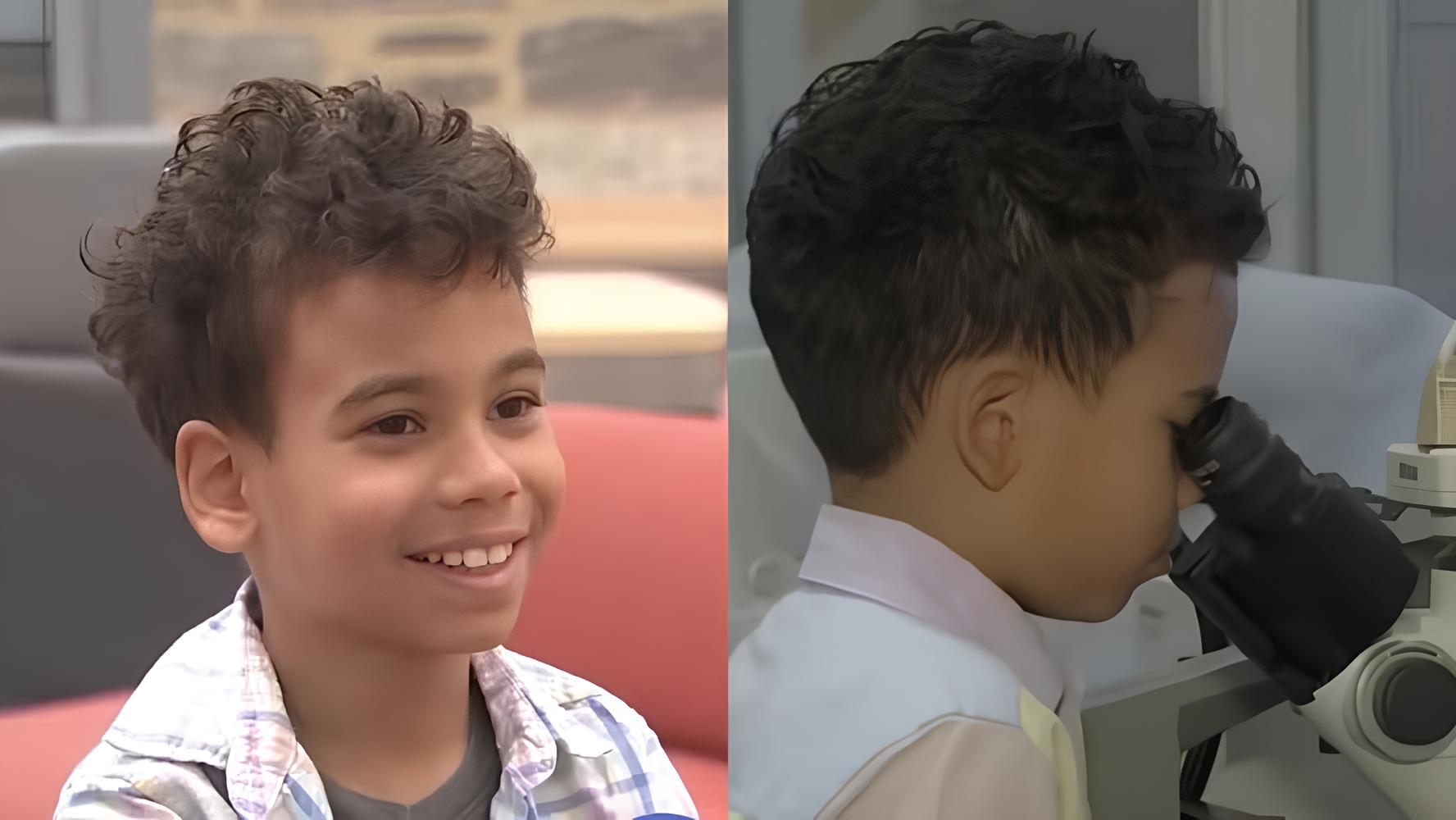
At Just 9 Years Old, Aiden Wilkins Studies Neuroscience at a University in the USA While Attending High School. The Prodigy Boy Wants to Be a Doctor and Is Already a Member of Mensa International, with an IQ Above 145.
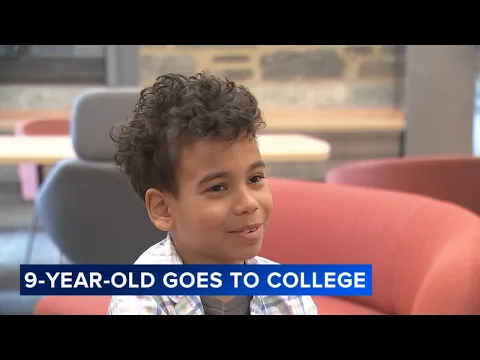
In a scenario that challenges any educational standard, young Aiden Wilkins, just 9 years old, is attending Neuroscience classes at a university in the United States while still completing elementary school. The case, which gained prominence in 2025 in major international outlets like People Magazine and the broadcaster ABC News (WPVI), has become a symbol of how talent and intellectual curiosity can transcend age barriers and transform the way we understand early learning.
According to family reports, the boy has already shown cognitive skills far above average since the age of three, with an impressive photographic memory and profound interest in how the human body works. By seven, Aiden was already reading books on anatomy and neuroscience, and by eight he started attending online courses from American universities until he was officially accepted into a higher education institution in Pennsylvania.
An Extraordinary Brain in Development
While most children his age are still learning fractions and spelling, Aiden studies synapses, neurotransmitters, and the functioning of the brain lobes.
-
Couple spends 20 years digging a hillside in California to escape heat, cold, and fires, creates a maze of underground houses with tunnels, domes, and illuminated patios, and transforms buried dwelling into an artisanal ecovillage.

-
How much does it cost to build a pool in 2026? See the average construction costs, licensing fees, and the most common extra expenses that may arise throughout the project.

-
Fort Atacadista uses World Cup fever to raffle off 58-inch TVs, promises one winner per day, multiplies chances with Vuon Card, and targets customers with purchases over R$ 100 as Grupo Pereira reaches 190 stores in the Brazilian retail market.
-
Son of a market vendor who saw his father wake up at 2 a.m. to set up the stall partners with OpenAI to offer ChatGPT Business licenses in Latin America and projects revenue above R$ 200 million in 2026.



His teachers claim that he has an unusually high ability to assimilate information, comparable to that of undergraduate students over 20 years old.
“It’s as if he was born thinking scientifically,” said neuroscience professor Dr. Michael Harris, one of the boy’s tutors at the university.


Aiden himself claims that his fascination with the human mind arose from watching documentaries about the brain and neurodegenerative diseases. He dreams of becoming a neurologist and researcher, aiming to “help people with Alzheimer’s and cerebral palsy.” To achieve this, he studies daily for between 6 and 8 hours, balancing university classes with the high school curriculum, which he is completing at an accelerated pace.
Family Support and an Unusual Routine
Aiden’s parents state that they have never imposed a strict routine but have sought to nurture his natural curiosity.
“He has always been curious. When he asked about something, he was not satisfied with simple answers. He wanted to know the why of everything, and this led him to delve deeper and deeper,” said Megan Wilkins, the boy’s mother, to People.
Despite the intense pace, Aiden leads a balanced life. He enjoys playing with the family dog, playing chess, and watching videos of scientific experiments on YouTube. The secret, according to his parents, is the balance between learning and leisure, something that experts highlight as essential in the development of gifted children.
Genius Officially Recognized
Tests conducted by educational psychologists indicate that Aiden has an IQ above 145, placing him among the 1% most intelligent in the world for his age group. The boy is also a member of Mensa International, the global association for people with high IQ, which brings together some of the greatest minds on the planet.
Institutions such as the Johns Hopkins Center for Talented Youth are also monitoring Aiden’s academic development, providing educational and psychological support to ensure that his advancement does not hinder his socialization and emotional well-being — a common challenge among gifted children.
A Promising Future Ahead
If he maintains his current pace, Aiden is expected to graduate high school at 10 years old and complete his bachelor’s degree in neuroscience before turning 14. The family’s plan is that, as soon as he reaches the minimum age required by law, he can officially enroll in medical school.
Experts point out that cases like Aiden’s reveal the positive impact of new teaching methodologies and the role of the internet in democratizing knowledge.
“Today, a curious and well-guided child can access the same content as an elite university student,” explains Dr. Robert Stevens, neuroeducator at the University of Pennsylvania.
For Aiden, however, learning is just the beginning. “I want to discover how the brain creates thoughts and how it can heal itself when it is sick,” he said in an interview. “Maybe one day I can find a way to reprogram people’s brains so that they no longer feel pain.”
Cases like Aiden Wilkins show that the future of education lies in personalization and encouraging individual talent.
His story, widely reported in the United States in March 2025, reinforces the idea that knowledge knows no age and that, when potential meets opportunity, even a nine-year-old can change the course of science.







-

3 people reacted to this.