Portuguese
  Spanish





With The Delays, The Expected Human Return to The Satellite Is Moving Further Away, While NASA Prioritizes Safety and Technical Adjustments.
The long-awaited human return to the Moon, which has not happened since 1972, has been officially postponed by NASA. The Artemis 2 and Artemis 3 missions, which will mark the historic return, have experienced significant delays. The first team of new astronauts on the Moon is now expected to launch only in 2027.
Since December 19, 1972, no human has stepped on the lunar surface. The three astronauts of Apollo 17 ended an era of exploration, but NASA has ambitious plans to change that. However, last week, the agency confirmed that the Artemis missions, scheduled to rewrite the history of space exploration, will have their dates changed.
NASA Will Fly Around The Moon First
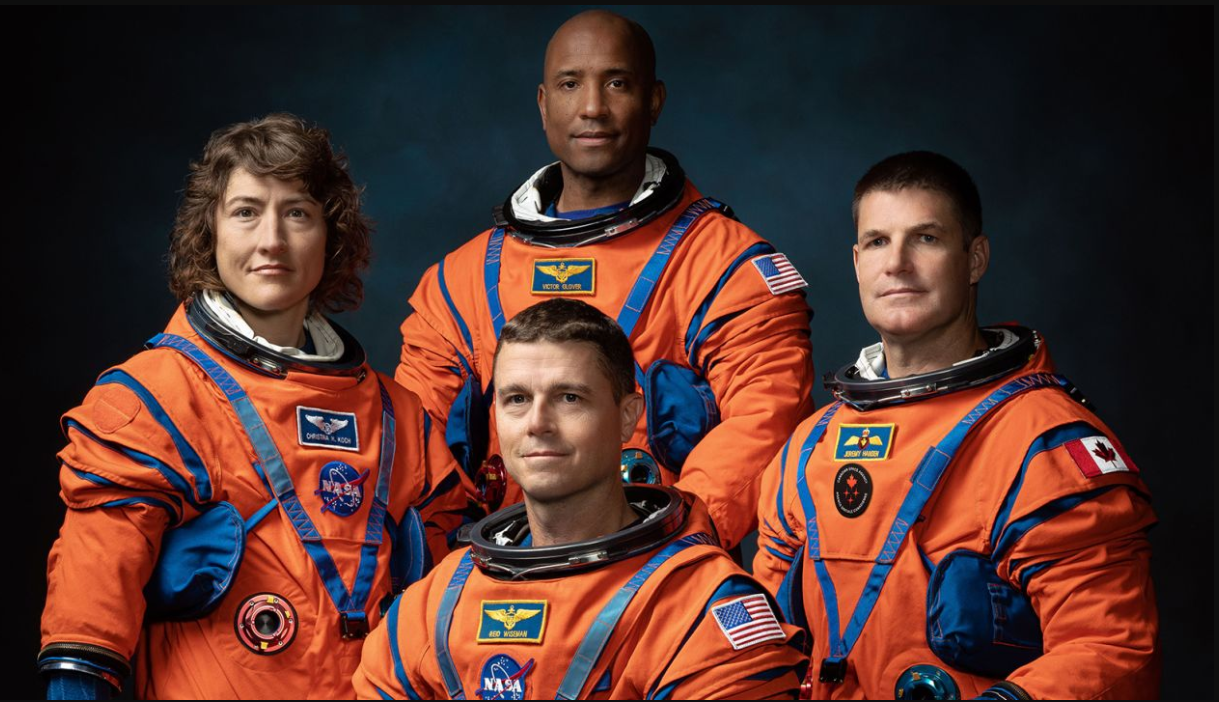
Artemis 2, which will carry four astronauts on a flight around the Moon, initially planned for September 2025, has been postponed to April 2026. Meanwhile, Artemis 3, which will finally land new astronauts on the Moon, is now expected in mid-2027, without a specific date set.
-
14-Year-Old Girl Develops Solar-Powered Water Purification System for India, Eliminating Need for Electricity or Chemicals

-
Forgotten Canadian Machine Harnessed Waterfall Power to Supply Mines with Compressed Air for 70 Years Without Motors or Electricity
-
Berries, Strawberries, and Blueberries Could Transform Agriculture in Northeastern Brazil, New Tests Reveal

-
Danish Resident Discovers Six Viking Gold Bracelets Weighing 762.5 Grams, Third Largest Gold Treasure in Denmark




“Space is demanding,” said Bill Nelson, NASA administrator, during a press conference. According to him, the adjustments are necessary to ensure that the Orion capsule is fully prepared to safely carry astronauts into deep space and bring them back.
The main focus is on the thermal shield of the Orion capsule. During NASA’s tests on the Artemis 1 mission, conducted in late 2022, uneven degradation of the material was observed upon reentering Earth’s atmosphere. Although the internal temperature remained stable, engineers prefer to prevent any failure by adjusting the reentry trajectory and bringing the capsule’s landing spot closer to the Pacific Ocean off San Diego, California.
First Mission of Female Astronauts and Black People to Visit The Moon
Artemis 3 promises to be a historic milestone: it will be the first mission to take female astronauts and black people to visit the Moon. While the crew for this mission has yet to be defined, the names for Artemis 2 have already been announced. Reid Wiseman, Victor Glover, Christina Koch (all from NASA), and Jeremy Hansen (from Canada) are undergoing intensive training, including in Iceland, where they simulate lunar surface conditions for the 2026 journey.
Even with the delays, the human return to the Moon carries a unique excitement and reinforces the importance of safety in every detail. After all, when the new astronauts finally arrive at the lunar satellite, it will be a moment to be etched in the history of space exploration, and of course, in our hearts. “Let’s make it happen!” It may take a few more years, but NASA assures that the wait will be worth it.