






 Portuguese
  Spanish
  4 min of reading
  104 comments


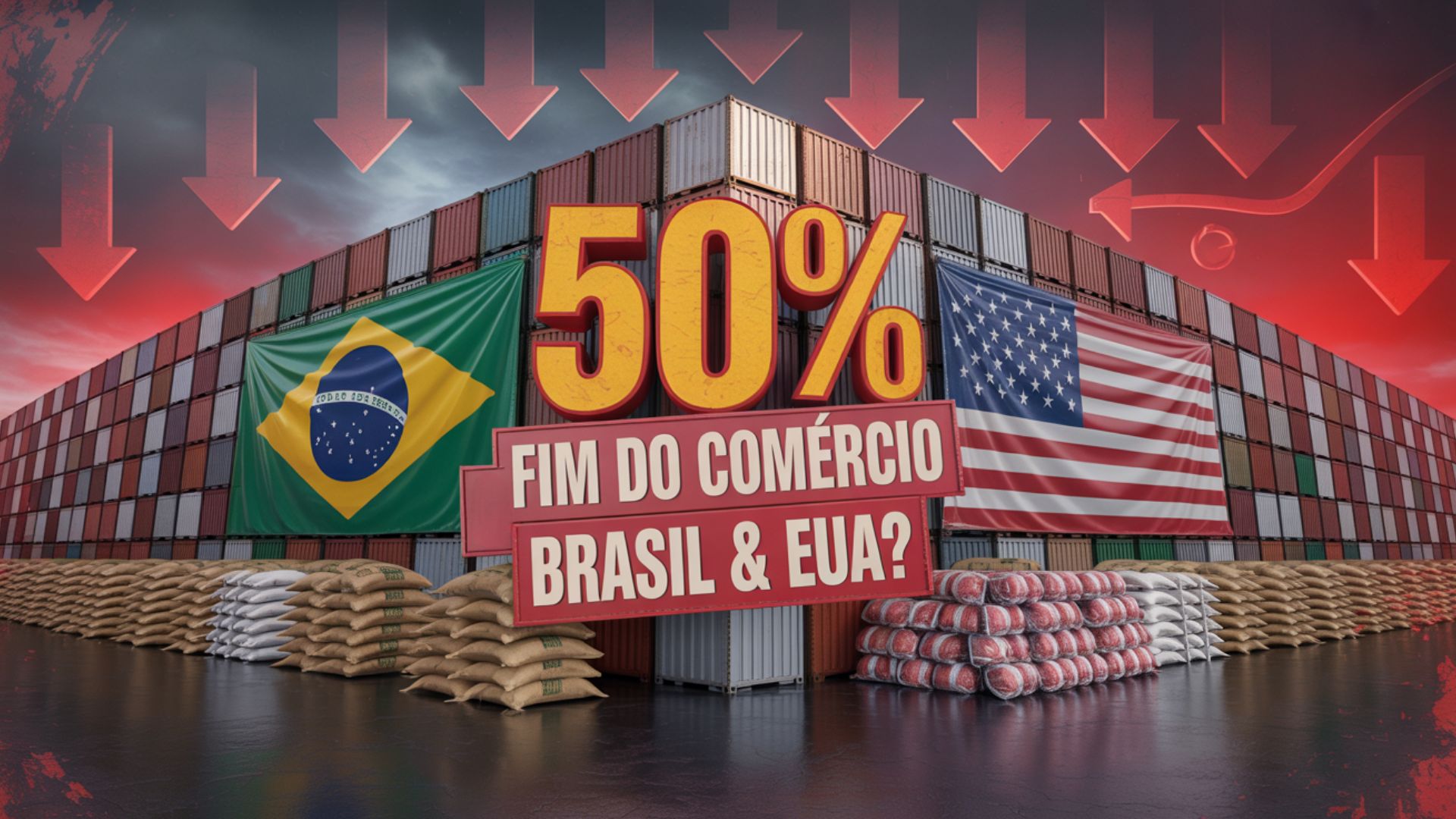


Brazilian Sectors Assess Up to 15 Months Without Exporting to the U.S. Following 50% Tariff, While CNI Mission in Washington Seeks to Reduce Impacts and the Lula Government Reviews Applying the Economic Reciprocity Law.
The increase in tariffs by the United States to 50% on a significant portion of Brazilian exports and the possibility of the government invoking the Economic Reciprocity Law have led segments of the industry to study an extreme scenario: going 12 to 15 months without selling to Americans.
The estimate, reported by executives affected by the tariff, comes as a mission led by the CNI (National Confederation of Industry) operates in Washington to try to reverse or at least mitigate the immediate impact on bilateral trade.
Negotiation in Washington: Industry Offensive
Since mid-August, business leaders and sector representatives have been holding meetings in the U.S. to open a negotiation channel with the U.S. administration. The president of CNI, Ricardo Alban, stated he seeks a common understanding.
-
Brazilian Joins Homeownership Consortium, Faces Decade of Dual Payments Totaling $141,000, Surpassing Traditional Mortgage

-
Land Rover to Halt Production in July, Putting 371 Jobs at Risk, as Chinese Automaker Negotiates to Convert Factory to 100,000 Vehicles Annually by 2027

-
Mexican Pest Threatens U.S. Cattle Herds at Historic Lows, Potentially Boosting Brazilian Beef Exports as Burger Prices Soar

-
Brazilian Freight Bill Progresses in Congress with $5,000 Minimum Wage, 70% Advance Payment, and Fines Up to $1 Million, as Agriculture and Industry Warn of Rising Costs and Legal Uncertainty


“Let us be able to follow a path of convergence in understanding and explanations,” he said.
In parallel, CNI hired the Ballard Partners firm for lobbying activities in Washington. The team is led by Brian Ballard, known for his close ties with President Donald Trump.
USTR Hearing and Brazil’s Counterpoints
On September 3, 2025, the USTR (U.S. Trade Representative) held a public hearing as part of the investigation launched under Section 301 of the Trade Act of 1974.
The procedure examines Brazilian practices in six areas, including digital trade, payment services, intellectual property, access to the ethanol market, and environmental issues.

At the meeting, CNI consultant and former Director-General of the WTO, Ambassador Roberto Azevêdo, refuted the narrative of deliberate harm to the U.S.
“The notion that Brazil is deliberately acting to harm the United States is completely unfounded,” he stated.
According to him, the facts show that American companies “have benefited” from Brazilian policies and that any divergences should be addressed through technical dialogue.
Most Affected Sectors and the Race for Exceptions
The 50% tariff significantly impacts supply chains of animal protein (beef and other meats), seafood, textiles and footwear, as well as coffee and tropical fruits.
Some strategic items, however, have been excluded from the new rates, such as aircraft and a significant portion of the industrial inputs list.
The design of the exceptions fuels the expectation that currently burdened segments may join a tariff relief list, a possibility raised by business leaders participating in the discussions in Washington.
For sectors with a solid presence in the U.S. market and long-term contracts, inclusion in exceptions is seen as an alternative to avoid a prolonged interruption in exports.
Meanwhile, companies are resizing routes and considering shipment delays, measures that, even if temporary, affect production, employment, and prices in the domestic market.
Reciprocity Law Under Review by the Government
The government of President Luiz Inácio Lula da Silva has initiated the steps to invoke the Economic Reciprocity Law, recently enacted, which authorizes countermeasures against countries that impose unilateral barriers considered harmful to Brazilian competitiveness.
The Camex received the request from the Itamaraty and has a 30-day deadline to present a technical opinion on the assessment of American tariffs.
While the possibility of retaliation is formally open, the public guidance from the Planalto and the economic area has been to prioritize negotiation and calibrate domestic support instruments for affected exporters.
Ethanol and SAF on the Agenda
In addition to the tariff dispute, the business mission seeks to anchor common interest points. One of them is ethanol.
“We are the two largest ethanol producers in the world, and today ethanol is a major input for the production of SAF [sustainable aviation fuel],” said Ricardo Alban.
The industry sees an opportunity for regulatory and technological cooperation to expand the use of biofuel in aviation and build economic bridges that help unlock the trade agenda.
Bilateral Trade Under Tension
The tariff pressure comes at a time of recurring Brazilian deficit in the relationship with the U.S.
Official data shows that, since 2009, the trade balance has been negative for Brazil and positive for the United States.
In 2024, the U.S. accounted for around 12% of Brazilian exports, a significant share for sectors such as processed foods, coffee, and footwear.
With the new tariff, sector entities estimate billion-dollar losses in the second half and predict a sharp drop in volumes while regulatory uncertainty persists.
In light of the situation, representative associations have begun discussing, as a contingency plan, the possibility of suspending exports to the American market for 12 to 15 months.
This measure, considered a last resort, aims to avoid unviable operations under the 50% tariff and give time to redirect shipments to other destinations, renegotiate contracts, and await developments from the USTR investigation and bilateral conversations.





Se nós não dependesse deles a **** do teu cartão não vinha visa ou master e cada mula mds
Kkkkkkkk
Donald Trump tem que enteder que ele é o presidente dos Est.Unidos e não o dono do mundo.
E esse desgoverno tem que entender que o mesmo tem que sentar a mesa.
MAS O FILHO DO SEU QUERIDO MITO IMPEDIU QUE A REUNIÃO ACONTECESSE, OU VC NÃO SE LEMBRA?
Se eu fosse o Trump, tinha colocado 95% de taxa. Você já paga isso nos produtos importados e não reclama. Paga tbm, no combustível, nos automóveis, eletrodomésticos e nem por isso vc fica revoltada….Acooooorda o problema do BRASIL são os BRASILEIROS
Eu gosto de ver como vcs não aceitam que NÃO PRECISAMOS MAIS DOS ESTADOS UNIDOS COMO ELES PRECISAM DE NÓS. QUAL A PARTE DE QUE VCS NÃO ENTENDERAM QUE O BRASIL ESTÁ ABRINDO NOVOS MERCADOS E QUE APESAR DASNTARIFAS TIVEMOS UM SUPERÁVIT NA BALANÇA COMERCIAL. AH, SIM. LÓGICO! VCS PRECISAM DO MEDO PARA A DIREITA VOLTAR AO PODER E ASSIM BENEFICIAR APENAS OS RICOS. NÃO, NÃO HÁ PROBLEMA INSOLÚVEL ALGUM ACONTECENDO. O GOVERNO LULA AGIU RÁPIDO E COM O SEM OS EUA ESTAMOS CRESCENDO. AOS PESSIMISTAS SÓ POSSO DIZER: SE FOREM CHORAR, MANDEM ÁUDIO. #BRASILSOBERANO #LULAREELEITO **** GADAIADA
Tem alguma mula acreditando nisso que o maluco falou AE eu trabalho dentro de indústria o aço não está saindo do Brasil vai vender pra vc né mula como e **** aa não vai vender pra nós mesmo va se ferra e cada mula mano de Deus.
Então vamo ali na agência de viagem comprar um pacote para Dubai….Ou quem sabe, um Camaro!!! O que? Vc não tem dinheiro….Nos EUA, um Camaro 0km sai por US$ 37.000…Agora vai o mesmo carro aqui
Vai lá….o Governo é bom e ele vai te ajudar kkkk