Portuguese
  Spanish


Central Bank Seeks Sustainable Solutions In Light Of Full Treasuries And Logistical Challenges
The Central Bank of Argentina, under the presidency of Santiago Bausili, is studying the adoption of note incineration as an alternative to contain the growing volume of currency deterioration.
This proposal gained prominence after statements made by Bausili during a live broadcast on the program Carajo, in 2025.
The Minister of Economy, Luis Caputo, and the Secretary of Economic Policy, José Luis Daza, also participated in the broadcast, reported the newspaper Clarín.
-
Brazil’s ANP Opens 86 New Oil Blocks in the Equatorial Margin, Expanding the Amazon River Mouth Frontier

-
Warren Buffett’s Lesson: How Discipline, Extra Income, and Small Investments Can Transform Your Financial Future

-
Brazilian Startup Turns Coffee Grounds into Plant-Based Leather, Cutting Water Use by Over 50 Times for High-Impact Sustainable Fashion

-
Eco Invest Auction Aims to Unlock $10 Billion in Investments, Focusing on Green Fertilizers, Critical Minerals, Batteries, and AI for Clean Industry in Brazil




The traditional method of shredding notes, currently widely used, has become insufficient to deal with the high number of banknotes in circulation.
After all, the increase in inflation, recorded between 2023 and early 2024, accelerated the circulation and consequent wear and tear of currency.
Volume of Banknotes In Circulation Still Pressures Banking System
Currently, according to data from the Central Bank of Argentina, the average durability of banknotes varies according to the denomination of each note.
Medium-denomination notes, for example, last between 20 and 30 months.
Higher denomination notes can last up to 40 months of use.
The accelerated wear due to inflation, however, has seriously impacted these timeframes.
Even with the introduction, in 2024, of the new banknotes of $10,000 (R$ 47.34) and $20,000 (R$ 94.68), imported from China, the problem has not been contained.
In May 2025, the country accounted for more than 8.7 billion banknotes in circulation.
This amount totaled an impressive 8,000 tons of paper.
Among them, $1,000 (R$ 4.73) banknotes accounted for a significant 43.4% of the total in circulation.
Per capita, Argentina currently has approximately 185 banknotes in circulation.
This number exceeds the indices of the United States, with 163 banknotes, and Brazil, with only 36 banknotes.
Although there was a reduction of 24% in the total volume of banknotes in the last year, the current rate of destruction still does not meet demand.
Between January and May 2025, $500 banknotes saw a decline of over 40%.
$1,000 notes registered a reduction of almost 29% in the same period.
In contrast, $20,000 notes increased by 129% and $10,000 notes grew by 10%.
Logistical Challenges And Full Vaults Worry Financial System
Even though 2.4 billion banknotes were destroyed in the last year, the Argentine banking system continues to face enormous logistical challenges.
As Santiago Bausili himself reported, the intention is to take inspiration from the Brazilian model to overcome these limitations.
Since 2017, the Central Bank of Brazil has implemented a sustainable method of destroying banknotes.
Banks are responsible for identifying worn notes.
They are shredded and compacted into blocks of R$ 50,000.
These blocks are used as fuel in cement factories.
This environmentally sustainable process is known as co-processing.
In 2023, more than 1,500 tons of waste were allocated to this practice in Brazil.
This prevented the emission of approximately 2,000 tons of CO₂ that would be released in landfills.
In Argentina, a more traditional method is still adopted.
The team shreds the notes into briquettes and disposes of the material in landfills.
Commercial banks classify the banknotes based on a five-tier quality system.
The Central Bank of the Argentine Republic (BCRA) established this system.
Notes that are seriously damaged, especially those worth over $1,000, must be punctured before being sent for destruction.
The teams send the rest of the banknotes in heat-sealed packages containing one thousand notes of the same denomination.
The physical destruction occurs at two specialized centers.
One is located in Buenos Aires.
The other operates in Santiago del Estero.
Historic Record And Emergency Measures
In July 2024, the situation reached a critical peak.
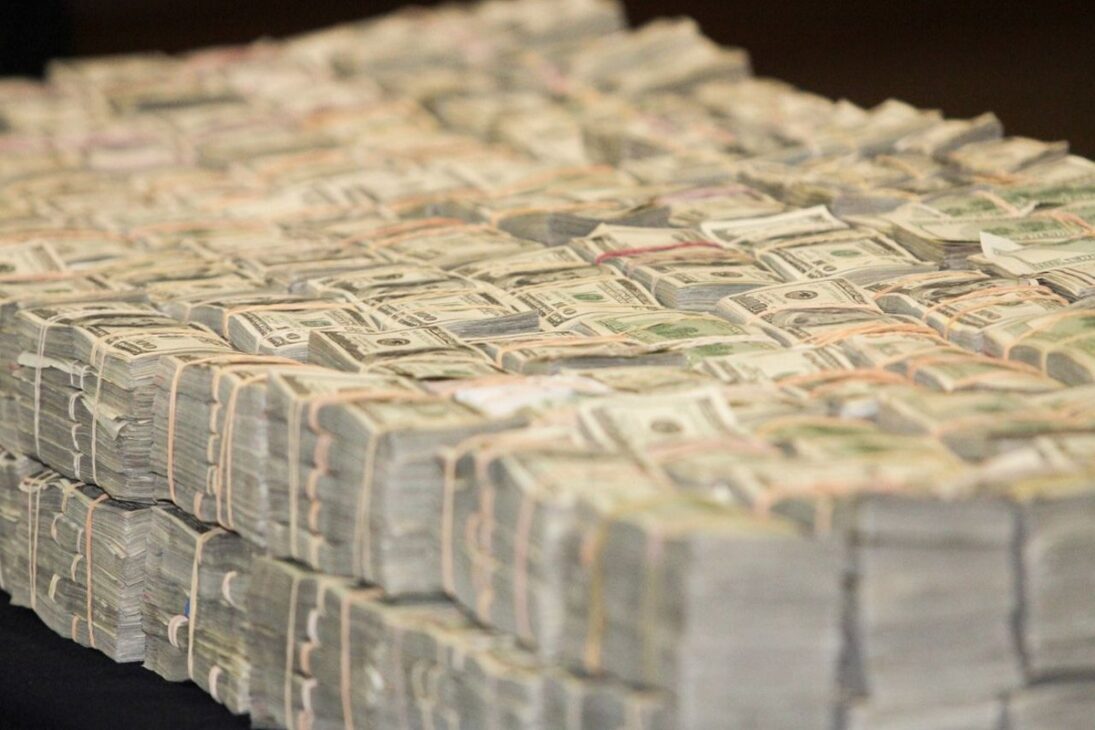
The amount of banknotes in circulation hit a record 11.8 billion.
As a result, banks began facing a serious logistical crisis.
With no physical space to store the deteriorated banknotes, several financial institutions had to build new vaults and deposits.
The population nicknamed these deposits “sarcophagi.”
Although the scenario has shown slight improvement in the last four months, the problem persists.
The Central Bank has intensified efforts to expedite the removal of damaged notes.
Still, there is a high stockpile of paper currency accumulated.
According to banking sector sources interviewed by the newspaper Clarín, many vaults remain stuffed with banknotes awaiting destruction.
“We have managed to relieve the emergency situation.
A spokesperson from the banking sector revealed to Clarín that banks still store a lot of unused paper awaiting destruction.
Therefore, the Argentine Central Bank confirmed that it is analyzing the feasibility of burning banknotes.
This strategy could offer a more efficient solution to the current problem.
Brazilian Example Motivates Search For Sustainable Solutions
The Brazilian experience with the incineration of currency has sparked great interest among technicians at the Central Bank of Argentina.
The proposal addresses the accumulation of banknotes by adopting a sustainable and effective practice.
Furthermore, it seeks to minimize the environmental impacts associated with paper disposal.
As Argentina advances in evaluating alternative methods, the topic remains on the agenda among the country’s economic and financial authorities.
The government is expected to implement new measures soon.
These actions should ensure a more efficient and sustainable flow in the destruction of Argentine banknotes.