






 Portuguese
  Spanish




Ruins, Inscriptions and Mosaics Make Caesarea Maritime One of the Archaeological Sites Most Connected to the Beginning of Christianity and Roman Rule in the Region
The discovery and study of an ancient Roman city on the coast of Israel has brought Caesarea Maritime into the spotlight for gathering structures and artifacts associated with the period described in the New Testament.
The area is located 45 kilometers north of present-day Tel Aviv and preserves signs of a large port city, with constructions that help visualize what the political and urban environment of the time was like.
Among the findings, the Stone of Pilate stands out as one of the most relevant items for bearing an inscription with the name of Pontius Pilate, linked to the trial of Jesus.
-
Say Goodbye to Storing Wine in a Regular Fridge: Midea’s Climate-Controlled Cellar Holds 34 Bottles, Maintains 5-18°C, and Uses Only Half a kWh Daily

-
Six Helicopters to Drop 550 Tons of Poison on Island Near Antarctica to Eradicate Mice Threatening Albatrosses and 19 Seabird Species.

-
Russia Unveils Poseidon: A 20-Meter Nuclear Torpedo-Drone with 10,000 km Range, 185 km/h Speed, and 100-Ton Capacity Threatening Coastal Cities with Radioactive Waves
-
Brazilian Innovator Converts Old Car into Electric Vehicle Using Laptop Batteries and Forklift Motor, Achieves Nearly 90 km/h in Urban Settings




What Happened and Why It Garnered Attention
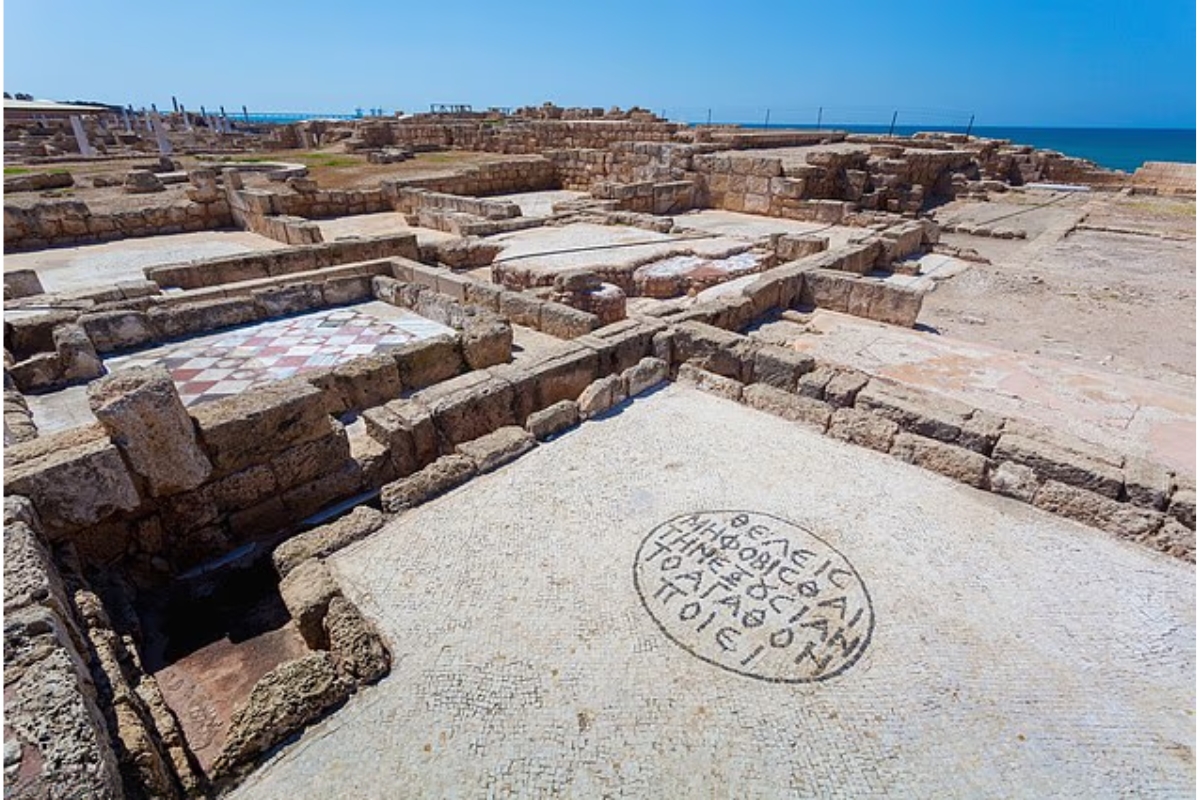
Caesarea Maritime presents itself as a large Roman city, with a set of ruins that includes artificial harbor, aqueducts, theatre, and stadium still visible.
These structures point to an urban center planned to accommodate ships, supply the population, and serve as a showcase of Roman power in the Mediterranean.
The scenery is also connected to episodes of early Christianity, as the city appears repeatedly in the Book of Acts as a strategic point of governance and circulation of people.
What Caesarea Maritime Was Like and What It Reveals
The city functioned as a port in the Mediterranean built by King Herod between 22 and 10 B.C., with monumental works and advanced infrastructure for the time.
The presence of aqueducts indicates the concern for water supply, while the theatre and stadium reinforce the public life typical of the Roman world.
The architectural ensemble helps to understand the context in which Roman authorities operated in the region and how administrative centers influenced daily life.
The Stone of Pilate and the Impact of This Finding

One of the most well-known artifacts from the site is the Stone of Pilate, found in June 1961 during excavations of a Roman theatre.
The limestone slab was part of a dedication to Emperor Tiberius Caesar and names Pontius Pilate as prefect of Judea.
The inscription is only partially preserved but records the dedication and links Pilate to the Roman administrative position, reinforcing his historical existence during the period depicted in the gospels.
The Period of Pilate and the Connection with the Gospels
The inscription is associated with the period when Pilate served as governor, between 26 and 36 A.D., the same time frame mentioned in the Christian accounts.
The Gospel of Luke mentions the governance of Tiberius and the presence of Pilate as an authority in Judea, alongside Herod, tetrarch of Galilee.
Pilate also appears many times in the Bible, presented as the Roman authority involved in the process that led to the crucifixion of Jesus.
What the Book of Acts Describes About the City
The Book of Acts mentions Caesarea about 15 times, describing the city as an important center of Roman governance and early Christianity.
The account includes the baptism of the first non-Jewish believer by Peter, marking a progression of Christianity beyond Judaism.
It also records that the apostle Paul was imprisoned for two years and went through hearings before Roman authorities. In the vocabulary of the time, the praetorium was an area linked to command and administration, used for official acts and trials.
Mosaics, Inscriptions, and Ancient Texts of the New Testament

Ancient mosaics were found at the site with references to verses from Paul’s letters, including inscriptions considered among the oldest known texts of the New Testament, dated to the 2nd century A.D.
There is evidence pointed out as signs of primitive Christian life, with quotations such as Romans 13:3, which deals with the relationship with authority and praising those who do good.
These records reinforce the idea that Christian groups lived and practiced their faith in Caesarea, in line with the narrative of expansion described in accounts from the period.
What May Happen From Now On
After the destruction of Caesarea by Muslim forces in 1265, the site remained almost intact for centuries, with limited use as a fishing village until its importance was recognized in the 20th century.
The excavations initiated in the 1950s expanded knowledge about Roman structures, including a governor’s palace and areas associated with administrative functions.
Today, Caesarea Maritime functions as a vast archaeological park and continues to attract visitors interested in Roman history and references to the New Testament, in addition to continuing to generate new analyses from preserved ruins and artifacts.








Parabéns ao escritor,texto fácil de entender,com palavras de fácil entendimento,em nenhum momento o texto fica cansativo,matéria objetiva.
Obrigada.
Engraçado como as pessoas criticam a existência de Jesus. Chamando de contos mitológicos.
Para comparação, por exemplo, Sócrates não escreveu absolutamente nada. Só existem os relatos de seus discípulos (parece que foi mesma coisa com Jesus). Buda não tem nada escrito ou registrado. Só existem os locais associados com a sua história. Mas em nenhum momento se questiona a existência dessas figuras.
Falou tudo,mas Jesus disse que cegou o entendimento dos homens.
Li,essa matéria sobre,a Cidade de Cesareia maritíma ser encontrada,isso prova a passagem de Jesus pela terra,e um dedo na cara das pessoas que não acreditam ,nem em Deus e nem em Jesus,e ainda dizem que a Bíblia é um livro feito pelas mãos de homens..sim claro,mas foram homens guiados pelas “Mãos de Deus”.
A Bíblia Original está na Itália,onde vivem os Papas(Vaticano),vai lá e vonheça a passagem de Jesus pela terra,a sua estória de vida,juntamente com os 12 Apóstolos …Parabéns aos Arquiólogos e estudiosos,que não desistem de procurar e estudar a estória da humanidade! Eu,Ellen adoro ler artigos,e ler livros sobre esses assuntos,e muitos outros..sinto-me grata por poder viver descobertas como essa e muitas outras!
Desculpa, mas não existe bíblia original. Tudo o que temos hoje, incluindo essa que tá no Vaticano, uma cópia dos escritos original. Sem contar que , o Velho Testamento, vem da tradição judaica.