Portuguese
  Spanish


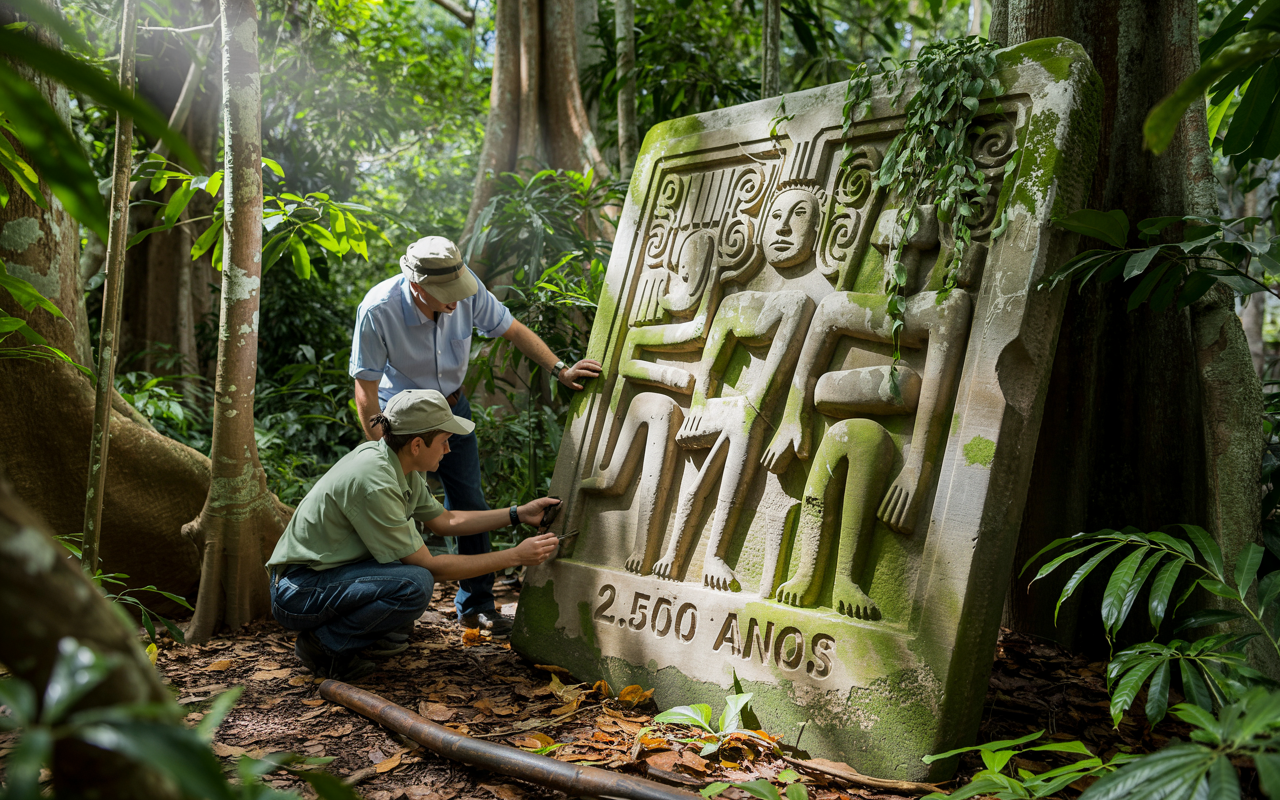


An Archaeological Discovery in Ecuador Is Rewriting the History of the Amazon. Through State-of-the-Art Technology, Archaeologists Found a Lost Civilization Under the Amazon Rainforest That Is Over 2,500 Years Old, Built Cities Connected by Roads and Revealed an Urban and Sophisticated Past Where It Was Once Imagined to Be Just Barren Forest.
For a long time, the prevailing view among scientists was that the Amazon had been mainly inhabited by small nomadic groups, without a large urban structure. This narrative, however, has been overturned by a series of new archaeological discoveries. The most impressive of these was made in the Upano Valley, located in present-day Ecuador, by a team led by French archaeologist Stéphen Rostain of CNRS (National Center for Scientific Research). Utilizing advanced LiDAR (Light Detection and Ranging) technology, the researchers were able to map the terrain hidden beneath the dense Amazonian vegetation — and what they found was surprising.
What Was Discovered Under the Amazon Rainforest?
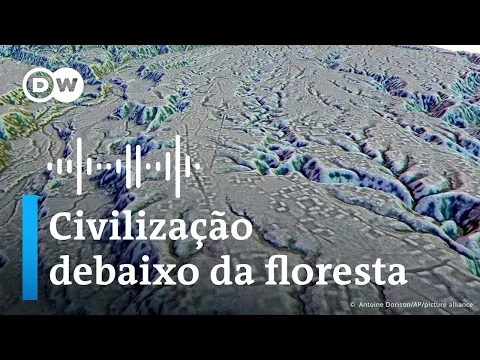

The lost civilization in the Amazon revealed itself through high-resolution images obtained with LiDAR, a technique that emits laser pulses from above (usually by helicopters or drones) and measures the return of these pulses to create a detailed map of the ground surface — even with dense forest cover.
The analysis revealed:
-
Couple Sold Everything to Restore a 300-Year-Old Abandoned Mansion, Uncovering Ancient Books and Untouched Rooms

-
Couple Builds Sustainable Home from Straw Bales, Wood, and Clay in Brazil
-
At 64, Grandma Sônia Turned Homemade Recipes into a Family Business, Growing Casa de Bolos to Over 600 Locations and Expanding to Portugal

-
Brazilian Couple Builds Underground Bunker in Santa Catarina Amid Fears of Crises and Shortages, Spending $10,000 and Learning Construction from Scratch, Videos Go Viral


- Five large interconnected cities;
- Ten smaller settlements;
- A network of wide, straight roads with clear interconnections;
- Residential, ceremonial, and hydraulic structures;
- An urban occupation system covering over 300 km².
According to Rostain, this is the most complex civilization found under the Amazon rainforest in Ecuador and possibly in the entire Amazon rainforest.
The Advanced Urbanism of the Upano Valley
Contrary to what was believed, the inhabitants of the Upano Valley did not live in isolation or in small villages. They formed a complete urban system, with connecting roads, ceremonial zones, elevated platforms, and well-defined residential areas.
“This is urbanism, with planning and connectivity. The structures reveal territory mastery and organization that forces us to rethink what we know about the past of the Amazon,” explains Fernando Mejía, an archaeologist at the Pontifical Catholic University of Ecuador and co-author of the study.
The Importance of LiDAR for Amazonian Archaeology
Traditional excavations in the Amazon have always faced difficulties due to dense vegetation, humid climate, and low aerial visibility. The arrival of LiDAR to tropical archaeology has revolutionized this scenario.
The technology used by archaeologists in discovering the lost civilization in the Amazon enabled the visualization of structures invisible to the naked eye. This not only accelerated the mapping process but also brought a new dimension to historical research in the region.
According to Carla Jaimes Betancourt, an archaeologist at the University of Bonn in Germany, “LiDAR is completely transforming the understanding of pre-Columbian urban engineering in the Amazon. We are only scratching the surface of what exists hidden under the forest.”
How Did This Amazonian Civilization Live?
Although the culture of the Upano Valley is still being unraveled, the first data indicate that it was a society with a strong capacity for collective organization. They:
- Built platforms to deal with flooding;
- Created elevated roads to connect urban centers;
- Developed a territorial distribution system with housing zones, cultivation areas, and rituals.
The cities were not simple clusters of huts: they were urban complexes with geometry and engineering adapted to the environment.
Comparisons with Other Civilizations
It is natural that, in light of such a discovery, comparisons arise with civilizations like the Mayans, the Aztecs, or even Teotihuacan in present-day Mexico. However, experts like Thomas Garrison from the University of Texas at Austin caution against overzealous comparisons:
“It is early to directly compare this with much larger and more complex civilizations like the Mayans. Still, the fact that we find this level of urban development in the heart of the Amazon is extraordinary. We are talking about a complex civilization, likely older than many known ones.”
A Story That Challenges Centuries of Stereotypes
For decades, the dominant narrative painted the Amazon as a territory of pristine forest, inhospitable and occupied by subsistence communities. The discovery of the civilization under the Amazon rainforest in the Upano Valley calls this narrative into question.
The evidence shows that the forest was inhabited by thousands of people who transformed the landscape, with agricultural techniques, hydraulic works, and urban planning — all of this millennia before the arrival of the Europeans.
This historical revision also values the role of indigenous peoples in the construction of the history of the South American continent. According to Rostain, “we can no longer see the Amazon merely as untouched nature; it has been shaped by human hands for millennia.”
How Many Lost Civilizations May Still Exist in the Amazon?
According to Mejía, the findings in Ecuador represent just the “tip of the iceberg”. The Amazon is still an immense territory that is little explored by modern excavations. The potential for new discoveries is enormous.
With the increasing use of LiDAR, it is believed that many other lost civilizations will be revealed in the coming years, whether in Brazil, Peru, Bolivia, Colombia, or other regions of the Amazon Basin.
Cultural and Political Impact of the Discoveries
In addition to expanding scientific knowledge, these discoveries have deep political and cultural implications. They reinforce the archaeological and historical value of the forest, strengthening arguments against deforestation and predatory occupation.
Preserving the Amazon is also about preserving buried memories of peoples who were able to build complex and harmonious systems with the environment. The existence of this lost civilization in the Amazon reinforces the idea that it is possible to live in the forest without destroying it.
What Do the Coming Years Hold for Amazonian Archaeology?
The discovery of the civilization under the Amazon rainforest was made possible by a combination of technology, scientific persistence, and international collaboration. With the advancement of LiDAR and the increase in investments in archaeological research, it is likely that new cultures, cities, and monumental structures will come to light soon.
Projects are already being developed by Brazilian universities, such as UFPA, UFRJ, and USP, in partnership with foreign institutions to map the Amazonian territory using similar technologies.
The Forest Hides Thousand-Year-Old Stories
The discovery of a lost civilization in the Amazon, over 2,500 years old with sophisticated urban infrastructure, challenges everything that was known so far about the pre-Columbian history of South America.
Archaeologists, with the aid of modern technologies like LiDAR, have revealed not only ancient ruins but also a new perspective on the role of the Amazon as a space of innovation, complexity, and urban life in the distant past.
These discoveries not only enrich science but also invite us to rethink how we view the past — and the future — of the Amazon rainforest.